THE CLASSIC COLLECTION✦An outlaw’s diary: the CommuneCLASSIC FREE BOOKS
An outlaw’s diary: the Commune
Cécile Tormay
THE CLASSIC COLLECTION · 1917
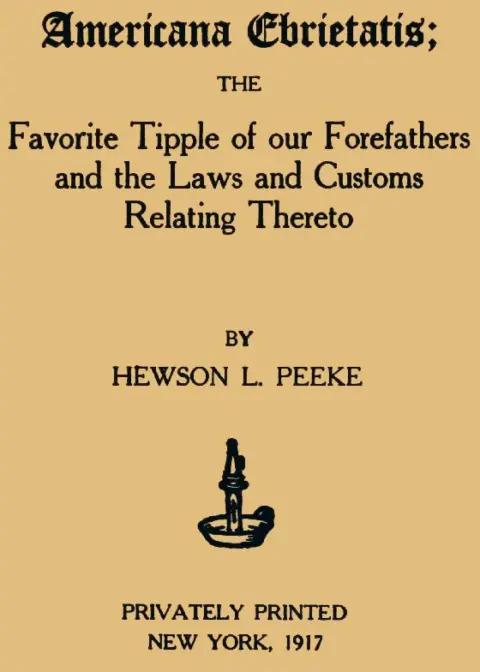
"Americana Ebrietatis" by Hewson L. Peeke is a historical account written in the early 20th century. The book explores the traditional American drinking customs and the evolution of laws and sentiments related to alcohol in society. Peeke discusses the connection between alcohol consumption, social practices, and influential figures throughout American history, particularly in the context of the liquor commerce and its social implications. The opening of Americana Ebrietatis provides an overview of the drinking habits of early American colonists, detailing different regional customs linked to race and cultural background. It examines how various immigrant groups favored specific alcoholic beverages—such as beer, wine, and cider—over water due to health concerns, positioning alcohol as a staple in daily life. The text sets the stage for a broader discussion about how alcohol was intertwined with significant social events, cultural practices, and even governance, establishing a framework for understanding the changing views on the liquor trade in America that the author aims to clarify throughout the rest of the work.
Introduction adapted from the source catalogue; source summaries may be automatically generated.
Free to read · English · 24,975 words · No account needed
MAKE TIME FOR A GOOD BOOK
On by default. Untick to stop anonymous reading totals. Each page counts after 10 seconds in view. How this works.
Anonymous counting is on unless you have switched it off.
When the Quakers framed their constitution for Pennsylvania they inserted clauses punishing swearing, intemperance, cardplaying, and the drinking of healths. They were mighty drinkers in their sober fashion, consuming vast quantities of ale and spirits, and making no serious inroads on the pure and wholesome water, although we are gravely assured that particular pumps, one on Walnut Street, and one in Norris Alley, were held in especial favor as having the best water in town for the legitimate purpose of boiling greens. Their first beer was made from molasses, and we have Penn's assurance that, when "well boyled with Sassafras or Pine infused into it," this was a very tolerable drink. Rum punch was also in liberal demand, and after a few years the thirsty colonists began to brew ale, and drank it out of deep pewter mugs.
When Congress met in 1774, in Philadelphia, John Adams was shocked by the display of eatables. His appetite overcame his scruples, although after each feast he scourged himself for yielding. After dining with Mr. Miers, a young Quaker lawyer, Adams remarks in his diary:
"A mighty feast again; nothing less than the very best of Claret, Madeira, and Burgundy. I drank Madeira at a great rate and found no inconvenience. This plain Friend and his plain though pretty wife, with her Thees and Thous, had provided us the most costly entertainment, ducks, hams, chickens, beef, pig, tarts, creams, custards, jellies, fools, trifles, floating islands, beer, porter, punch, wine, etc."
Again after dining at Mr. Powell's:
"A most sinful feast again: Everything which could delight the eye, or allure the taste, curds, and creams, jellies, sweetmeats of various kinds, twenty sorts of tarts, fools, trifles, floating islands, whipped syllabubs, etc. Parmesan cheese, punch, wine, porter, beer, etc."
The Swedes planted peach and fruit trees of all kinds, had flourishing gardens, and grew rich selling the products when the Quakers arrived. They made wine, beer, or brandy out of sassafras, persimmons, corn, and apparently anything that could be made to ferment and they imported Madeira. Acrelius, their historian, gives a long list of their drinks, and tells us that they always indulged in four meals a day.
Your reading position is saved on this browser. Take it to another device with a library code. Reading pages adapt to text, rather than matching a printed edition.
BEHIND THE BOOK
This eBook is for the use of anyone anywhere in the United States and most other parts of the world at no cost and with almost no restrictions whatsoever. You may copy it, give it away or re-use it under the terms of the Project Gutenberg License included with this eBook or online at www.gutenberg.org. If you are not located in the United States, you will have to check the laws of the country where you are located before using this eBook. Read the source licence.
The original source file, including credits and licence, is retained by this library. Request an original-format copy at no charge. Please include the book title and Project Gutenberg identifier #45177.
KEEP YOUR CURIOSITY GOING
Cécile Tormay

Moritz Busch
John L. Ransom
Frances Wright
Cécile Tormay

Mabel Potter Daggett