READ · DISCOVER · ENJOYClassic literature · Always free
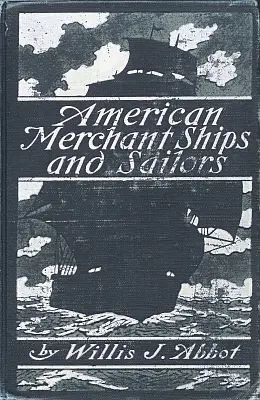
American Merchant Ships and Sailors — digital edition cover

THE CLASSIC COLLECTION · 1902

American Merchant Ships and Sailors

"American Merchant Ships and Sailors" by Willis J. Abbot is a historical account written in the early 20th century. The book delves into the rich maritime history of the United States, particularly focusing on shipbuilding, the evolution of the American sailor, and the crucial role of maritime trade in the nation's development. Through detailed narratives and illustrations, it highlights the adventures and hardships faced by early American seafarers and shipbuilders, ultimately portraying a fascinating era of exploration and commerce. The opening of this work sets the stage by reflecting on the decline of the American sailor at the turn of the 20th century and the significance of maritime activities in the nation's formative years. Abbot discusses the pioneering spirit that drove early Americans to sea, detailing the transition from wooden sailing ships to the emergence of steam-powered vessels. He explores the foundational role of New England in shipbuilding, the evolution of maritime trade, and the challenges posed by competitive and often hostile sea conditions. The chapter serves to frame the story of American maritime history, showcasing not just the technology of shipbuilding but also the human stories of adventure, risk, and resilience that characterized this important facet of American heritage.

Introduction adapted from the source catalogue; source summaries may be automatically generated.

Start reading ↓

Free to read · English · 108,404 words · No account needed

MAKE TIME FOR A GOOD BOOK

American Merchant Ships and Sailors

On by default. Untick to stop anonymous reading totals. Each page counts after 10 seconds in view. How this works.

Anonymous counting is on unless you have switched it off.

American Merchant Ships and Sailors

A duty which at times has come very near to true war service, has been the enforcement of the modus vivendi agreed upon by Great Britain and the United States, as a temporary solution of the problem of the threatened extinction of the fur-bearing seals. This story of the seal "fishery," and the cruel and wholesale slaughter which for years attended it, is one of the most revolting chapters in the long history of civilized man's warfare on dumb animals. It is to be noted that it is only the civilized man who pursues animals to the point of extinction. The word "savage" has come to mean murderous, bloodthirsty, but the savages of North America hunted up and down the forests and plains for uncounted centuries, living wholly on animal food, finding at once their livelihood and their sport in the chase, dressing in furs and skins, and decking themselves with feathers, but never making such inroads upon wild animal life as to affect the herds and flocks. Civilized man came with his rifles and shot-guns, his eagerness to kill for the sake of killing, his cupidity, which led him to ignore breeding-seasons, and seek the immediate profit which might accrue from a big kill, even though thereby that particular form of animal life should be rendered extinct. In less than forty years after his coming to the great western plains, the huge herds of buffalo had disappeared. The prairie chicken and the grouse became scarce, and fled to the more remote regions. Of lesser animal life, the woods and fields in our well-settled states are practically stripped bare. A few years ago, it became apparent that for the seals of the North Pacific ocean and Bering Sea, early extinction was in store. These gentle and beautiful animals are easily taken by hunters who land on the ice floes, where they bask by the thousands, and slaughter them right and left with heavy clubs. The eager demand of fashionable women the world over for garments made of their soft, warm fur, stimulated pot-hunters to prodigious efforts of murder. No attention was given to the breeding season, mothers with young cubs were slain as ruthlessly as any. Schooners and small steamers manned by as savage and lawless men as have sailed the seas since the days of the slave-trade, put out from scores of ports, each captain eager only to make the biggest catch of the year, and heedless whether after him there should be any more seals left for the future. This sort of hunting soon began to tell on the numbers of the hapless animals, and the United States Government sent out a party of scientific men in the revenue cutter "Lincoln," to investigate conditions, particularly in the Pribylof Islands, which had long been the favorite sealing ground. As a result of this investigation, the United States and Great Britain entered into a treaty prohibiting the taking of seals within sixty miles of these islands, thus establishing for the animals a safe breeding-place. The enforcement of the provisions of this treaty has fallen upon the vessels of the revenue service, which are kept constantly patrolling the waters about the islands, boarding vessels, counting the skins, and investigating the vessel's movements. It has been a duty requiring much tact and firmness, for many of the sealers are British, and the gravest international dissension might have arisen from any unwarrantable or arbitrary interference with their acts. The extent of the duty devolving upon the cutters is indicated by some figures of their work in a single year. The territory they patrolled covered sixty degrees of longitude and twenty-five of latitude, and the cruising distance of the fleet was 77,461 miles. Ninety-four vessels were boarded and examined, over 31,000 skins counted, and four vessels were seized for violation of the treaty. In the course of this work, the cutters engaged in it have performed many useful and picturesque services. On one occasion it fell to one of them to go to the rescue of a fleet of American whalers who, nipped by an unusually early winter in the polar regions, were caught in a great ice floe, and in grave danger of starving to death. The men from the cutters hauled food across the broad expanse of ice, and aided the imprisoned sailors to win their freedom. The revenue officers, furthermore, have been to the people of Alaska the respected representatives of law and order, and in many cases the arbiters and enforcers of justice. Along the coast of Alaska live tribes of simple and ignorant Indians, who were for years the prey of conscienceless whites, many of whom turned from the business of sealing, when the two Governments undertook its regulation, to take up the easier trade of fleecing the Indians. The natives were all practised trappers and hunters, and as the limitations upon sealing did not apply to them, they had pelts to sell that were well worth the buying. Ignorant of the values of goods, eager for guns and glittering knives, and always easily stupefied with whisky, the Indians were easy prey to the sea traders. For a gun of doubtful utility, or a jug of fiery whisky, the Indian would not infrequently barter away the proceeds of a whole year of hunting and fishing, and be left to face the winter with his family penniless. It has been the duty of the officers of the revenue cutters serving on the North Pacific station to suppress this illicit trade, and to protect the Indians, as far as possible, from fraud and extortion. The task has been no easy one, but it has been discharged so far as human capacity would permit, so that the Alaska Indians have come to look upon the men wearing the revenue uniform as friends and counselors, while to a great extent the semi-piratical sailors who infested the coast have been driven into other lines of dishonest endeavor. Perhaps not since the days of Lafitte and the pirates of Barataria has any part of the coast of the United States been cursed with so criminal and abandoned a lot of sea marauders as have for a decade frequented the waters off Alaska, the Pribylof Islands, and the sealing regions. The outlawry of a great part of the seal trade, and the consequent heavy profits of those who are able to make one or two successful cruises uncaught by officers of the law, have attracted thither the reckless and desperate characters of every sea, and with these the revenue cutters have to cope. Yet so diversified are the duties of this service that the revenue officers may turn from chasing an illicit sealer to go to the rescue of whalers nipped in the ice, or may make a cruise along the coast to deliver supplies from the Department of Education to mission schools along Bering Sea and the Arctic Ocean, or to carry succor to a party of miners known to be in distress. The rapid development of Alaska since the discoveries of gold has greatly added to the duties of this fleet.

Your reading position is saved on this browser. Take it to another device with a library code. Reading pages adapt to text, rather than matching a printed edition.

More from this author

BEHIND THE WORDS

About Willis J. (Willis John) Abbot

Willis J. (Willis John) Abbot (1863–1934). Explore Panama and the Canal in Picture and Prose, Aircraft and Submarines The Story of the Invention, Development, and Present-Day Uses of War’s Newest Weapons, The Naval History of the United States. Volume 1 and other works in this collection. These books span history.

Explore this author’s books →

THE READERS’ VERDICT

How did this story stay with you?

Not rated yet
Your rating for American Merchant Ships and Sailors

Be the first to share your verdict.

One rating per browser, which you can change or remove. A necessary browser identifier remembers your vote. How ratings work

A GOOD STORY DESERVES COMPANY

Pass this book along.

A great read is even better when it’s shared.

SEND A LITTLE INSPIRATION

Share this book

BEHIND THE BOOK

Edition & source details.

Title
American Merchant Ships and Sailors
Author
Willis J. (Willis John) Abbot
Source edition imprint
1902
Digital edition publisher
Project Gutenberg
Gutenberg release date
2005-04-18
Language
English
Source edition imprint
New York Dodd, Mead & Company The Caxton Press New York. 1902
Source identifier
Project Gutenberg #15648
Contributors
No additional named contributors in source metadata

Public-domain source & licence

This eBook is for the use of anyone anywhere in the United States and most other parts of the world at no cost and with almost no restrictions whatsoever. You may copy it, give it away or re-use it under the terms of the Project Gutenberg License included with this eBook or online at www.gutenberg.org. If you are not located in the United States, you will have to check the laws of the country where you are located before using this eBook. Read the source licence.

Full source licence and obtaining an original copy

The original source file, including credits and licence, is retained by this library. Request an original-format copy at no charge. Please include the book title and Project Gutenberg identifier #15648.

the full Project Gutenberg License must appear
prominently whenever any copy of a Project Gutenberg work (any work
on which the phrase “Project Gutenberg” appears, or with which the
phrase “Project Gutenberg” is associated) is accessed, displayed,
performed, viewed, copied or distributed:

This eBook is for the use of anyone anywhere in the United States and most
other parts of the world at no cost and with almost no restrictions
whatsoever. You may copy it, give it away or re-use it under the terms
of the Project Gutenberg™ License included with this eBook or online
at www.gutenberg.org. If you
are not located in the United States, you will have to check the laws
of the country where you are located before using this eBook.

1.E.2. If an individual Project Gutenberg electronic work is
derived from texts not protected by U.S. copyright law (does not
contain a notice indicating that it is posted with permission of the
copyright holder), the work can be copied and distributed to anyone in
the United States without paying any fees or charges. If you are
redistributing or providing access to a work with the phrase “Project
Gutenberg” associated with or appearing on the work, you must comply
either with the requirements of paragraphs 1.E.1 through 1.E.7 or
obtain permission for the use of the work and the Project Gutenberg
trademark as set forth in paragraphs 1.E.8 or 1.E.9.

1.E.3. If an individual Project Gutenberg electronic work is posted
with the permission of the copyright holder, your use and distribution
must comply with both paragraphs 1.E.1 through 1.E.7 and any
additional terms imposed by the copyright holder. Additional terms
will be linked to the Project Gutenberg License for all works
posted with the permission of the copyright holder found at the
beginning of this work.

1.E.4. Do not unlink or detach or remove the full Project Gutenberg
License terms from this work, or any files containing a part of this
work or any other work associated with Project Gutenberg.

1.E.5. Do not copy, display, perform, distribute or redistribute this
electronic work, or any part of this electronic work, without
prominently displaying the sentence set forth in paragraph 1.E.1 with
active links or immediate access to the full terms of the Project
Gutenberg License.

1.E.6. You may convert to and distribute this work in any binary,
compressed, marked up, nonproprietary or proprietary form, including
any word processing or hypertext form. However, if you provide access
to or distribute copies of a Project Gutenberg work in a format
other than “Plain Vanilla ASCII” or other format used in the official
version posted on the official Project Gutenberg website
(www.gutenberg.org), you must, at no additional cost, fee or expense
to the user, provide a copy, a means of exporting a copy, or a means
of obtaining a copy upon request, of the work in its original “Plain
Vanilla ASCII” or other form. Any alternate format must include the
full Project Gutenberg License as specified in paragraph 1.E.1.

1.E.7. Do not charge a fee for access to, viewing, displaying,
performing, copying or distributing any Project Gutenberg works
unless you comply with paragraph 1.E.8 or 1.E.9.

1.E.8. You may charge a reasonable fee for copies of or providing
access to or distributing Project Gutenberg electronic works
provided that:

• You pay a royalty fee of 20% of the gross profits you derive from
the use of Project Gutenberg works calculated using the method
you already use to calculate your applicable taxes. The fee is owed
to the owner of the Project Gutenberg trademark, but he has
agreed to donate royalties under this paragraph to the Project
Gutenberg Literary Archive Foundation. Royalty payments must be paid
within 60 days following each date on which you prepare (or are
legally required to prepare) your periodic tax returns. Royalty
payments should be clearly marked as such and sent to the Project
Gutenberg Literary Archive Foundation at the address specified in
Section 4, “Information about donations to the Project Gutenberg
Literary Archive Foundation.”

• You provide a full refund of any money paid by a user who notifies
you in writing (or by e-mail) within 30 days of receipt that s/he
does not agree to the terms of the full Project Gutenberg™
License. You must require such a user to return or destroy all
copies of the works possessed in a physical medium and discontinue
all use of and all access to other copies of Project Gutenberg™
works.

• You provide, in accordance with paragraph 1.F.3, a full refund of
any money paid for a work or a replacement copy, if a defect in the
electronic work is discovered and reported to you within 90 days of
receipt of the work.

• You comply with all other terms of this agreement for free
distribution of Project Gutenberg™ works.


1.E.9. If you wish to charge a fee or distribute a Project
Gutenberg™ electronic work or group of works on different terms than
are set forth in this agreement, you must obtain permission in writing
from the Project Gutenberg Literary Archive Foundation, the manager of
the Project Gutenberg™ trademark. Contact the Foundation as set
forth in Section 3 below.

1.F.

1.F.1. Project Gutenberg volunteers and employees expend considerable
effort to identify, do copyright research on, transcribe and proofread
works not protected by U.S. copyright law in creating the Project
Gutenberg™ collection. Despite these efforts, Project Gutenberg™
electronic works, and the medium on which they may be stored, may
contain “Defects,” such as, but not limited to, incomplete, inaccurate
or corrupt data, transcription errors, a copyright or other
intellectual property infringement, a defective or damaged disk or
other medium, a computer virus, or computer codes that damage or
cannot be read by your equipment.

1.F.2. LIMITED WARRANTY, DISCLAIMER OF DAMAGES - Except for the “Right
of Replacement or Refund” described in paragraph 1.F.3, the Project
Gutenberg Literary Archive Foundation, the owner of the Project
Gutenberg™ trademark, and any other party distributing a Project
Gutenberg™ electronic work under this agreement, disclaim all
liability to you for damages, costs and expenses, including legal
fees. YOU AGREE THAT YOU HAVE NO REMEDIES FOR NEGLIGENCE, STRICT
LIABILITY, BREACH OF WARRANTY OR BREACH OF CONTRACT EXCEPT THOSE
PROVIDED IN PARAGRAPH 1.F.3. YOU AGREE THAT THE FOUNDATION, THE
TRADEMARK OWNER, AND ANY DISTRIBUTOR UNDER THIS AGREEMENT WILL NOT BE
LIABLE TO YOU FOR ACTUAL, DIRECT, INDIRECT, CONSEQUENTIAL, PUNITIVE OR
INCIDENTAL DAMAGES EVEN IF YOU GIVE NOTICE OF THE POSSIBILITY OF SUCH
DAMAGE.

1.F.3. LIMITED RIGHT OF REPLACEMENT OR REFUND - If you discover a
defect in this electronic work within 90 days of receiving it, you can
receive a refund of the money (if any) you paid for it by sending a
written explanation to the person you received the work from. If you
received the work on a physical medium, you must return the medium
with your written explanation. The person or entity that provided you
with the defective work may elect to provide a replacement copy in
lieu of a refund. If you received the work electronically, the person
or entity providing it to you may choose to give you a second
opportunity to receive the work electronically in lieu of a refund. If
the second copy is also defective, you may demand a refund in writing
without further opportunities to fix the problem.

1.F.4. Except for the limited right of replacement or refund set forth
in paragraph 1.F.3, this work is provided to you ‘AS-IS’, WITH NO
OTHER WARRANTIES OF ANY KIND, EXPRESS OR IMPLIED, INCLUDING BUT NOT
LIMITED TO WARRANTIES OF MERCHANTABILITY OR FITNESS FOR ANY PURPOSE.

1.F.5. Some states do not allow disclaimers of certain implied
warranties or the exclusion or limitation of certain types of
damages. If any disclaimer or limitation set forth in this agreement
violates the law of the state applicable to this agreement, the
agreement shall be interpreted to make the maximum disclaimer or
limitation permitted by the applicable state law. The invalidity or
unenforceability of any provision of this agreement shall not void the
remaining provisions.

1.F.6. INDEMNITY - You agree to indemnify and hold the Foundation, the
trademark owner, any agent or employee of the Foundation, anyone
providing copies of Project Gutenberg™ electronic works in
accordance with this agreement, and any volunteers associated with the
production, promotion and distribution of Project Gutenberg™
electronic works, harmless from all liability, costs and expenses,
including legal fees, that arise directly or indirectly from any of
the following which you do or cause to occur: (a) distribution of this
or any Project Gutenberg work, (b) alteration, modification, or
additions or deletions to any Project Gutenberg work, and (c) any
Defect you cause.

Section 2. Information about the Mission of Project Gutenberg

Project Gutenberg is synonymous with the free distribution of
electronic works in formats readable by the widest variety of
computers including obsolete, old, middle-aged and new computers. It
exists because of the efforts of hundreds of volunteers and donations
from people in all walks of life.

Volunteers and financial support to provide volunteers with the
assistance they need are critical to reaching Project Gutenberg’s
goals and ensuring that the Project Gutenberg collection will
remain freely available for generations to come. In 2001, the Project
Gutenberg Literary Archive Foundation was created to provide a secure
and permanent future for Project Gutenberg and future
generations. To learn more about the Project Gutenberg Literary
Archive Foundation and how your efforts and donations can help, see
Sections 3 and 4 and the Foundation information page at www.gutenberg.org.

Section 3. Information about the Project Gutenberg Literary Archive Foundation

The Project Gutenberg Literary Archive Foundation is a non-profit
501(c)(3) educational corporation organized under the laws of the
state of Mississippi and granted tax exempt status by the Internal
Revenue Service. The Foundation’s EIN or federal tax identification
number is 64-6221541. Contributions to the Project Gutenberg Literary
Archive Foundation are tax deductible to the full extent permitted by
U.S. federal laws and your state’s laws.

The Foundation’s business office is located at 41 Watchung Plaza #516,
Montclair NJ 07042, USA, +1 (862) 621-9288. Email contact links and up
to date contact information can be found at the Foundation’s website
and official page at www.gutenberg.org/contact

Section 4. Information about Donations to the Project Gutenberg
Literary Archive Foundation

Project Gutenberg™ depends upon and cannot survive without widespread
public support and donations to carry out its mission of
increasing the number of public domain and licensed works that can be
freely distributed in machine-readable form accessible by the widest
array of equipment including outdated equipment. Many small donations
($1 to $5,000) are particularly important to maintaining tax exempt
status with the IRS.

The Foundation is committed to complying with the laws regulating
charities and charitable donations in all 50 states of the United
States. Compliance requirements are not uniform and it takes a
considerable effort, much paperwork and many fees to meet and keep up
with these requirements. We do not solicit donations in locations
where we have not received written confirmation of compliance. To SEND
DONATIONS or determine the status of compliance for any particular state
visit www.gutenberg.org/donate.

While we cannot and do not solicit contributions from states where we
have not met the solicitation requirements, we know of no prohibition
against accepting unsolicited donations from donors in such states who
approach us with offers to donate.

International donations are gratefully accepted, but we cannot make
any statements concerning tax treatment of donations received from
outside the United States. U.S. laws alone swamp our small staff.

Please check the Project Gutenberg web pages for current donation
methods and addresses. Donations are accepted in a number of other
ways including checks, online payments and credit card donations. To
donate, please visit: www.gutenberg.org/donate.

Section 5. General Information About Project Gutenberg electronic works

Professor Michael S. Hart was the originator of the Project
Gutenberg concept of a library of electronic works that could be
freely shared with anyone. For forty years, he produced and
distributed Project Gutenberg eBooks with only a loose network of
volunteer support.

Project Gutenberg eBooks are often created from several printed
editions, all of which are confirmed as not protected by copyright in
the U.S. unless a copyright notice is included. Thus, we do not
necessarily keep eBooks in compliance with any particular paper
edition.

Most people start at our website which has the main PG search
facility: www.gutenberg.org.

This website includes information about Project Gutenberg,
including how to make donations to the Project Gutenberg Literary
Archive Foundation, how to help produce our new eBooks, and how to
subscribe to our email newsletter to hear about new eBooks.


KEEP YOUR CURIOSITY GOING

Your next chapter awaits.