How to Study Architecture
Charles H. (Charles Henry) Caffin
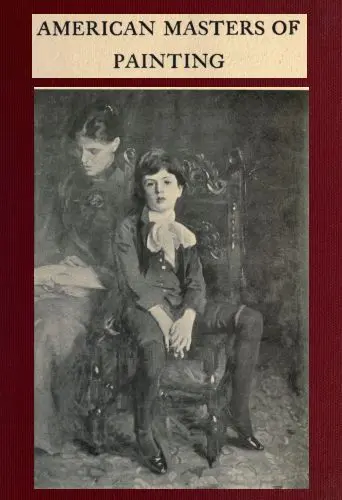
THE CLASSIC COLLECTION · 1901
"American Masters of Painting" by Charles H. Caffin is a collection of brief appreciation essays on notable American painters, written in the early 20th century. The work introduces readers to key figures in American art, like George Inness, John La Farge, and James A. McNeill Whistler, alongside illustrations of their significant works. Caffin's aim is to highlight the contributions and innovations of these artists within the context of American culture. The opening of the book begins by establishing George Inness as a pivotal figure in American art, credited as a pathfinder who shaped the naturalistic movement in landscape painting. Caffin discusses Inness's evolution as an artist, emphasizing his independent studies of nature and his progression influenced by the Barbizon painters. The narrative outlines Inness's techniques, the mood he sought to convey through his landscapes, and his spiritual approach to art, all of which contribute to his unique style and significance in the field. Through this introduction, readers gain insight into both the artistic and personal qualities that define Inness's work and set the stage for further explorations of other artists in the collection.
Introduction adapted from the source catalogue; source summaries may be automatically generated.
Free to read · English · 36,724 words · No account needed
MAKE TIME FOR A GOOD BOOK
On by default. Untick to stop anonymous reading totals. Each page counts after 10 seconds in view. How this works.
Anonymous counting is on unless you have switched it off.
This skill of hand is at the service of a brilliant pictorial sense. Like a true painter, he sees a picture in everything he studies. Perhaps it would be truer to say that he sees the picture, the one which for the time being has taken possession of his imagination and to which he is willing to sacrifice even truth, or at least some portion of truth, rather than to permit the integrity of his mental picture to be impaired. This pictorial sense is one of the sources of the greatness and of the less than greatness in his work. It gives to each of his canvases a distinct æsthetic charm; grandiose, for example, in the portrait of “Lady Elcho, Mrs. Arden, and Mrs. Tennant,” ravishingly elegant in the “Mrs. Meyer and Children,” delicately quaint in the “Beatrix,” and so on through a range of motives, each variously characterized by grandeur of line, suppleness of arrangement, and fascinating surprise of detail; used with extraordinary originality, but always conformable to an instinctive sense of balance and rhythm. And then, too, how tactful is the selection of pose, costume, and accessories! With what taste he creates environment for his conception of the subject!
It is, however, in regard to the conception of his subject that Sargent challenges criticism. How far does he render the character of the sitter? To say that his characterization is slap-dash and superficial is, surely, going too far. It was confuted by that exhibition of fifty portraits, which represented at least fifty distinct persons. Nor with that panorama of his art in one’s memory can one admit that he has no real sympathy with his sitters. Very possibly, however, it is not a personal sympathy, and for two reasons. He is a picture maker before he is a portraitist, and in portraiture has less interest in the individual than in the type which he or she represents. This latter particular is symptomatic, partly of the artist himself and partly of his times. He is not of the world in which he plays so conspicuous a part, but preserves an aloofness from it and studies it with the collectedness of an onlooker interested in the moving show and in its general trends of motive, but with an individual sympathy only occasionally elicited, as when he paints Georg Henschel, like himself, a musician. Again it is an affectation of the class from which most of his sitters, especially the ladies, are drawn to exhibit the studied unconviction so deliciously represented in Anthony Hope’s “Dolly Dialogues.” The elegant shallowness of so many of his portraits is true enough in a general way, and very likely in the individual case. There is another type, embodying the thinking-for-herself and the greater latitude of action of the modern woman. They are, to a certain extent, the product of an age of nerves, and in his portraits of them there is perceptible an equivalent restlessness of manner, a highly strung intention, almost a stringiness of nervous expression. Again, I can recall in the Boston exhibition two portraits of ladies whose esprit was of a kind that quiet folks would consider fast. Their cases also had been keenly diagnosed and met with the skill of an artist who did not care to extenuate, nor on the other hand had fallen under personal subjection to the physical attractiveness, but set down what he saw and surrounded it with the elegant atmosphere that was its salvation in real life. It is here that he compares to such advantage with a painter like Boldini. Sargent has instinctive refinement. It would be quite impossible for him to have any feelings toward his subjects other than those of a true gentleman; and, though he may represent in a lady a full flavour of the modern spirit, he never allows the modernity to exceed the limits of good taste. For the same reason Sargent’s pictures, though many of them have a restlessness of their own, seem quiet alongside Boldini’s. The latter makes a motive of nervous tenuosity, and his pictures, if seen frequently, become wiry in suggestion, and defeat their own purpose of being vibrative; but Sargent’s, controlled by a fine sobriety of feeling, another phase of his unfailing taste and tact, retain their suppleness. Their actuality is all the more convincing because it is not the motive, but an incident.
Your reading position is saved on this browser. Take it to another device with a library code. Reading pages adapt to text, rather than matching a printed edition.
Charles H. (Charles Henry) Caffin
Charles H. (Charles Henry) Caffin
Charles H. (Charles Henry) Caffin
Charles H. (Charles Henry) Caffin
BEHIND THE BOOK
This eBook is for the use of anyone anywhere in the United States and most other parts of the world at no cost and with almost no restrictions whatsoever. You may copy it, give it away or re-use it under the terms of the Project Gutenberg License included with this eBook or online at www.gutenberg.org. If you are not located in the United States, you will have to check the laws of the country where you are located before using this eBook. Read the source licence.
The original source file, including credits and licence, is retained by this library. Request an original-format copy at no charge. Please include the book title and Project Gutenberg identifier #59694.
KEEP YOUR CURIOSITY GOING

David Patterson (Spirit) Hatch

David Patterson (Spirit) Hatch

David Patterson (Spirit) Hatch

Ralph Waldo Emerson

Maurice Baring

Oscar Wilde & James McNeill Whistler