All in a Life-time
Henry Morgenthau & French Strother
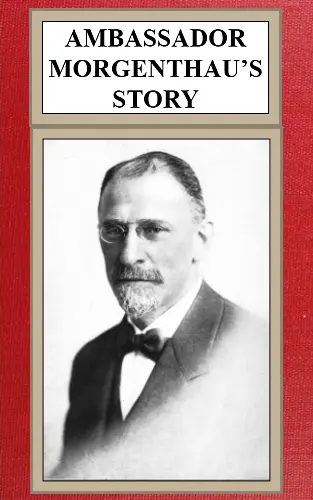
THE CLASSIC COLLECTION · 1918
"Ambassador Morgenthau's Story" by Henry Morgenthau is a memoir published in 1918. The former U.S. Ambassador to the Ottoman Empire recounts his experiences from 1913 to 1916, documenting German-Ottoman relations during World War I. The book serves as a primary source on the Armenian genocide, revealing his conversations with Ottoman leaders who dismissed early reports of atrocities. Unable to secure official U.S. intervention, Morgenthau drew international attention to the unfolding genocide and organized private relief efforts.
Introduction adapted from the source catalogue; source summaries may be automatically generated.
Free to read · English · 111,991 words · No account needed
MAKE TIME FOR A GOOD BOOK
On by default. Untick to stop anonymous reading totals. Each page counts after 10 seconds in view. How this works.
Anonymous counting is on unless you have switched it off.
All through the spring and summer of 1915 the deportations took place. Of the larger cities, Constantinople, Smyrna, and Aleppo were spared; practically all other places where a single Armenian family lived now became the scenes of these unspeakable tragedies. Scarcely a single Armenian, whatever his education or wealth, or whatever the social class to which he belonged, was exempted from the order. In some villages placards were posted ordering the whole Armenian population to present itself in a public place at an appointed time--usually a day or two ahead, and in other places the town crier would go through the streets delivering the order vocally. In still others not the slightest warning was given. The gendarmes would appear before an Armenian house and order all the inmates to follow them. They would take women engaged in their domestic tasks without giving them the chance to change their clothes. The police fell upon them just as the eruption of Vesuvius fell upon Pompeii; women were taken from the wash-tubs, children were snatched out of bed, the bread was left half baked in the oven, the family meal was abandoned partly eaten, the children were taken from the schoolroom, leaving their books open at the daily task, and the men were forced to abandon their ploughs in the fields and their cattle on the mountain side. Even women who had just given birth to children would be forced to leave their beds and join the panic-stricken throng, their sleeping babies in their arms. Such things as they hurriedly snatched up--a shawl, a blanket, perhaps a few scraps of food--were all that they could take of their household belongings. To their frantic questions “Where are we going?” the gendarmes would vouchsafe only one reply: “To the interior.”
In some cases the refugees were given a few hours, in exceptional instances a few days, to dispose of their property and household effects. But the proceeding, of course, amounted simply to robbery. They could sell only to Turks, and since both buyers and sellers knew that they had only a day or two to market the accumulations of a lifetime, the prices obtained represented a small fraction of their value. Sewing machines would bring one or two dollars--a cow would go for a dollar, a houseful of furniture would be sold for a pittance. In many cases Armenians were prohibited from selling or Turks from buying even at these ridiculous prices; under pretense that the Government intended to sell their effects to pay the creditors whom they would inevitably leave behind, their household furniture would be placed in stores or heaped up in public places, where it was usually pillaged by Turkish men and women. The government officials would also inform the Armenians that, since their deportation was only temporary, the intention being to bring them back after the war was over, they would not be permitted to sell their houses. Scarcely had the former possessors left the village, when Mohammedan mohadjirs--immigrants from other parts of Turkey--would be moved into the Armenian quarters. Similarly all their valuables--money, rings, watches, and jewellery--would be taken to the police stations for “safe keeping,” pending their return, and then parcelled out among the Turks. Yet these robberies gave the refugees little anguish, for far more terrible and agonizing scenes were taking place under their eyes. The systematic extermination of the men continued; such males as the persecutions which I have already described had left were now violently dealt with. Before the caravans were started, it became the regular practice to separate the young men from the families, tie them together in groups of four, lead them to the outskirts, and shoot them. Public hangings without trial--the only offense being that the victims were Armenians--were taking place constantly. The gendarmes showed a particular desire to annihilate the educated and the influential. From American consuls and missionaries I was constantly receiving reports of such executions, and many of the events which they described will never fade from my memory. At Angora all Armenian men from fifteen to seventy were arrested, bound together in groups of four, and sent on the road in the direction of Caesarea. When they had travelled five or six hours and had reached a secluded valley, a mob of Turkish peasants fell upon them with clubs, hammers, axes, scythes, spades, and saws. Such instruments not only caused more agonizing deaths than guns and pistols, but, as the Turks themselves boasted, they were more economical, since they did not involve the waste of powder and shell. In this way they exterminated the whole male population of Angora, including all its men of wealth and breeding, and their bodies, horribly mutilated, were left in the valley, where they were devoured by wild beasts. After completing this destruction, the peasants and gendarmes gathered in the local tavern, comparing notes and boasting of the number of “giaours” that each had slain. In Trebizond the men were placed in boats and sent out on the Black Sea; gendarmes would follow them in boats, shoot them down, and throw their bodies into the water.
Your reading position is saved on this browser. Take it to another device with a library code. Reading pages adapt to text, rather than matching a printed edition.
Henry Morgenthau & French Strother
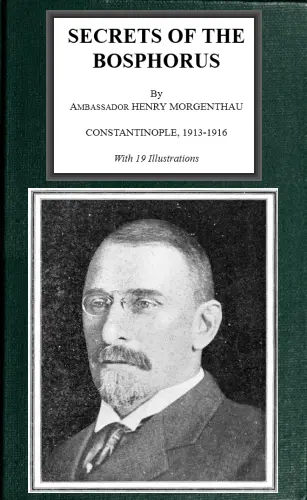
Henry Morgenthau
BEHIND THE BOOK
This eBook is for the use of anyone anywhere in the United States and most other parts of the world at no cost and with almost no restrictions whatsoever. You may copy it, give it away or re-use it under the terms of the Project Gutenberg License included with this eBook or online at www.gutenberg.org. If you are not located in the United States, you will have to check the laws of the country where you are located before using this eBook. Read the source licence.
The original source file, including credits and licence, is retained by this library. Request an original-format copy at no charge. Please include the book title and Project Gutenberg identifier #55343.
KEEP YOUR CURIOSITY GOING
Cécile Tormay

Moritz Busch
John L. Ransom
Frances Wright
Cécile Tormay

Mabel Potter Daggett