All in a Life-time
Henry Morgenthau & French Strother
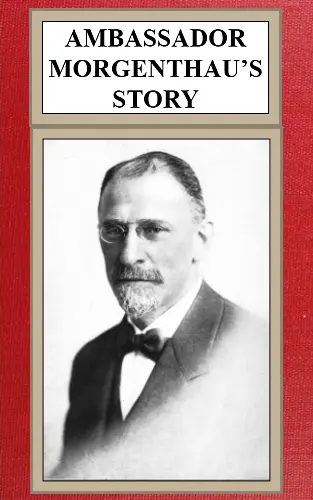
THE CLASSIC COLLECTION · 1918
"Ambassador Morgenthau's Story" by Henry Morgenthau is a memoir published in 1918. The former U.S. Ambassador to the Ottoman Empire recounts his experiences from 1913 to 1916, documenting German-Ottoman relations during World War I. The book serves as a primary source on the Armenian genocide, revealing his conversations with Ottoman leaders who dismissed early reports of atrocities. Unable to secure official U.S. intervention, Morgenthau drew international attention to the unfolding genocide and organized private relief efforts.
Introduction adapted from the source catalogue; source summaries may be automatically generated.
Free to read · English · 111,991 words · No account needed
MAKE TIME FOR A GOOD BOOK
On by default. Untick to stop anonymous reading totals. Each page counts after 10 seconds in view. How this works.
Anonymous counting is on unless you have switched it off.
When the Turkish Government abrogated the Capitulations, and in this way freed themselves from the domination of the foreign powers, they were merely taking one step toward realizing this Pan-Turkish ideal. I have alluded to the difficulties which I had with them over the Christian schools. Their determination to uproot these, or at least to transform them into Turkish institutions, was merely another detail in the same racial progress. Similarly, they attempted to make all foreign business houses employ only Turkish labour, insisting that they should discharge their Greek, Armenian, and Jewish clerks, stenographers, workmen, and other employees. They ordered all foreign houses to keep their books in Turkish; they wanted to furnish employment for Turks, and enable them to acquire modern business methods. The Ottoman Government even refused to have any dealings with the representative of the largest Austrian munition maker unless he admitted a Turk as a partner. They developed a mania for suppressing all languages except Turkish. For decades French had been the accepted language of foreigners in Constantinople; most street signs were printed in both French and Turkish. One morning the astonished foreign residents discovered that all these French signs had been removed and that the names of streets, the directions on street cars, and other public notices, appeared only in those strange Turkish characters, which very few of them understood. Great confusion resulted from this change, but the ruling powers refused to restore the detested foreign language.
These leaders not only reverted to the barbaric conceptions of their ancestors, but they went to extremes that had never entered the minds of the early sultans. Their fifteenth and sixteenth century predecessors treated the subject peoples as dirt under their feet, yet they believed that they had a certain usefulness and did not disdain to make them their slaves. But this Committee of Union and Progress, led by Talaat and Enver, now decided to do away with them altogether. The old conquering Turks had made the Christians their servants, but their parvenu descendants bettered their instruction, for they determined to exterminate them wholesale and Turkify the empire by massacring the non-Moslem elements. Originally this was not the statesmanlike conception of Talaat and Enver; the man who first devised it was one of the greatest monsters known to history, the “Red Sultan,” Abdul Hamid. This man came to the throne in 1876, at a critical period in Turkish history. In the first two years of his reign, he lost Bulgaria as well as important provinces in the Caucasus, his last remaining vestiges of sovereignty in Montenegro, Serbia, and Rumania, and all his real powers in Bosnia and Herzegovina. Greece had long since become an independent nation, and the processes that were to wrench Egypt from the Ottoman Empire had already begun. As the Sultan took stock of his inheritance, he could easily foresee the day when all the rest of his domain would pass into the hand of the infidel. What had caused this disintegration of this extensive Turkish Empire? The real cause, of course, lay deep in the character of the Turk, but Abdul Hamid saw only the more obvious fact that the intervention of the great European Powers had brought relief to these imprisoned nations. Of all the new kingdoms which had been carved out of the Sultan’s dominions, Serbia--let us remember this fact to her everlasting honour--is the only one that has won her own independence. Russia, France, and Great Britain have set free all the rest. And what had happened several times before might happen again. There still remained one compact race in the Ottoman Empire that had national aspirations and national potentialities. In the northeastern part of Asia Minor, bordering on Russia, there were six provinces in which the Armenians formed the largest element in the population. From the time of Herodotus this portion of Asia has borne the name of Armenia. The Armenians of the present day are the direct descendants of the people who inhabited the country three thousand years ago. Their origin is so ancient that it is lost in fable and mystery. There are still undeciphered cuneiform inscriptions on the rocky hills of Van, the largest Armenian city, that have led certain scholars--though not many, I must admit--to identify the Armenian race with the Hittites of the Bible. What is definitely known about the Armenians, however, is that for ages they have constituted the most civilized and most industrious race in the eastern section of the Ottoman Empire. From their mountains they have spread over the Sultan’s dominions, and form a considerable element in the population of all the large cities. Everywhere they are known for their industry, their intelligence, and their decent and orderly lives. They are so superior to the Turks intellectually and morally that much of the business and industry had passed into their hands. With the Greeks, the Armenians constitute the economic strength of the empire. These people became Christians in the fourth century and established the Armenian Church as their state religion. This is said to be the oldest Christian Church in existence.
Your reading position is saved on this browser. Take it to another device with a library code. Reading pages adapt to text, rather than matching a printed edition.
Henry Morgenthau & French Strother
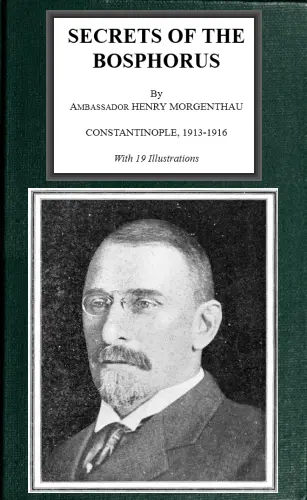
Henry Morgenthau
BEHIND THE BOOK
This eBook is for the use of anyone anywhere in the United States and most other parts of the world at no cost and with almost no restrictions whatsoever. You may copy it, give it away or re-use it under the terms of the Project Gutenberg License included with this eBook or online at www.gutenberg.org. If you are not located in the United States, you will have to check the laws of the country where you are located before using this eBook. Read the source licence.
The original source file, including credits and licence, is retained by this library. Request an original-format copy at no charge. Please include the book title and Project Gutenberg identifier #55343.
KEEP YOUR CURIOSITY GOING
Cécile Tormay

Moritz Busch
John L. Ransom
Frances Wright
Cécile Tormay

Mabel Potter Daggett