
All in a Life-time
Henry Morgenthau & French Strother
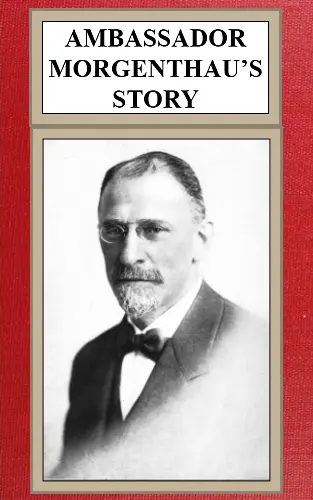
THE CLASSIC COLLECTION · 1918
"Ambassador Morgenthau's Story" by Henry Morgenthau is a memoir published in 1918. The former U.S. Ambassador to the Ottoman Empire recounts his experiences from 1913 to 1916, documenting German-Ottoman relations during World War I. The book serves as a primary source on the Armenian genocide, revealing his conversations with Ottoman leaders who dismissed early reports of atrocities. Unable to secure official U.S. intervention, Morgenthau drew international attention to the unfolding genocide and organized private relief efforts.
Introduction adapted from the source catalogue; source summaries may be automatically generated.
Free to read · English · 111,991 words · No account needed
MAKE TIME FOR A GOOD BOOK
On by default. Untick to stop anonymous reading totals. Each page counts after 10 seconds in view. How this works.
Anonymous counting is on unless you have switched it off.
Imagine a great government year in and year out maintaining this attitude toward many millions of its own subjects! And for centuries the Turks simply lived like parasites upon these overburdened and industrious people. They taxed them to economic extinction, stole their most beautiful daughters and forced them into their harems, took Christian male infants by the hundreds of thousands and brought them up as Moslem soldiers. I have no intention of describing the terrible vassalage and oppression that went on for five centuries; my purpose is merely to emphasize this innate attitude of the Moslem Turk to people not of his own race and religion--that they are not human beings with rights, but merely chattels, which may be permitted to live when they promote the interest of their masters, but which may be pitilessly destroyed when they have ceased to be useful. This attitude is intensified by a total disregard for human life and an intense delight in inflicting physical human suffering which are not unusually the qualities of primitive peoples.
Such were the mental characteristics of the Turk in his days of military greatness. In recent times his attitude toward foreigners and his subject peoples had superficially changed. His own military decline and the ease with which the infidel nations defeated his finest armies had apparently given the haughty descendants of Osman a respect at least for their prowess. The rapid disappearance of his own empire in a hundred years, the creation out of the Ottoman Empire of new states like Greece, Serbia, Bulgaria, and Rumania, and the wonderful improvement which had followed the destruction of the Turkish yoke in these benighted lands, may have increased the Ottoman hatred for the unbeliever, but at least they had a certain influence in opening his eyes to his importance. Many Turks also now received their education in European universities; they studied in their professional schools, and they became physicians, surgeons, lawyers, engineers, and chemists of the modern kind. However much the more progressive Moslems might despise their Christian associates, they could not ignore the fact that the finest things, in this temporal world at least, were the products of European and American civilization. And now that one development of modern history which seemed to be least understandable to the Turk began to force itself upon the consciousness of the more intelligent and progressive. Certain leaders arose who began to speak surreptitiously of such things as “Constitutionalism,” “Liberty,” “Self-government,” and to whom the Declaration of Independence contained certain truths that might have a value even for Islam. These daring spirits began to dream of overturning the autocratic Sultan and of substituting a parliamentary system for his irresponsible rule. I have already described the rise and fall of this Young Turk movement under such leaders as Talaat, Enver, Djemal, and their associates in the Committee of Union and Progress. The point which I am emphasizing here is that this movement presupposed a complete transformation of Turkish mentality, especially in its attitude toward subject peoples. No longer, under the reformed Turkish state, were Greeks, Syrians, Armenians, and Jews to be regarded as “filthy giaours.” All these peoples were henceforth to have equal rights and equal duties. A general love feast now followed the establishment of the new régime, and scenes of almost frenzied reconciliation, in which Turks and Armenians embraced each other publicly, apparently signalized the absolute union of the long antagonistic peoples. The Turkish leaders, including Talaat and Enver, visited Christian churches and sent forth prayers of thanksgiving for the new order, and went to Armenian cemeteries to shed tears of retribution over the bones of the martyred Armenians who lay there. Armenian priests reciprocally paid their tributes to the Turks in Mohammedan mosques. Enver Pasha visited several Armenian schools, telling the children that the old days of Moslem-Christian strife had passed forever and that the two peoples were now to live together as brothers and sisters. There were cynics who smiled at all these demonstrations and yet one development encouraged even them to believe that an earthly paradise had arrived. All through the period of domination only the master Moslem had been permitted to bear arms and serve in the Ottoman army. To be a soldier was an occupation altogether too manly and glorious for the despised Christian. But now the Young Turks encouraged all Christians to arm, and enrolled them in the army on an equality with Moslems. These Christians fought, both as officers and soldiers, in the Italian and the Balkan wars, winning high praise from the Turkish generals for their valour and skill. Armenian leaders had figured conspicuously in the Young Turk movement; these men apparently believed that a constitutional Turkey was possible. They were conscious of their own intellectual and industrial superiority to the Turks, and knew that they could prosper in the Ottoman Empire if left alone, whereas, under European control, they would have greater difficulty in meeting the competition of the more rigorous European colonists who might come in. With the deposition of the Red Sultan, Abdul Hamid, and the establishment of a constitutional system, the Armenians now for the first time in several centuries felt themselves to be free men.
Your reading position is saved on this browser. Take it to another device with a library code. Reading pages adapt to text, rather than matching a printed edition.
Henry Morgenthau & French Strother
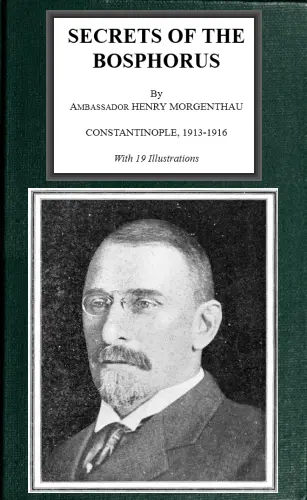
Henry Morgenthau
BEHIND THE BOOK
This eBook is for the use of anyone anywhere in the United States and most other parts of the world at no cost and with almost no restrictions whatsoever. You may copy it, give it away or re-use it under the terms of the Project Gutenberg License included with this eBook or online at www.gutenberg.org. If you are not located in the United States, you will have to check the laws of the country where you are located before using this eBook. Read the source licence.
The original source file, including credits and licence, is retained by this library. Request an original-format copy at no charge. Please include the book title and Project Gutenberg identifier #55343.
KEEP YOUR CURIOSITY GOING
Cécile Tormay

Moritz Busch
John L. Ransom
Frances Wright
Cécile Tormay

Mabel Potter Daggett