
Dark Hester
Anne Douglas Sedgwick
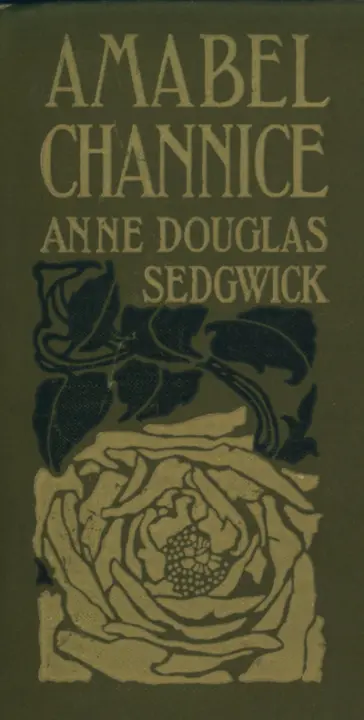
THE CLASSIC COLLECTION · 1908
"Amabel Channice" by Anne Douglas Sedgwick is a novel written in the early 20th century. The story focuses on Lady Amabel Channice, a woman grappling with her past choices, including a troubled marriage and a pursuit of peace in her rural surroundings. Key characters include Lady Channice herself and her son, Augustine, as they navigate their complex family dynamics and the lingering shadows of her earlier life. The opening of the narrative introduces Lady Channice, anxiously waiting for her son Augustine to return from the garden. As she reflects on her home, Charlock House, the depiction of the house and its surroundings sets a somber yet calm tone. Lady Channice engages in light conversation with Augustine about his reading and their shared memories, but beneath the surface lies a palpable tension regarding their relationship with her estranged husband and the implications of her past. Their interactions reveal the emotional weight both characters carry, hinting at deeper themes of loneliness, societal expectations, and the struggle for personal fulfillment.
Introduction adapted from the source catalogue; source summaries may be automatically generated.
Free to read · English · 41,130 words · No account needed
MAKE TIME FOR A GOOD BOOK
On by default. Untick to stop anonymous reading totals. Each page counts after 10 seconds in view. How this works.
Anonymous counting is on unless you have switched it off.
The poor child hovered, wailing, delivered over to vague, unseen sorrow, and, though a tiny infant, it seemed to be Paul Quentin, too, in some dreadful plight, appealing to her in the name of their dead love to save him. She did not love him; she did not love the child; but her heart seemed broken with impotent pity.
In the intervals of nightmare she could look, furtively, fixedly, about the room. The moon was bright outside, and through the curtains a pallid light showed the menacing forms of the two great wardrobes. The four posts of her bed seemed like the pillars of some vast, alien temple, and the canopy, far above her, floated like a threatening cloud. Opposite her bed, above the chimney-piece, was a deeply glimmering mirror: if she were to raise herself she would see her own white reflection, rising, ghastly.--She hid her face on her pillows and sank again into the abyss.
Next morning she could not get up. Her pulses were beating at fever speed; but, with the daylight, her mind was clearer. She could summon her quiet look when Mrs. Bray came in to ask her mournfully how she was. And a little later a telegram came, from Bertram.
Her trembling hands could hardly open it. She read the words. "All is well." Mrs. Bray stood beside her bed. She meant to keep that quiet look for Mrs. Bray; but she fainted. Mrs. Bray, while she lay tumbled among the pillows, and before lifting her, read the message hastily.
From the night of torment and the shock of joy, Amabel brought an extreme susceptibility to emotion that showed itself through all her life in a trembling of her hands and frame when any stress of feeling was laid upon her.
After that torment and that shock she saw Bertram once, and only once, again;--ah, strange and sad in her memory that final meeting of their lives, though this miraculous news was the theme of it. She was still in bed when he came, the bed she did not leave for months, and, though so weak and dizzy, she understood all that he told her, knew the one supreme fact of her husband's goodness. He sent her word that she was to be troubled about nothing; she was to take everything easily and naturally. She should always have her child with her and it should bear his name. He would see after it like a father; it should never know that he was not its father. And, as soon as she would let him, he would come and see her--and it. Amabel, lying on her pillows, gazed and gazed: her eyes, in their shadowy hollows, were two dark wells of sacred wonder. Even Bertram felt something of the wonder of them. In his new gladness and relief, he was very kind to her. He came and kissed her. She seemed, once more, a person whom one could kiss. "Poor dear," he said, "you have had a lot to bear. You do look dreadfully ill. You must get well and strong, now, Amabel, and not worry any more, about anything. Everything is all right. We will call the child Augustine, if it's a boy, after mother's father you know, and Katherine, if it's a girl, after her mother: I feel, don't you, that we have no right to use their own names. But the further away ones seem right, now. Hugh is a trump, isn't he? And, I'm sure of it, Amabel, when time has passed a little, and you feel you can, he'll have you back; I do really believe it may be managed. This can all be explained. I'm saying that you are ill, a nervous breakdown, and are having a complete rest."
Your reading position is saved on this browser. Take it to another device with a library code. Reading pages adapt to text, rather than matching a printed edition.
Anne Douglas Sedgwick
Anne Douglas Sedgwick

Anne Douglas Sedgwick

Anne Douglas Sedgwick
BEHIND THE BOOK
This eBook is for the use of anyone anywhere in the United States and most other parts of the world at no cost and with almost no restrictions whatsoever. You may copy it, give it away or re-use it under the terms of the Project Gutenberg License included with this eBook or online at www.gutenberg.org. If you are not located in the United States, you will have to check the laws of the country where you are located before using this eBook. Read the source licence.
The original source file, including credits and licence, is retained by this library. Request an original-format copy at no charge. Please include the book title and Project Gutenberg identifier #28631.
KEEP YOUR CURIOSITY GOING
Coulson Kernahan

Maurice Baring
Frances Wright
Cécile Tormay

Frederic Jesup Stimson

W. H. P. (William Henry Pope) Jarvis