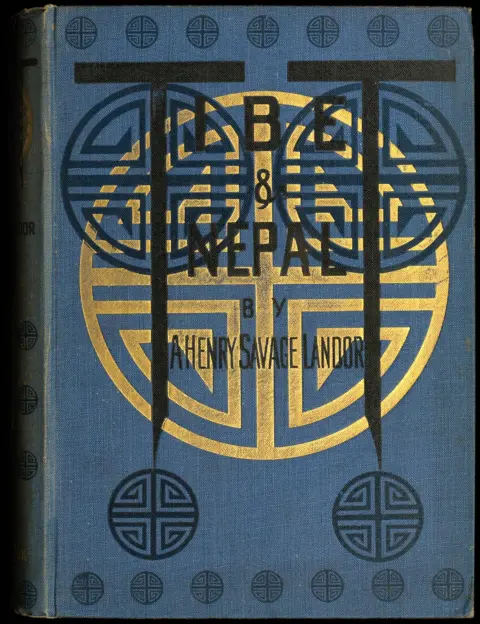
Tibet & Nepal
Arnold Henry Savage Landor
THE CLASSIC COLLECTION · 1893
"Alone with the Hairy Ainu" by A. H. Savage Landor is a travel memoir written in the late 19th century. This engaging narrative chronicles the author's extraordinary journey across Hokkaido, Japan, delving into the customs and lifestyle of the Ainu people, who are described as "hairy men." Landor's observations and experiences aim to contribute to the fields of anthropology and ethnology, offering a unique perspective on a culture that was little understood at the time. At the start of the memoir, the author reflects on his motivations for undertaking the arduous journey alone, which combined a desire for adventure and personal insight. After arriving in Hakodate, he quickly learns of the challenges that await him, including difficult terrain and minimal accommodations. As he encounters the Ainu in their villages, he describes their living conditions, customs, and practices—often with a mix of fascination and repulsion. His initial interactions with the Ainu are marked by cultural misunderstandings, particularly surrounding his artistic endeavors, which lead to humorous and sometimes dangerous situations. This opening portion sets the stage for a deeper exploration of Ainu culture, as Landor embarks on a journey filled with personal anecdotes, vivid descriptions, and insightful commentary.
Introduction adapted from the source catalogue; source summaries may be automatically generated.
Free to read · English · 109,525 words · No account needed
MAKE TIME FOR A GOOD BOOK
On by default. Untick to stop anonymous reading totals. Each page counts after 10 seconds in view. How this works.
Anonymous counting is on unless you have switched it off.
It must not be argued that because they have no religion the Ainu are bad people. They are far from it. They are decidedly not moral, for nothing is immoral among them. The Ainu must be considered more as animals than as human beings. When we speak of a dog, we do not ask whether it is a moral dog, but only if it is a good dog. The same can be said of the Ainu. We cannot compare them to ourselves, nor judge them by our own standard of morality. Taken by themselves they are gentle, kind, brave, and above everything they are simple. Their language, manners, customs, arts, habits, as we have seen, are the very simplest and rudest possible. Thus, it is absurd to suppose that such simple brains could entertain high religious ideas. If they had brains enough to compass high religious beliefs they would long ago have used those brains in bettering their miserable condition and filthy mode of living. They would have striven to make the beginnings of a history and a literature, or at least to have devised or adopted some mode of writing with which they could preserve these high ideas, and pass them on from generation to generation. Even their language is so poor in words as to hardly express their everyday wants. The Ainu are low in the scale of humanity. They have always been low; they have not sunk, for they have never risen. They have never done any harm in this world, and they will never do any good.
The Ainu are without laws, which, paradoxical as it sounds, to a great extent makes them good. People are never so good as when no harm can be done. There are indeed few crimes among them; no voluntary infanticides; very very rarely murders; no suicides; little theft, and as little treachery among people of the same tribe. Though usually retiring and reserved, they are hospitable on special occasions, and generous with what little they possess. The young show an instinctive reverence for the aged, without considering it a virtue or a duty. Cowardice is despised by the Ainu, but courage, endurance of pain, and hardship, drunkenness, and similar qualities, are looked on as the chief virtues in men. Punishments are seldom inflicted by Ainu on any of their tribesmen, and the crime must indeed be great to raise the whole community against the criminal. If by rare chance some great evil has been done, the chief of the village and all the men assemble, and decide on the punishment to be inflicted. Flogging is the general punishment for the lesser crimes, which, according to Ainu ideas, are theft and assault. The murder of a tribesman is sometimes punished by cutting the tendons of the hands and feet of the murderer, thus disabling him from hunting or fishing. If, however, the man murdered was of another tribe, or a Japanese, this Draconian kind of justice is not administered. Quarrels among tribesmen are settled by private retribution, and no one interferes either one way or the other. These quarrels, however, very seldom occur, as the Ainu are naturally a peaceful people. Imprisonment does not exist, for the simple reason that the Ainu have no prisons. They do not know what a prison is; neither is capital punishment practised by them. According to their own ideas they are not cruel to children, for we seldom see them wilfully ill-treating them; but according to civilised notions Ainu women make shockingly bad mothers. They love, but they do not look after, nor practically take care of, their little ones after these are about a year and a half old; and as to washing them, combing their hair, educating them, or trying to cure them of the thousand and one wretched skin diseases, which come chiefly by their own neglect, an Ainu mother puts her hand to these things no more than the men put theirs to the building of a temple or the creation of a literature. This neglect is not with them, as it would be with us, an intolerable crime, but is the natural result of their animal instinct as contradistinguished from rational development. For if a baby is not old enough at one and a half years of age to take care of himself, he is of no good as an Ainu. It is needless to add that, in these circumstances, most of them are of no good, and that the percentage of infantile deaths is appalling to a civilised mind.
Your reading position is saved on this browser. Take it to another device with a library code. Reading pages adapt to text, rather than matching a printed edition.
Arnold Henry Savage Landor
Arnold Henry Savage Landor
Arnold Henry Savage Landor
Arnold Henry Savage Landor
BEHIND THE BOOK
This eBook is for the use of anyone anywhere in the United States and most other parts of the world at no cost and with almost no restrictions whatsoever. You may copy it, give it away or re-use it under the terms of the Project Gutenberg License included with this eBook or online at www.gutenberg.org. If you are not located in the United States, you will have to check the laws of the country where you are located before using this eBook. Read the source licence.
The original source file, including credits and licence, is retained by this library. Request an original-format copy at no charge. Please include the book title and Project Gutenberg identifier #37873.
KEEP YOUR CURIOSITY GOING
Wilfrid Scawen Blunt
Wilfrid Scawen Blunt

E. W. (Edgar Watson) Howe
Francis Greenleaf Allinson & Anne C. E. (Anne Crosby Emery) Allinson
Cyrenus Cole

John Martineau