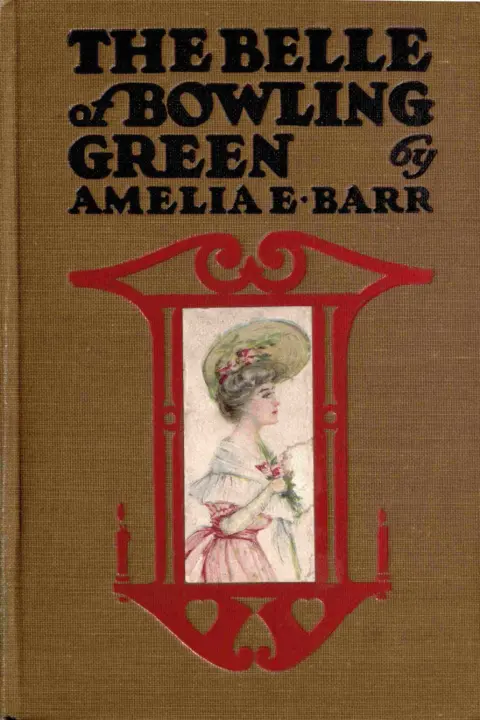
The Belle of Bowling Green
Amelia E. Barr
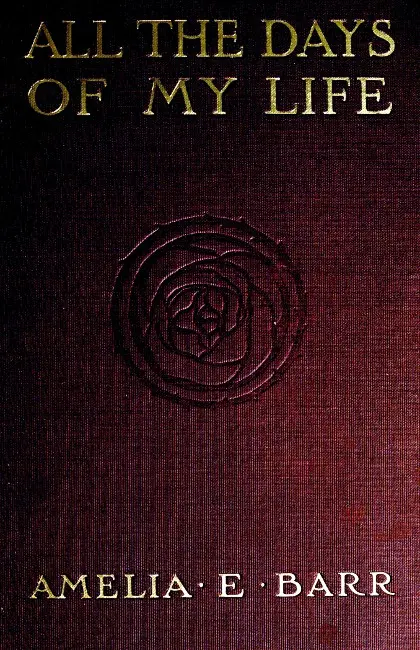
THE CLASSIC COLLECTION · 1913
"All the Days of My Life: An Autobiography" by Amelia E. Barr is an autobiography written in the early 20th century. In this work, Barr chronicles her life from her early childhood in England through her experiences that shaped her perspectives and identity, paying particular attention to her family and the socio-cultural environment of her upbringing. With a strong voice, she aims to recount not only the events of her life but also the underlying emotions, thoughts, and transformations she has undergone. The opening of the autobiography introduces Barr's perspective on writing about herself, acknowledging the personal nature of her narrative while also indicating that it arises from a necessity to clarify misconceptions about her life. She expresses a desire to connect with women who may find strength and comfort in her experiences. As she reflects on her childhood, she conveys vivid memories of her family, early beliefs, and the societal norms surrounding her, all while revealing her spiritual contemplations regarding life, death, and the roles of women. Notably, her rich recollections serve as a means of understanding her development and the challenges she faced, which promise to resonate with readers who value personal journeys and historical contexts within autobiographical literature.
Introduction adapted from the source catalogue; source summaries may be automatically generated.
Free to read · English · 194,380 words · No account needed
MAKE TIME FOR A GOOD BOOK
On by default. Untick to stop anonymous reading totals. Each page counts after 10 seconds in view. How this works.
Anonymous counting is on unless you have switched it off.
"Our wisest men have decided, that a certain form of teaching called the Stowe method, will be best for the class of children we wish to reach; and this method is taught in the Normal School at Glasgow, where we have now nearly forty young men and women studying it. Now, Amelia, if you will go to Glasgow to learn this method, I will promise you a good school, and a good salary, and you could bring your father and mother to wherever you are located, and make your homes together."
Then with the daring decision of young fresh faculties, I cried out, "O Dr. Farrar! I should like that better than anything else."
"The children may be mostly poor children," he added.
"I used to long to be a missionary. I can call it a mission work. Oh, I should enjoy it! But--" and I looked doubtfully at him--"but this course of instruction, will it cost much money?" I asked.
"Our Board of Education will look after that," he answered. "They pay the Normal School so much for every pupil, and they will also give you one pound every week for your rooms and food. You can live on that, I should say?"
"Very well indeed."
"The Board will also allow you five pounds for traveling expenses,
but----"
"Yes, Dr. Farrar, but what?"
"When you have won your diploma, and have been appointed to a school, the Board will expect you to gradually pay back what it spends for your education."
"That is right," I answered. "I should like to pay it back, but if I should die, would my father have to pay it for me?"
"No, no, child! Death pays all debts. You are more likely to marry,
than to die."
"And what then, Doctor?"
"If you marry well, the Board will not count its loss in your gain."
We talked over this subject thoroughly, and I assured him of my perfect satisfaction, and even pleasure, in the proposition. "If that is so," he said, "go and pack your trunk, take it in the morning to the Easton Square Railway Station, and leave it in the baggage room; then come to me at this address," and he wrote a few lines for my direction. "The Board meets there to-morrow at ten o'clock to examine applicants, and you will be questioned a little, no doubt, but I think they will not puzzle you."
"Not unless they are grammarians, and ask me to parse a sentence."
As I was leaving he asked, "Have you money enough to take you to
London?"
"I have fourteen shillings," I said. "Miss Berners can give me
nothing."
Your reading position is saved on this browser. Take it to another device with a library code. Reading pages adapt to text, rather than matching a printed edition.
Amelia E. Barr
Amelia E. Barr
Amelia E. Barr
Amelia E. Barr
BEHIND THE BOOK
This eBook is for the use of anyone anywhere in the United States and most other parts of the world at no cost and with almost no restrictions whatsoever. You may copy it, give it away or re-use it under the terms of the Project Gutenberg License included with this eBook or online at www.gutenberg.org. If you are not located in the United States, you will have to check the laws of the country where you are located before using this eBook. Read the source licence.
The original source file, including credits and licence, is retained by this library. Request an original-format copy at no charge. Please include the book title and Project Gutenberg identifier #35706.
KEEP YOUR CURIOSITY GOING
John L. Ransom

Herman W. Mudgett

Harriet Monroe
Daniel Dulany Addison
Charles Lanman

Harold Rosher