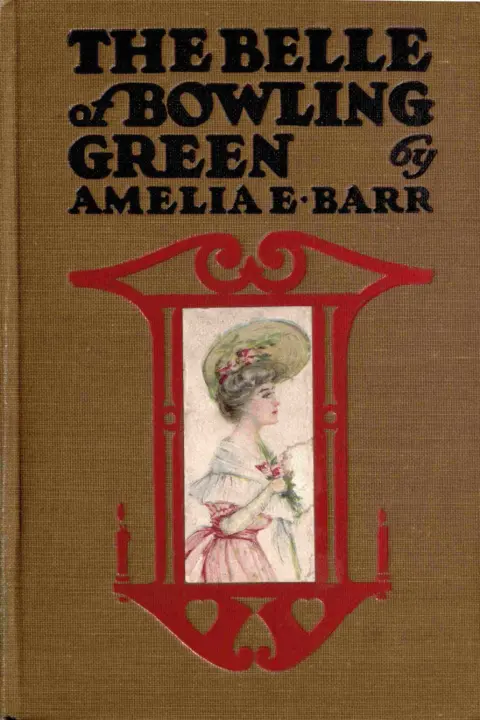
The Belle of Bowling Green
Amelia E. Barr
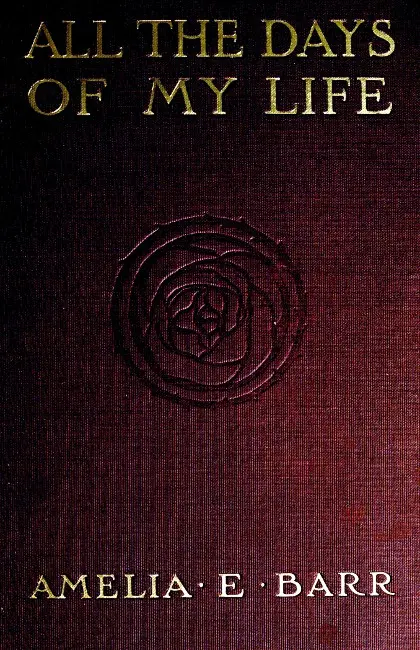
THE CLASSIC COLLECTION · 1913
"All the Days of My Life: An Autobiography" by Amelia E. Barr is an autobiography written in the early 20th century. In this work, Barr chronicles her life from her early childhood in England through her experiences that shaped her perspectives and identity, paying particular attention to her family and the socio-cultural environment of her upbringing. With a strong voice, she aims to recount not only the events of her life but also the underlying emotions, thoughts, and transformations she has undergone. The opening of the autobiography introduces Barr's perspective on writing about herself, acknowledging the personal nature of her narrative while also indicating that it arises from a necessity to clarify misconceptions about her life. She expresses a desire to connect with women who may find strength and comfort in her experiences. As she reflects on her childhood, she conveys vivid memories of her family, early beliefs, and the societal norms surrounding her, all while revealing her spiritual contemplations regarding life, death, and the roles of women. Notably, her rich recollections serve as a means of understanding her development and the challenges she faced, which promise to resonate with readers who value personal journeys and historical contexts within autobiographical literature.
Introduction adapted from the source catalogue; source summaries may be automatically generated.
Free to read · English · 194,380 words · No account needed
MAKE TIME FOR A GOOD BOOK
On by default. Untick to stop anonymous reading totals. Each page counts after 10 seconds in view. How this works.
Anonymous counting is on unless you have switched it off.
In March and April of 1883 I wrote one of the most interesting of all my Scotch novels. I began it on March twenty-fifth, and finished it on the thirtieth of April. I worked on it nine hours every day excepting four days when I only wrote eight hours. During this same time I wrote the following for Robert Bonner and Harper's:
Mar. 25th. Finished my long paper on famous Irish women and began my novel, "Cluny MacPherson."
Mar. 26th. At home all day writing on "Cluny MacPherson."
Mar. 27th. Ditto.
Mar. 28th. Writing on "Cluny" all morning. Went down to several offices in afternoon. Did nothing in the evening. Had a bad headache.
Mar. 29th. Very sick headache, but wrote "Cato's Song."
Mar. 30th. At the last hour wrote "Two Workers" for Bonner, and he praised it very much, a great thing for him to do.
Mar. 31st. Very sick. Went to the dentist's but could not have
anything done.
April 1st. Wrote an "April Wedding" and worked on "Cluny."
April 2nd. Still sick but on "Cluny," and wrote "The Reconciliation."
April 3rd. All day on "Cluny;" in the evening wrote "Lending a
Hand."
April 4th. All day on "Cluny."
April 5th. All day on "Cluny."
April 6th. All day on "Cluny," but am feeling tired.
April 7th. On "Cluny," very tired. A wet day and Peter Cooper's
funeral.
April 8th. On "Cluny," and wrote a poem called "O Mollie, How I Love
You!"
April 9th. On my novel nine hours.
April 10th. On my novel eight hours.
April 11th. On my novel eight hours.
April 12th. On my novel eight hours, and wrote "Two Ships."
April 13th. On my novel nine hours.
April 14th. On my novel eight hours.
April 15th, 16th, 17th. Nine hours each.
April 18th. Very sick.
April 19th. Wrote "My Pretty Canary" and "The Little Evangel."
April 20th. Wrote nine hours on "Cluny."
April 21st to 28th. I wrote all day long on "Cluny," but managed to write for Harper's a poem called, "A Tap at the Door."
April 29th. On "Cluny," and wrote for Bonner a poem called, "Take
Care."
April 30th. Wrote "A Birthday," finished "Cluny" and took it to Mr.
Rand, of the Tract House.
Eleven days afterwards I saw Mr. Rand, and he told me they were reading proof, and much pleased with the book, and on February seventeenth, A.D. 1884, I received a letter from the Cluny MacPherson, chief of the clan MacPherson, thanking me for such a good picture of the clan life. The letter was dated from Castle Cluny, but the chief himself filled some important office in the Queen's Household.
Your reading position is saved on this browser. Take it to another device with a library code. Reading pages adapt to text, rather than matching a printed edition.
Amelia E. Barr
Amelia E. Barr
Amelia E. Barr
Amelia E. Barr
BEHIND THE BOOK
This eBook is for the use of anyone anywhere in the United States and most other parts of the world at no cost and with almost no restrictions whatsoever. You may copy it, give it away or re-use it under the terms of the Project Gutenberg License included with this eBook or online at www.gutenberg.org. If you are not located in the United States, you will have to check the laws of the country where you are located before using this eBook. Read the source licence.
The original source file, including credits and licence, is retained by this library. Request an original-format copy at no charge. Please include the book title and Project Gutenberg identifier #35706.
KEEP YOUR CURIOSITY GOING
John L. Ransom

Herman W. Mudgett

Harriet Monroe
Daniel Dulany Addison
Charles Lanman

Harold Rosher