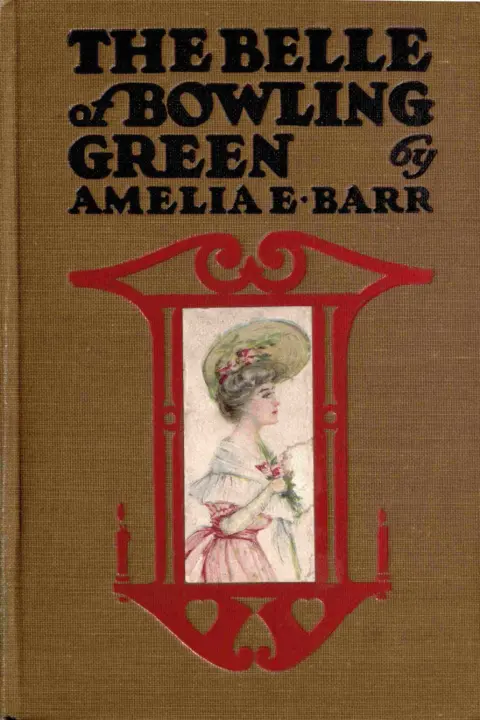
The Belle of Bowling Green
Amelia E. Barr
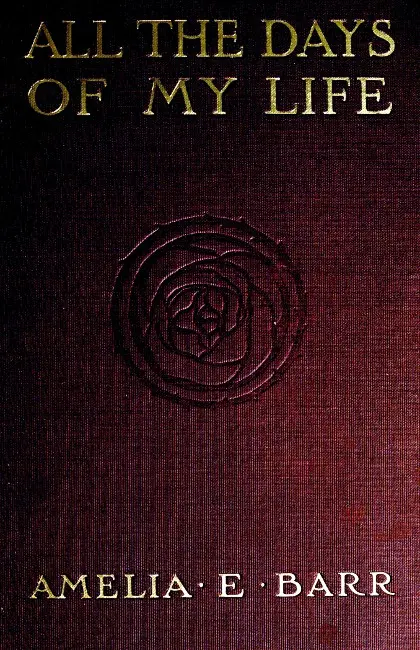
THE CLASSIC COLLECTION · 1913
"All the Days of My Life: An Autobiography" by Amelia E. Barr is an autobiography written in the early 20th century. In this work, Barr chronicles her life from her early childhood in England through her experiences that shaped her perspectives and identity, paying particular attention to her family and the socio-cultural environment of her upbringing. With a strong voice, she aims to recount not only the events of her life but also the underlying emotions, thoughts, and transformations she has undergone. The opening of the autobiography introduces Barr's perspective on writing about herself, acknowledging the personal nature of her narrative while also indicating that it arises from a necessity to clarify misconceptions about her life. She expresses a desire to connect with women who may find strength and comfort in her experiences. As she reflects on her childhood, she conveys vivid memories of her family, early beliefs, and the societal norms surrounding her, all while revealing her spiritual contemplations regarding life, death, and the roles of women. Notably, her rich recollections serve as a means of understanding her development and the challenges she faced, which promise to resonate with readers who value personal journeys and historical contexts within autobiographical literature.
Introduction adapted from the source catalogue; source summaries may be automatically generated.
Free to read · English · 194,380 words · No account needed
MAKE TIME FOR A GOOD BOOK
On by default. Untick to stop anonymous reading totals. Each page counts after 10 seconds in view. How this works.
Anonymous counting is on unless you have switched it off.
But the education by reverence must begin early. Children of very tender years may be taught to wander through those early ages of faith, when God took Enoch, and no one was astonished; when Abraham talked with God as friend with friend; when the marvelous ladder was let down by Jacob's pillow; when Hagar carrying her dying child in the desert saw without surprise the angel of the Lord coming to help her. Nor is there any danger in permitting them to enter that dimmer world lying about childhood, to which Robinson Crusoe and Scheherazade hold the keys. The multiplication table can wait, until the child has been taught to reverence all that is holy, wise and good, and the imagination received its first impulse. So I do not call such events as I have chronicled trifling; indeed, I know that in the formation of my character, they had a wide and lasting influence.
A few days after the fair, Jonathan Greenwood was going to Bradford so he left me at my home as he passed there, and as soon as I came in sight of our house, I saw my sister running to the gate to meet me.
"I have a little brother!" she cried. "I have a little brother,
Amelia."
"Mine, too," I asserted; and she answered, "Yes, I dare say."
"Is he nice?" I asked.
"Middling nice. You should see how everyone goes on about him."
"My word!" cried Jonathan, "you girls will be nobodies now. But, I
shall stick by you, Milly."
"Yes," I answered dubiously, for I had learned already that little girls were of much less importance than little boys. So I shook my head, and gave Jonathan's promise a doubtful "yes."
"Tell Ann Oddy," he said, "that I will be in for a cup of tea at five o'clock." Then he drove away, and Jane and I walked slowly up the garden path together.
"Father called him John Henry, first thing," said Jane, "and Mother is proud of him, as never was."
"I want to see him," I answered. "Let us go to the children's room."
"He is in Mother's room, and Mother is sick in bed, and Ann is so busy
with the boy, she forgot my breakfast, so I had breakfast with
Father."
"Breakfast with Father! Never!"
"Yes, indeed, and dinner, too, for three days now. Perhaps as you have come home, Ann will remember that girls need something for breakfast. Father wasn't pleased at her forgetting me."
"What did she say?"
She said, "Mr. Huddleston, I cannot remember everything, and the Mistress and the little lad do come first, I should say."
"Was Father angry?" I asked.
Your reading position is saved on this browser. Take it to another device with a library code. Reading pages adapt to text, rather than matching a printed edition.
Amelia E. Barr
Amelia E. Barr
Amelia E. Barr
Amelia E. Barr
BEHIND THE BOOK
This eBook is for the use of anyone anywhere in the United States and most other parts of the world at no cost and with almost no restrictions whatsoever. You may copy it, give it away or re-use it under the terms of the Project Gutenberg License included with this eBook or online at www.gutenberg.org. If you are not located in the United States, you will have to check the laws of the country where you are located before using this eBook. Read the source licence.
The original source file, including credits and licence, is retained by this library. Request an original-format copy at no charge. Please include the book title and Project Gutenberg identifier #35706.
KEEP YOUR CURIOSITY GOING
John L. Ransom

Herman W. Mudgett

Harriet Monroe
Daniel Dulany Addison
Charles Lanman

Harold Rosher