Fighting Germany’s Spies
French Strother
THE CLASSIC COLLECTION · 1921
"All in a Life-time" by Henry Morgenthau and French Strother is a memoir written in the early 20th century. The book chronicles the life experiences of Henry Morgenthau, providing insights into his personal journey from a childhood in Germany to becoming a prominent figure in American society, particularly during significant political events. The narrative explores Morgenthau's early years, his education, and his entry into various professional fields, including law and real estate, as well as his reflections on American culture and the immigrant experience. The opening of the memoir introduces readers to Morgenthau's childhood in Mannheim, Germany, where he describes the idyllic life and rich cultural experiences that shaped his early years. Recounting stories of family, education, and community, he poignantly reflects on the simplicity and contentment of his upbringing. However, a shift occurs when his family decides to emigrate to America due to economic challenges, leading to their adventurous journey across the Atlantic. The narrative sets the stage for Morgenthau’s transitions, detailing his initial impressions of America as he embarks on a quest for opportunity and a better future.
Introduction adapted from the source catalogue; source summaries may be automatically generated.
Free to read · English · 146,028 words · No account needed
MAKE TIME FOR A GOOD BOOK
On by default. Untick to stop anonymous reading totals. Each page counts after 10 seconds in view. How this works.
Anonymous counting is on unless you have switched it off.
The difficulties inherent in this situation can be cured only at the source. The League of Nations, when it comes into being, must not operate exclusively through a central agency at Geneva, because it cannot learn in that way the real difficulties and the wants of dependent peoples. That can be done only in the most direct way, through representatives on the spot. The people, moreover, want to be heard. They are wonderfully relieved after they have had their say. That fact has its touch of pathos, perhaps to some a touch of the ridiculous; but it is a factor of the human equation which we cannot afford to ignore. And if we supply American tribunals, disinterested and just, before which these peoples can state their grievances and their aspirations, we will have taken a long step toward their pacification and stabilization.
Abdul Hamid, kept prisoner, 184
Abraham & Straus, incident of formation of firm, 34
Adler, Dr. Cyrus, objects to Jew serving on commission
to investigate Polish pogroms, 353
Adler, Dr. Felix, leader of a new movement, 95, 129
Admission to the Bar, 29
Adrianople, Governor of, hospitable reception given by, 192
Agincourt, visit to ancient battleground, 266
Albright, Charles P., 26
Alexander, Andrew, building erected for, 55
Alexander, James W., fights to retain control of Equitable Insurance Co., 80
Alexandria, visit to, 219
Algef, Dr., 15
Ali Kuli Khan, at Peace Conference, 326
Ali Mehemmid, visit to, 223
Allen, Edward W., at Roosevelt’s fusion meeting, 280
Alter, Rabbi, visit to, near Warsaw, 374
America’s true mission in Turkey, 203
American Chamber of Commerce for the Levant, speech at, 198
American troops, arrival in France, restores flagging energy of the people,
256;
visit to, on British front, 266;
Sir Douglas Haig’s impressions of, 273
Anderson, Charles P., sails for International Red Cross Conference, 310; in conference with Henry P. Davison, 313
Anderson, U. S. District Attorney, sends deputies to New Hampshire to enforce election laws, 246
Arabian night, arranged by Governor of Nabulus, 231
Arif Pasha, 224
Armenia, report on, 337
Armistice, earlier than expected, 299
Armstrong Committee, the Insurance investigation, 64, 66, 71
Arnold, Olney, Consular Agent at Cairo, 219, 220
Aronstam, Charles S. account of Roosevelt’s forming fusion
ticket for New York municipal election, 280;
tenders nomination for President of Board of Aldermen, 281;
declined, 282
Arthur of Connaught, Prince, met on British front, 269
Atterbury, Gen. W. W., asked to accept Director-Generalship of Associated National Red Cross, 318
Askenazy, pronounced Assimilator, 366
Astor, John Jacob, dealings with, 46
Astor, William Waldorf, 46;
real estate transactions with, 54, 55
Aupin, Count, meeting with, 330
Baker, Elbert H., prophesies Wilson would carry Ohio by large majority, 245
Baker, J. E., takes party of labour leaders to British front, 267
Baker, Newton D., assures committee of high Democratic majority in Ohio, 245; letter declining to speak for League to Enforce Peace, 300
Baker, Ray Stannard, at Peace Conference, 324
Your reading position is saved on this browser. Take it to another device with a library code. Reading pages adapt to text, rather than matching a printed edition.
French Strother
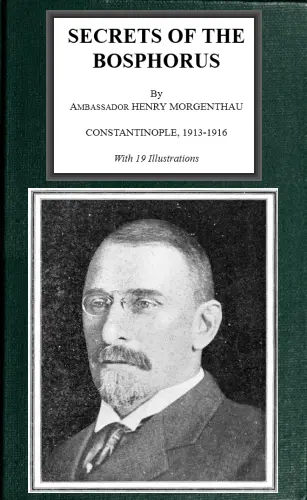
Henry Morgenthau
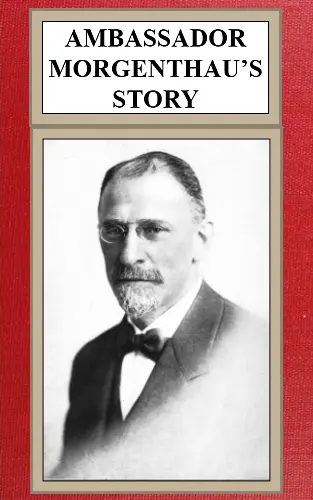
Henry Morgenthau
BEHIND THE BOOK
This eBook is for the use of anyone anywhere in the United States and most other parts of the world at no cost and with almost no restrictions whatsoever. You may copy it, give it away or re-use it under the terms of the Project Gutenberg License included with this eBook or online at www.gutenberg.org. If you are not located in the United States, you will have to check the laws of the country where you are located before using this eBook. Read the source licence.
The original source file, including credits and licence, is retained by this library. Request an original-format copy at no charge. Please include the book title and Project Gutenberg identifier #63538.
KEEP YOUR CURIOSITY GOING
Cécile Tormay

Moritz Busch
John L. Ransom
Frances Wright
Cécile Tormay

Mabel Potter Daggett