Fighting Germany’s Spies
French Strother
THE CLASSIC COLLECTION · 1921
"All in a Life-time" by Henry Morgenthau and French Strother is a memoir written in the early 20th century. The book chronicles the life experiences of Henry Morgenthau, providing insights into his personal journey from a childhood in Germany to becoming a prominent figure in American society, particularly during significant political events. The narrative explores Morgenthau's early years, his education, and his entry into various professional fields, including law and real estate, as well as his reflections on American culture and the immigrant experience. The opening of the memoir introduces readers to Morgenthau's childhood in Mannheim, Germany, where he describes the idyllic life and rich cultural experiences that shaped his early years. Recounting stories of family, education, and community, he poignantly reflects on the simplicity and contentment of his upbringing. However, a shift occurs when his family decides to emigrate to America due to economic challenges, leading to their adventurous journey across the Atlantic. The narrative sets the stage for Morgenthau’s transitions, detailing his initial impressions of America as he embarks on a quest for opportunity and a better future.
Introduction adapted from the source catalogue; source summaries may be automatically generated.
Free to read · English · 146,028 words · No account needed
MAKE TIME FOR A GOOD BOOK
On by default. Untick to stop anonymous reading totals. Each page counts after 10 seconds in view. How this works.
Anonymous counting is on unless you have switched it off.
It was settled most unexpectedly. During my attendance at Law School, Abraham Goldsmith, Wilbur Larremore, son of Judge Larremore, and I used to hold weekly quizzes at my house. In that way I had renewed my friendship with Goldsmith, who had been my classmate in the City College. One evening, early in December, 1878, Goldsmith called and informed me that Samson Lachman and he contemplated starting a law firm. I had always been very fond of Goldsmith, and Samson Lachman had won my unlimited admiration when I listened to his Commencement Day oration and saw him receive eleven prizes, which were about all that one man could take. Hence, Goldsmith found me very receptive, and before we separated that evening, our partnership was an accomplished fact. We both agreed that Lachman was entitled to head the firm. As Goldsmith expressed indifference as to his position, and as Lachman, Morgenthau & Goldsmith sounded more euphonious, that order was adopted. We agreed to start on January 1, 1879. Our average ages were twenty-three. We hired offices at No. 243 Broadway at an annual rental of $400. Our net receipts for the year 1879 were $1,500.
Our practice, as well as our income, grew steadily, but I shall abstain from relating many details, as most of the matters involved were not of public interest.
A rather interesting affair, because some of the participants are well known to the public, was the dissolution in February, 1893, of the firm of Wechsler & Abraham, of Brooklyn. We represented Wechsler, and William J. Gaynor, afterward Mayor of the City of New York, represented Abraham. Their partnership agreement contained a very peculiar dissolution clause. They were to meet on February 1, 1893, and bid for the business, and a bid was to be final only if the non-bidding partner had failed to increase it during a term of twenty-four hours. When we met, I drew attention to the fact that if we acted under the contract, either side could prolong the matter indefinitely, and recommended that we amend the agreement by reducing the limit to one hour. This was agreed to on condition that both parties would deposit $500,000 as an earnest of their intentions to complete their bid, the unsuccessful bidder to have his check returned to him. Isidor Straus pulled out a certified check of $500,000 and I instructed Wechsler to make out his check. When Wechsler admitted that he did not have that much in the bank, I showed them an underwriting that I had secured from the Guaranty Trust Company and the Title Guarantee & Trust Company, to finance our purchase to the extent of $1,000,000. The auction then proceeded, and both factions were cautiously watching each other. Gaynor, Abraham, and the Strauses several times retired to the other end of the room for conference, Nathan Straus constantly pulling at one of his big cigars and pretending that they had about reached the limit of their bidding. I had arranged definitely with Wechsler that we would bid an amount that would produce $500,000 for the good will of the business. So, finally, when they came within reach of about $100,000 of it, I bid the exact amount that would produce the desired result. They saw what I meant, and, as it turned out, had their last conference, which lasted about ten minutes, and raised us $100. I then informed them that we would take our hour. We (Wechsler, Mr. MacNulty, who was the manager of the store, and myself) went to an adjoining restaurant to discuss the matter. Wechsler devoted fully forty minutes of the hour in trying to persuade me to reduce the fee that he had agreed to pay me. He and I had agreed that if he purchased the property, and we had to complete the financing of it, my firm’s fee was to be $25,000, while if Abraham bought him out, we were to receive $10,000. Wechsler thought we had earned it too quickly, and begged for a reduction. I was absolutely firm and finally told him the story of the dentist who, with his modern methods, had painlessly extracted two teeth for a farmer in two minutes, and when he demanded his fee of $2.50, the exorbitancy of the charge was objected to by the farmer, who stated that when he had his last tooth extracted, the dentist had pulled him around the room for half an hour, and then only charged him 50 cents for all that work. I said to Wechsler that I could have protracted this matter for thirty days, and this delay would have been most injurious to him on account of his diabetic condition. He wanted me to bid another $10,000 so that Abraham would have had to pay the fee, and he would have a net $250,000 for his good will. I was firm in my advice that he was unwise to run the business alone and should not risk securing it. We returned before the hour had expired, got Wechsler’s check back, and his half interest in the business became the property of Isidor and Nathan Straus, for whom Abraham had in reality been bidding. Immediately thereafter they dropped Wechsler’s name and created the well-known firm of Abraham & Straus.
Your reading position is saved on this browser. Take it to another device with a library code. Reading pages adapt to text, rather than matching a printed edition.
French Strother
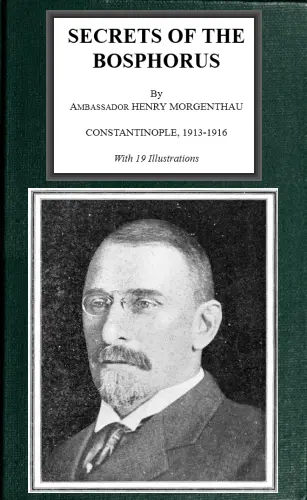
Henry Morgenthau
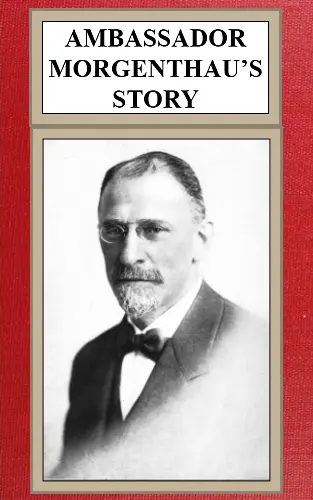
Henry Morgenthau
BEHIND THE BOOK
This eBook is for the use of anyone anywhere in the United States and most other parts of the world at no cost and with almost no restrictions whatsoever. You may copy it, give it away or re-use it under the terms of the Project Gutenberg License included with this eBook or online at www.gutenberg.org. If you are not located in the United States, you will have to check the laws of the country where you are located before using this eBook. Read the source licence.
The original source file, including credits and licence, is retained by this library. Request an original-format copy at no charge. Please include the book title and Project Gutenberg identifier #63538.
KEEP YOUR CURIOSITY GOING
Cécile Tormay

Moritz Busch
John L. Ransom
Frances Wright
Cécile Tormay

Mabel Potter Daggett