THE CLASSIC COLLECTION✦A dead man’s diaryCLASSIC FREE BOOKS
A dead man’s diary
Coulson Kernahan
THE CLASSIC COLLECTION · 1874
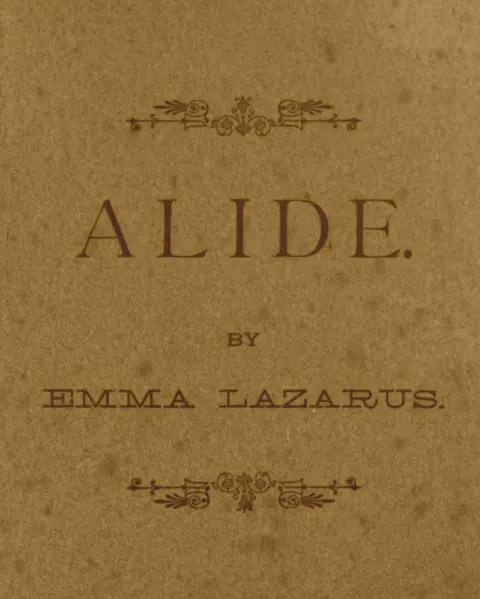
"Alide: An Episode of Goethe's Life" by Emma Lazarus is a novel written in the late 19th century. The story revolves around the young poet Johann Wolfgang von Goethe and his interactions with the Duroc family, particularly focusing on Alide, the charming younger daughter whose spirited nature captivates him. The narrative intertwines elements of Goethe's life with fictionalized accounts of his early romances and social encounters. At the start of the novel, readers are introduced to Dr. Julius Steck, a cover for Goethe, as he ventures to the Duroc household. As he arrives with his friend Max Waldstein, Goethe's vibrant and artistically inclined character is contrasted with the pastoral world of the Durocs, setting up an engaging exploration of his infatuation with Alide. Their initial interactions are filled with warmth and humor, while the family dynamics and picturesque rural setting add depth to the story. The opening sets the scene for a romantic unfolding that highlights not just the charm of young love, but also Goethe's reflective nature and desire to connect with a life beyond the academic, inviting readers into a literary journey rich with emotion and identity.
Introduction adapted from the source catalogue; source summaries may be automatically generated.
Free to read · English · 47,841 words · No account needed
MAKE TIME FOR A GOOD BOOK
On by default. Untick to stop anonymous reading totals. Each page counts after 10 seconds in view. How this works.
Anonymous counting is on unless you have switched it off.
"Do not be foolish, sweetheart," said he, forcing a smile. "Have you never seen me tired before? A night's sleep will bring me up again. Meanwhile, do you sleep sweetly and dream of other things." He kissed her hurriedly for good-night. "Till to-morrow!" he cried, in a cheerful voice, and in a moment he was out of the house. He, on his part, had not remarked the icy chill of those affectionate hands that pressed his own, the unnatural brilliancy of the dilated eyes, the crimson spot of fever that glowed on either cheek, and the burning heat of the smooth white forehead which his lips had lightly touched. It was Madame Duroc who perceived, with a terrible sensation of oppression and anxiety, the unusual appearance of her child, and yet dared not express her sympathy by the slightest emphasis of affection. She felt that whatever trouble Alide was enduring now must be borne alone, and if it were not to pass away its solace must be left to a later period. All night the pious mother was awake, constantly invoking the blessing of Heaven upon the dear young head. She knew that the child of her heart, ill, helpless, and alone, was for the first time learning to suffer.
When Goethe hurried from the Burkhardts' home, there was a tumult in his brain, a heat and fever in his blood, a lassitude in his limbs, which he did not remember to have experienced before. A night's sleep would restore him, he had assured Alide; but when he issued into the soft night-air he said to himself that this was better than to toss uncomfortably upon his pillow, for in his nervously-excited condition sleep was an impossibility. It was past midnight, and the streets were silent and black with shadows, relieved only by the white splendor of the moon that floated high above the house-tops. He walked at a rapid pace, but not in the direction of his lodging. Contrary to his usual habit, he took no note of the beauty of the night, and the quiet, restful appearance of the sleeping town. Overcome by poignant regrets, gloomy self-reproaches, and morose imaginings of the future, he yielded to the influence of a morbid despair. He saw himself faithless to the highest responsibilities of his life. On one side his fate called out, summoning him to an austere and lofty career, to the noblest achievements and the purest rewards; on the other, a clinging, affectionate child held him to the earth, fettered, cramped, and bound with chains of flowers. What was he doing with his youth? To whom was he about to sacrifice the convictions, the activity, of his richest and strongest years of manhood? And yet, whenever the image of that beautiful young face, ennobled as it was by a pure and deep passion, formed itself upon his brain, he felt his heart beat faster and the old yearning and unrest fill his bosom. At that moment all was dark within him,--whether he truly loved, or whether he yielded to a weak, ephemeral fancy; whether he himself was the Goethe of his imagination, or merely an ordinary foolish and capricious young man, stayed entirely by insane ambition and fantastic illusions. He raised his head, and, with a passionate movement, clasped his hands, extended them wide, and let them drop by his sides, in a mute appeal to the mysterious forces of night. He had unconsciously walked towards the river, and the unexpected sight of the smooth black stream with its glittering reflections, and of the immense reach of star-sprinkled sky above, holding in its pale depths the bright, benign face of the moon, awakened him at once from the sombre unreality of his reverie to the beautiful actual world. The exquisite aspect of the June night seemed almost to give a direct answer to the cry of his agitated soul. Sweet and holy influences appeared to descend from those remote heavens upon his head, which he bared as if in prayer. Like the touch of his mother's hand the fitful yet indescribably gentle whiffs of breeze passed caressingly over his brow. He did not try to account for the sudden serenity which filled his breast after its recent turmoil and fever. This was true rest, he said to himself, this conscious repose, so different from the brutish oblivion of sleep. And yet, as the first streaks of dawn broke over the river, he was aware of an aching weariness in his limbs and a chill throughout his frame. He felt as one who has been scourged; his eyes burned, his hands trembled. With a painful effort he hurried to his lodging, flung himself, sick and shivering, upon his bed, and was immediately possessed by the profound sleep of utter exhaustion.
Your reading position is saved on this browser. Take it to another device with a library code. Reading pages adapt to text, rather than matching a printed edition.
BEHIND THE BOOK
This eBook is for the use of anyone anywhere in the United States and most other parts of the world at no cost and with almost no restrictions whatsoever. You may copy it, give it away or re-use it under the terms of the Project Gutenberg License included with this eBook or online at www.gutenberg.org. If you are not located in the United States, you will have to check the laws of the country where you are located before using this eBook. Read the source licence.
The original source file, including credits and licence, is retained by this library. Request an original-format copy at no charge. Please include the book title and Project Gutenberg identifier #69539.
KEEP YOUR CURIOSITY GOING
Coulson Kernahan

Maurice Baring
Frances Wright
Cécile Tormay

Frederic Jesup Stimson

W. H. P. (William Henry Pope) Jarvis