
The Water-Babies
Charles Kingsley
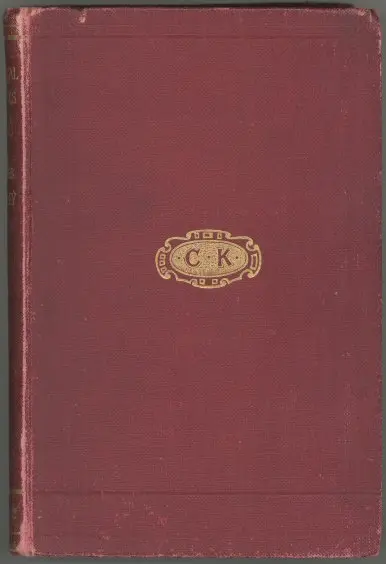
THE CLASSIC COLLECTION · 1854
"Alexandria and Her Schools" by Charles Kingsley is a historical account written in the late 19th century. The work reflects on the intellectual landscape of ancient Alexandria, particularly focusing on its schools of thought, both physical and metaphysical, and how they interacted with the wider historical and cultural contexts of the time. Kingsley aims to present insights into the coherence and organic development of Alexandria’s spiritual history. The beginning of the work introduces the foundational ideas that will guide the exploration of Alexandria's intellectual legacy. Kingsley discusses the selection of the topic and expresses his humble apprehensions about its ambitious scope, while acknowledging contributions from Cambridge, where he received his education. He sets the stage for a deeper examination of Alexandria’s unique blend of philosophy, science, and art, emphasizing the city's both physical evolution and metaphysical significance. He elaborates on the city's development from its creation by Alexander the Great to its role as a vibrant hub of knowledge under the Ptolemies, particularly how these schools influenced the disciplines of mathematics, philosophy, and literature. Overall, the opening lays the groundwork for an exploration of Alexandria as a significant center of learning and cultural exchange in the ancient world.
Introduction adapted from the source catalogue; source summaries may be automatically generated.
Free to read · English · 38,404 words · No account needed
MAKE TIME FOR A GOOD BOOK
On by default. Untick to stop anonymous reading totals. Each page counts after 10 seconds in view. How this works.
Anonymous counting is on unless you have switched it off.
LECTURE II.
THE PTOLEMAIC ERA.
(Continued.)
I SAID in my first Lecture, that even if royal influence be profitable for the prosecution of physical science, it cannot be profitable for art. It can only produce a literary age, as it did in the Ptolemaic era; a generation of innumerable court-poets, artificial epigrammatists, artificial idyllists, artificial dramatists and epicists; above all, a generation of critics. Or rather shall we say, that the dynasty was not the cause of a literary age, but only its correlative? That when the old Greeks lost the power of being free, of being anything but the slaves of oriental despots, as the Ptolemies in reality were, they lost also the power of producing true works of art; because they had lost that youthful vigour of mind from which both art and freedom sprang? Let the case be as it will, Alexandrian literature need not detain us long—though, alas! it has detained every boy who ever trembled over his Greek grammar, for many a weary year; and, I cannot help suspecting, has been the main cause that so many young men who have spent seven years in learning Greek, know nothing about it at the end of the seven. For I must say, that as far as we can see, these Alexandrian pedants were thorough pedants; very polished and learned gentlemen, no doubt, and, like Callimachus, the pets of princes: but after all, men who thought that they could make up for not writing great works themselves, by showing, with careful analysis and commentation, how men used to write them of old, or rather how they fancied men used to write them; for, consider, if they had really known how the thing was done, they must needs have been able to do it themselves. Thus Callimachus, the favourite of Ptolemy Philadelphus, and librarian of his Museum, is the most distinguished grammarian, critic, and poet of his day, and has for pupils Eratosthenes, Apollonius Rhodius, Aristophanes of Byzantium, and a goodly list more. He is an encyclopædia in himself. There is nothing the man does not know, or probably, if we spoke more correctly, nothing he does not know about. He writes on history, on the Museum, on barbarous names, on the wonders of the world, on public games, on colonisation, on winds, on birds, on the rivers of the world, and—ominous subject—a sort of comprehensive history of Greek literature, with a careful classification of all authors, each under his own heading. Greek literature was rather in the sere and yellow leaf, be sure, when men thought of writing that sort of thing about it. But still, he is an encyclopædic man, and, moreover, a poet. He writes an epic, “Aitia,” in four books, on the causes of the myths, religious ceremonies, and so forth—an ominous sign for the myths also, and the belief in them; also a Hecate, Galatæa, Glaucus—four epics, besides comedies, tragedies, iambics, choriambics, elegies, hymns, epigrams seventy-three—and of these last alone can we say that they are in any degree readable; and they are courtly, far-fetched, neat, and that is all. Six hymns remain, and a few fragments of the elegies: but the most famous elegy, on Berenice’s hair, is preserved to us only in a Latin paraphrase of Catullus. It is curious, as the earliest instance we have of genuinely ungenuine Court poetry, and of the complimentary lie which does not even pretend to be true; the flattery which will not take the trouble to prevent your seeing that it is laughing in your face.
Your reading position is saved on this browser. Take it to another device with a library code. Reading pages adapt to text, rather than matching a printed edition.
Charles Kingsley
Charles Kingsley
Charles Kingsley
Charles Kingsley
BEHIND THE BOOK
This eBook is for the use of anyone anywhere in the United States and most other parts of the world at no cost and with almost no restrictions whatsoever. You may copy it, give it away or re-use it under the terms of the Project Gutenberg License included with this eBook or online at www.gutenberg.org. If you are not located in the United States, you will have to check the laws of the country where you are located before using this eBook. Read the source licence.
The original source file, including credits and licence, is retained by this library. Request an original-format copy at no charge. Please include the book title and Project Gutenberg identifier #1275.
KEEP YOUR CURIOSITY GOING

David Patterson (Spirit) Hatch
Cécile Tormay

Moritz Busch
Coulson Kernahan
John L. Ransom

Ralph Waldo Emerson