
From the Land of the Snow-Pearls: Tales from Puget Sound
Ella Higginson
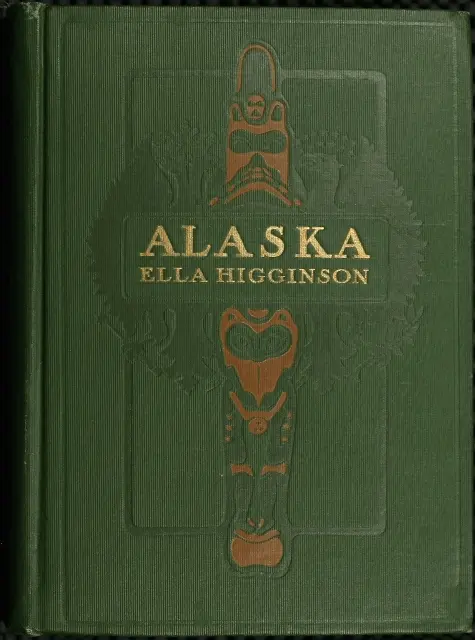
THE CLASSIC COLLECTION · 1908
"Alaska, the Great Country" by Ella Higginson is a descriptive travelogue written in the early 20th century. The book explores the stunning landscapes and untouched beauty of Alaska, detailing both its historical significance and its enchantment as a travel destination. Higginson’s writing encapsulates the allure of Alaska’s remote regions, offering readers a glimpse into the natural majesty that draws countless visitors each year. The opening of the work sets the stage for an immersive journey into Alaska, emphasizing that the true splendor of the region extends far beyond the typical tourist routes. Higginson describes the annual influx of travelers to places like Juneau and Sitka, but argues that these brief visits fail to convey the country's essence. Instead, she points to the breathtaking sights found west of Sitka, where mountains rise dramatically from the sea and vibrant natural beauty enchants those who venture further into the wild. Through lush imagery and poetic language, the author invites readers to appreciate Alaska not just as a destination, but as a land steeped in history and wonder that leaves a lasting impression on all who experience its charm.
Introduction adapted from the source catalogue; source summaries may be automatically generated.
Free to read · English · 159,560 words · No account needed
MAKE TIME FOR A GOOD BOOK
On by default. Untick to stop anonymous reading totals. Each page counts after 10 seconds in view. How this works.
Anonymous counting is on unless you have switched it off.
According to a report prepared by Lieutenant-Colonel Glassford, of the United States Signal Corps Service, on February 5, 1906, the temperature was twenty-six degrees above zero in Grand Junction, Colorado, and in Salchia, Alaska; twenty-two degrees in Flagstaff, Arizona, Memphis, Salt Lake, Spokane, and Summit, Alaska; fourteen degrees in Cairo, Illinois, Cincinnati, Little Rock, Pittsburgh, and Della, Alaska; twelve degrees in Santa Fe and in Fort Egbert and Eagle, on the Yukon; ten degrees in Helena, Buffalo, and Workman's, Alaska; zero in Denver, Dodge, Kansas, and Fairbanks and Chena, Alaska; five degrees below in Dubuque, Omaha, and Copper Centre and Matanuska, Alaska; ten degrees below in Huron, Michigan, and in Gokona, Alaska; fifteen degrees below in Bismarck, St. Paul, and in Tanana Crossing, Alaska; twenty degrees below in Fort Brady, Michigan, and in Ketchumstock, Alaska.
Statistics giving the absolute mean minimum temperature in the capital cities of the United States prove that out of the forty-seven cities, thirty-one were as cold or colder than Sitka, and four were colder than Valdez.
On the southern coast of Alaska there are few points where zero is recorded, the average winter weather at Juneau, Sitka, Valdez, and Seward being milder than in Washington, D.C. In the interior, the weather is much colder, but it is the dry, light cold. At Fairbanks, it is true that the thermometer has registered sixty degrees below zero; but it has done the same in the Dakotas and other states, and is unusual. Severely cold weather occurs in Alaska as rarely as in other cold countries, and remains but a few days.
Alaska has unfortunately had the reputation of having an unendurable climate thrust upon her, first by such chill-blooded navigators as Whidbey and Vancouver; and later, by the gold seekers who rushed, frenziedly, into the unsettled wastes, with no preparation for the intense cold which at times prevails.
Almost every winter in Wyoming, Nebraska, Montana, and the Dakotas, children of the prairies and their teachers freeze to death going to or from school, and it is accepted as a matter of course. In Alaska, where hundreds of men traverse hundreds of miles by dog sleds and snow-shoes, with none of the comforts of more civilized countries and with road houses few and far, if two or three in a winter freeze to death, the tragedy is wired to all parts of the world as another mute testimony to the "tremendously horrible" climate of Alaska.
The intense heat, of which dozens of people perish every summer in New York and other eastern states is unknown in Alaska. Cyclones and cloud-bursts are unchronicled. Fatal epidemics of disease among white people have never yet occurred.
Your reading position is saved on this browser. Take it to another device with a library code. Reading pages adapt to text, rather than matching a printed edition.
BEHIND THE BOOK
This eBook is for the use of anyone anywhere in the United States and most other parts of the world at no cost and with almost no restrictions whatsoever. You may copy it, give it away or re-use it under the terms of the Project Gutenberg License included with this eBook or online at www.gutenberg.org. If you are not located in the United States, you will have to check the laws of the country where you are located before using this eBook. Read the source licence.
The original source file, including credits and licence, is retained by this library. Request an original-format copy at no charge. Please include the book title and Project Gutenberg identifier #34615.
KEEP YOUR CURIOSITY GOING
Wilfrid Scawen Blunt
Wilfrid Scawen Blunt

E. W. (Edgar Watson) Howe
Francis Greenleaf Allinson & Anne C. E. (Anne Crosby Emery) Allinson
Cyrenus Cole

John Martineau