THE CLASSIC COLLECTION✦The show girlCLASSIC FREE BOOKS
The show girl
Max Pemberton
THE CLASSIC COLLECTION · 1907
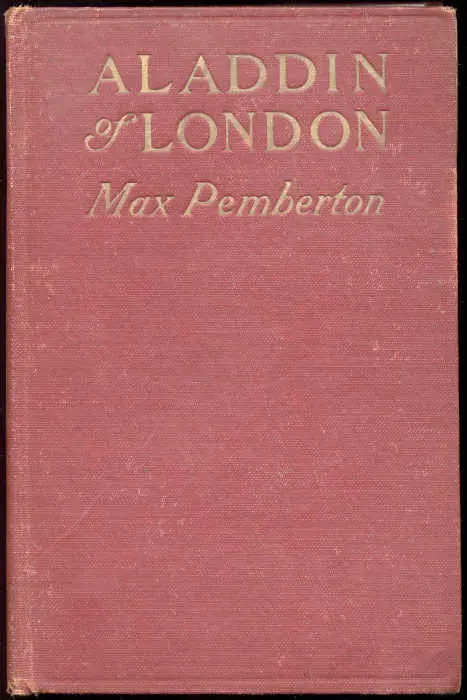
"Aladdin of London; Or, Lodestar" by Max Pemberton is a novel written in the early 20th century. The story begins in the grim surroundings of the East End of London, focusing on themes of class struggle and personal redemption. The main character, Alban Kennedy, is a young man caught between his aristocratic heritage and his present poverty, grappling with the societal injustices that confine him while also finding himself fascinated by the lives of both the elite and the impoverished. The opening of the book introduces readers to a meeting in a rundown hall where Paul Boriskoff, a Polish refugee, passionately recounts his past sufferings caused by betrayal and injustice. His emotional appeal resonates with a varied assembly of socio-political exiles, including Asiatics and Eastern Europeans, who share in his struggles. As the narrative unfolds, we also meet Alban Kennedy, who navigates his life as one of the "East Enders," and his interactions with Lois Boriskoff hint at a budding romance. Throughout this introductory portion, themes of love, aspiration, and a longing for belonging are hinted at, setting the stage for a deeper exploration of Alban's journey as he seeks to reconcile his past with his future amidst the backdrop of societal turmoil and personal ambition.
Introduction adapted from the source catalogue; source summaries may be automatically generated.
Free to read · English · 79,673 words · No account needed
MAKE TIME FOR A GOOD BOOK
On by default. Untick to stop anonymous reading totals. Each page counts after 10 seconds in view. How this works.
Anonymous counting is on unless you have switched it off.
"No, miss, he is not expected until late."
"Why did you not send the carriage to the station?"
"Mr. Gessner said that you were coming to-morrow, miss."
She flushed slightly at the retort and made as though to step out into the garden--but hesitating an instant, she said:
"I have had nothing to eat since one o'clock, Fellows. I must have some
supper."
"Yes, miss."
"Anything will do--tell cook it does not matter. Has Lord Portcullis
called?"
"No, miss--not since yesterday."
"Or Mrs. Melville?"
"This afternoon. She asked for your address, miss--but I did not give
it."
"Quite right--I suppose that Captain Forrest did not come?" She turned away as though not wishing to look the man in the face--a gesture which Alban's quick eyes instantly perceived.
Fellows, on the other hand, permitted a smile to lurk for an instant about the corners of his mouth before he said--
"I understood that Captain Forrest was at Brighton, miss."
The girl's face clouded perceptibly, and she loosened her cloak and
threw it from her shoulders as though it had become an insupportable
burden.
"If he calls to-morrow, I do not wish to see him. Please tell them
all--I will not see him."
The butler smiled again, but answered, "Yes, miss."
Anna Gessner herself, still hesitating upon the threshold suddenly remembered another interest and referred to it with no less ardor.
"Oh, that reminds me, Fellows. Has my father spoken again of that
dreadful silly business?"
"Concerning the young gentleman, miss?"
She heard him with unutterable contempt.
"The beggar-boy that he wishes to bring to this house. Did he speak of
him to-night?"
Fellows came a step nearer and, hushing his voice, he said, with a servant's love of a dramatic reply:
"Mr. Kennedy is in the garden now, miss--indeed, I think he's sitting
near the vestibule."
She looked at him astonished. Ugly passions of disappointment and thwarted desire betrayed themselves in the swift turn and the angry pursing of her lips. Of her father's intentions in bringing this beggar-boy to the house, she knew nothing at all. It seemed to her one of those mad acts for which no sane apology could be offered.
"He is here now, Fellows! Who brought him then?"
"Mr. Geary--at six o'clock."
"Mr. Geary is a hateful busybody--I suppose I must speak to the boy."
"I think that Mr. Gessner would wish it, miss."
She hesitated a brief instant, her annoyance giving battle to her father's well-known desire. Curiosity in the end helped her decision. She must see the object of a charity so eccentric.
"You say that he is in the garden?" she continued, taking two steps
across the vestibule.
Your reading position is saved on this browser. Take it to another device with a library code. Reading pages adapt to text, rather than matching a printed edition.
Max Pemberton
Max Pemberton
Max Pemberton
Max Pemberton
BEHIND THE BOOK
This eBook is for the use of anyone anywhere in the United States and most other parts of the world at no cost and with almost no restrictions whatsoever. You may copy it, give it away or re-use it under the terms of the Project Gutenberg License included with this eBook or online at www.gutenberg.org. If you are not located in the United States, you will have to check the laws of the country where you are located before using this eBook. Read the source licence.
The original source file, including credits and licence, is retained by this library. Request an original-format copy at no charge. Please include the book title and Project Gutenberg identifier #28326.
KEEP YOUR CURIOSITY GOING
Coulson Kernahan

Maurice Baring
Frances Wright
Cécile Tormay

Frederic Jesup Stimson

W. H. P. (William Henry Pope) Jarvis