THE CLASSIC COLLECTION✦Stories of RomanceCLASSIC FREE BOOKS
Stories of Romance
Dinah Maria Mulock Craik & Allan Cunningham & Oliver Wendell Holmes & Harriet Elizabeth Prescott Spofford & John Wilson
THE CLASSIC COLLECTION · 1853
"Agatha's Husband: A Novel" by Dinah Maria Mulock Craik is a romantic novel written in the late 19th century. The story revolves around Agatha Bowen, a lively and independent young woman navigating her way through society with the pressure of finding a husband. Surrounded by well-meaning friends, she grapples with the expectations of marriage and her own sentiments towards the men who enter her life, particularly Major Frederick Harper and his enigmatic brother, Nathanael. The opening of the novel introduces Agatha as she engages in light-hearted banter with her friends in her drawing-room, where discussions about potential suitors abound. While her friends are eager to find her a husband, Agatha remains content to indulge in the company of her black kitten and is initially dismissive of marriage. However, her perspective begins to shift with the arrival of Major Harper, a charming and charismatic man, as well as Nathanael, whose reserved demeanor piques her interest. As the narrative unfolds, Agatha must confront her feelings and the implications of love, companionship, and the social pressures of her time.
Introduction adapted from the source catalogue; source summaries may be automatically generated.
Free to read · English · 137,037 words · No account needed
MAKE TIME FOR A GOOD BOOK
On by default. Untick to stop anonymous reading totals. Each page counts after 10 seconds in view. How this works.
Anonymous counting is on unless you have switched it off.
Mr. Harper resumed. His tone was gentle, though with a certain strangeness in it, a want of that music which runs through all deep-toned low voices, and which in his was very peculiar.
“It appears to me--though nothing shall be done against your decision--that, considering all things, it would be better that our stay in my father's house were made as short as possible.”
“Yes--yes.” Two long pausing words, said beneath her breath.
“Accordingly I rode to Kingcombe this afternoon, and find that we can enter the cottage on Saturday. To-day is Thursday----”
“Is it?--Oh yes. I beg your pardon. Proceed.”
“If it would be agreeable and convenient to you, I think we had better arrange matters so. I have already told my father it was probable we should leave on Saturday. Are you willing?”
“Quite willing.”
“It is settled then. On Saturday evening we go home.”
Go home! To their first home! To that new bridal nest, which, be it the poorest dwelling on earth, seems--or should seem--holy, happy, and fair! What a coming home it was! Better, she thought, that he had cast her adrift, or torn himself from her and placed the wide world between them. Rather any open separation than the mockery of such a union.
“Home!” she cried. “I will not go--I cannot. Oh, not home!”
“To a house, then--call it by what name you please. To your own house, which we will merely say is mine. Your comfort”--he stopped a little--“must always be the first consideration of your husband.”
“My husband!” she repeated, almost in a shriek--and the old fit of fierce laughter was coming back.
At this moment Eulalie's curious eyes were seen turning towards the little room. Nathanael moved so as to shield his wife from them. “Hush!” he said, sorrowfully, even with a sort of pity--“hush, Agatha. We are married. Between us two there must be, under all circumstances, honour and silence.”
His manner was so solemn, free from bitterness or anger, that Agatha's passion was quelled. She was awed as by the sight of some dead face, wronged grievously in life, but which now only revenges itself by the hopelessness of its mute perpetual smile. She remained staring blankly into the fire, plaiting and unplaiting the sash of her dress with heedless fingers. Eulalie might peer safely.
“There was another thing,” resumed Nathanael, “which, before telling the rest of the household, I wished to say to you. I had business in Weymouth to-morrow; and--if”--
“Well? I listen.”
“If--I were to ride there to-night”--
“Go.” A soft, quick word--a mere motion of the lips--and yet it was the
one word of doom.
Your reading position is saved on this browser. Take it to another device with a library code. Reading pages adapt to text, rather than matching a printed edition.
Dinah Maria Mulock Craik & Allan Cunningham & Oliver Wendell Holmes & Harriet Elizabeth Prescott Spofford & John Wilson
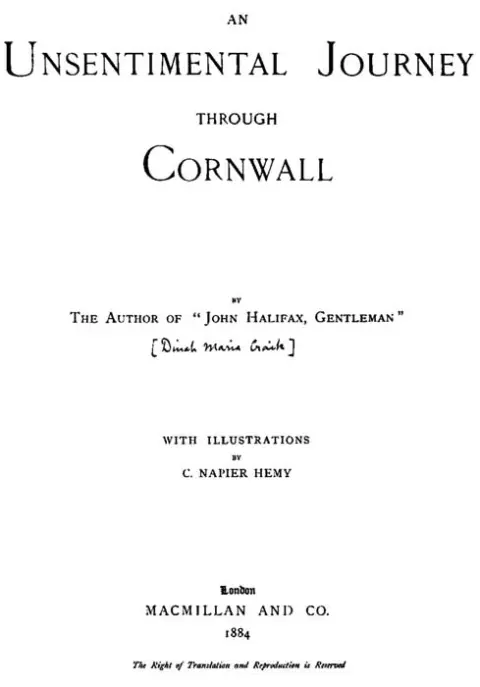
Dinah Maria Mulock Craik
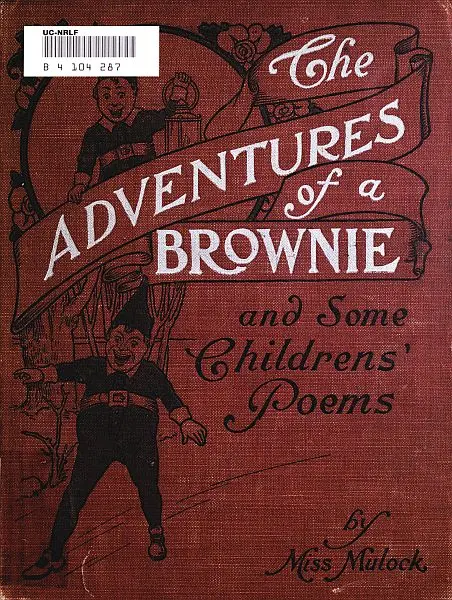
Dinah Maria Mulock Craik
Dinah Maria Mulock Craik
BEHIND THE BOOK
This eBook is for the use of anyone anywhere in the United States and most other parts of the world at no cost and with almost no restrictions whatsoever. You may copy it, give it away or re-use it under the terms of the Project Gutenberg License included with this eBook or online at www.gutenberg.org. If you are not located in the United States, you will have to check the laws of the country where you are located before using this eBook. Read the source licence.
The original source file, including credits and licence, is retained by this library. Request an original-format copy at no charge. Please include the book title and Project Gutenberg identifier #21767.
KEEP YOUR CURIOSITY GOING
Coulson Kernahan

Maurice Baring
Frances Wright
Cécile Tormay

Frederic Jesup Stimson

W. H. P. (William Henry Pope) Jarvis