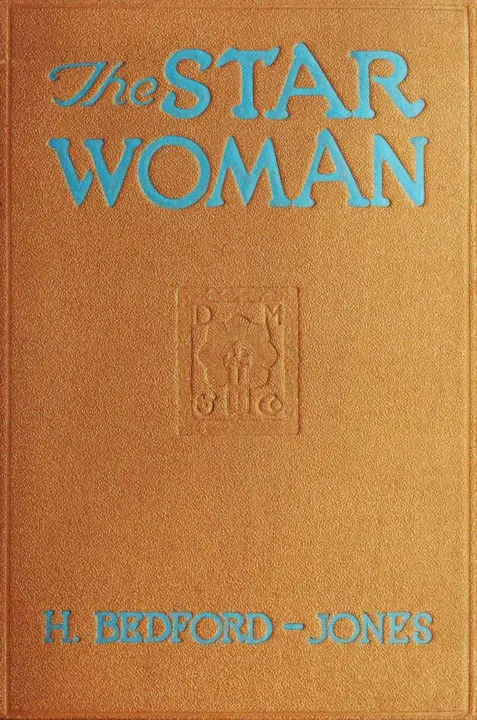
The Star Woman
H. (Henry) Bedford-Jones
THE CLASSIC COLLECTION · 1924
"Against the Tide" by H. Bedford-Jones is a novel written in the early 20th century. The book primarily revolves around the characters Dorothy Deming and Reese Armstrong as they navigate personal and financial tumult and their impending marriage, set against the backdrop of business dealings and societal expectations in early 1920s America. The narrative hints at themes of ambition, loyalty, and the moral challenges posed by business. The opening of the novel introduces the Deming mansion, alive with excitement in anticipation of Dorothy's wedding to Reese Armstrong. However, this merriment is overshadowed by a brewing storm—both literal and metaphorical—as Lawrence Macgowan, a close friend of the groom, expresses concerns about the pressures of finance on Armstrong. As the festivities progress, a telegram brings troubling news about the Deming Food Products Company, leading to the postponement of the wedding. Macgowan, aware of deeper issues at play, urges Dorothy to manage her soon-to-be husband's priorities, setting the stage for a narrative that intertwines personal relationships with the cutthroat world of business.
Introduction adapted from the source catalogue; source summaries may be automatically generated.
Free to read · English · 71,754 words · No account needed
MAKE TIME FOR A GOOD BOOK
On by default. Untick to stop anonymous reading totals. Each page counts after 10 seconds in view. How this works.
Anonymous counting is on unless you have switched it off.
"Now! Aren't you ashamed of the way you've worried? Reese, there's something that has just occurred to me. You remember Muirhead, that Western man we met at the Grays' on Christmas day--the one who was telling about the Stockmen's Protective Association? I think that was the name of his cattle organization--"
Armstrong nodded. "Sure. What about it?"
"Why, it suggested something to me! Last night, you were talking about forming some organization of the stockholders to fight Macgowan. Couldn't you give it that very name--Stockholders' Protective Association? It's a splendid name!"
"Good!" Armstrong's eyes kindled. "Fine idea, Dot! Sure, I'll take up the idea, and if Mansfield approves--but here comes the crowd. Train's in."
"Oh--there's father--Reese, don't you dare breathe a word of trouble!"
The Demings joined them with hearty greetings. J. Fortescue Deming clapped his son-in-law on the shoulder admiringly.
"Reese, you're looking like a fighting-cock! When Dot left us so
hurriedly, I had a notion you were in some sort of a business fight.
Win out?"
"Well, I'm winning!" Armstrong laughed as the words left his lips. He knew suddenly that he was all right again, that he was indeed winning. After those few words from Robert Dorns, ten minutes ago, the clouds had lifted.
The faith of men still endured.
When he entered Mansfield's office, at three that afternoon, Armstrong discovered that the lawyer had not been idle these past few days. Mansfield greeted him heartily; Dorns had not yet arrived.
"Well, Mr. Armstrong, I have some definite word for you. That postal investigation is no longer to be feared."
"I never feared it." Armstrong smiled. "You have blocked it, then?"'
The other assented. "Yes, dependent upon my production of certain evidence. I have got this from Mr. Wren; the rest is a matter of routine. You've had no further trouble?"
"None. I've been awaiting word from you and have kept quiet."
"Good. Judge Holcomb should be here at any moment now."
"Holcomb?" Armstrong's brows went up. He had not seen the judge since the latter had resigned from Consolidated, and had fancied him out of town.
"He has been lending me some assistance in this affair," said Mansfield. "Ah, here's Dorns now! He seems to bear tidings."
Robert Dorns appeared. He came into the room, stopped, regarded them with an expansive grin, and waved his unlighted cigar.
"By glory, we got 'em!" he uttered. "We got 'em cold!"'
Armstrong leaped to his feet. "How? Why?"
"Consolidated had a directors' meeting this morning. Macgowan and Findlater got into the trough with both feet--back salaries, fees, and so forth--they only touched the treasury for about thirty-five thousand! How does that suit you, Q. Adams?"
Your reading position is saved on this browser. Take it to another device with a library code. Reading pages adapt to text, rather than matching a printed edition.
H. (Henry) Bedford-Jones
H. (Henry) Bedford-Jones
H. (Henry) Bedford-Jones
H. (Henry) Bedford-Jones
BEHIND THE BOOK
This eBook is for the use of anyone anywhere in the United States and most other parts of the world at no cost and with almost no restrictions whatsoever. You may copy it, give it away or re-use it under the terms of the Project Gutenberg License included with this eBook or online at www.gutenberg.org. If you are not located in the United States, you will have to check the laws of the country where you are located before using this eBook. Read the source licence.
The original source file, including credits and licence, is retained by this library. Request an original-format copy at no charge. Please include the book title and Project Gutenberg identifier #67269.
KEEP YOUR CURIOSITY GOING
Coulson Kernahan

Maurice Baring
Frances Wright
Cécile Tormay

Frederic Jesup Stimson

W. H. P. (William Henry Pope) Jarvis