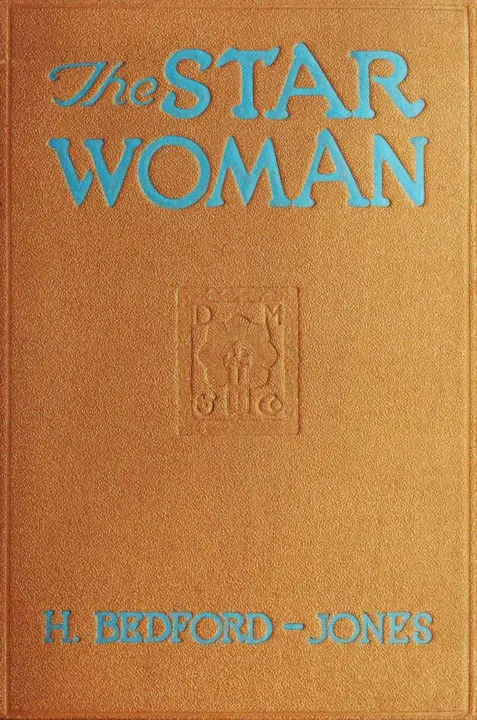
The Star Woman
H. (Henry) Bedford-Jones
THE CLASSIC COLLECTION · 1924
"Against the Tide" by H. Bedford-Jones is a novel written in the early 20th century. The book primarily revolves around the characters Dorothy Deming and Reese Armstrong as they navigate personal and financial tumult and their impending marriage, set against the backdrop of business dealings and societal expectations in early 1920s America. The narrative hints at themes of ambition, loyalty, and the moral challenges posed by business. The opening of the novel introduces the Deming mansion, alive with excitement in anticipation of Dorothy's wedding to Reese Armstrong. However, this merriment is overshadowed by a brewing storm—both literal and metaphorical—as Lawrence Macgowan, a close friend of the groom, expresses concerns about the pressures of finance on Armstrong. As the festivities progress, a telegram brings troubling news about the Deming Food Products Company, leading to the postponement of the wedding. Macgowan, aware of deeper issues at play, urges Dorothy to manage her soon-to-be husband's priorities, setting the stage for a narrative that intertwines personal relationships with the cutthroat world of business.
Introduction adapted from the source catalogue; source summaries may be automatically generated.
Free to read · English · 71,754 words · No account needed
MAKE TIME FOR A GOOD BOOK
On by default. Untick to stop anonymous reading totals. Each page counts after 10 seconds in view. How this works.
Anonymous counting is on unless you have switched it off.
"Mr. Slosson was a witness to the conversation," struck in Williams
smoothly.
"--and that he advised you," pursued Armstrong, "to falsify the company's financial statement in such a manner that blue sky licenses might be obtained."
"Do you deny that Wren did so?"
"Of course," said Armstrong impatiently. "He was in Evansville then, and I believe that he interviewed you, gaining certain information about the standing of the company. I understood that it was in bad shape, due to incompetent directors, and was making plans to the end of helping Mr. Deming to retrieve the lost ground--but Wren certainly never made such proposals as you here assert."
Windsor was intent, Dorns was frowning; Ried Williams shrugged and spoke with an assumed helplessness that was very well done.
"Of course, Armstrong, passing the lie does no good here and now."
Armstrong looked at him.
"Williams, how long has Slosson been in New York?"
This question brought a narrowing of the other man's lids.
"A week, or a little over."
"Did you or Macgowan send him to my house?"
To all three of his listeners, this question brought startled surprise, for Dorns knew nothing of Armstrong's recent domestic trouble. For an instant Williams was so badly shaken that Armstrong thought the victory won.
"Your house?" repeated Williams, bewildered and wildly alarmed. "What the devil was he doing there?"
"Talking," said Armstrong. Perceiving the advantage of reticence, and being himself ignorant of Slosson's exact errand at Aircastle Point, he gave the frowning Windsor a slight smile. Obviously, that gentleman thought that Slosson had given Armstrong warning of this whole affair, and was disturbed thereby. Armstrong shifted his ground quickly.
"As you very well know, at the time you charge that I was conspiring with you, my affairs were all in the hands of Lawrence Macgowan. Just where does he enter into this matter?"
Williams hesitated slightly before this shrewd demand.
"So far as I know," he responded, "he was not connected with it at
all."
"Really?" Armstrong laughed. "When, at the time, he was my personal adviser and chief aid? You never suspected that he was involved or had knowledge of this?"
"No," said Williams stubbornly.
"Not even when, after my marriage, he handled on my behalf all the negotiations which ended in Consolidated Securities taking over Food Products?"
Williams rallied. "The matter was never discussed between us," he
responded. "If Macgowan was aware of the matter, he never mentioned
it."
Your reading position is saved on this browser. Take it to another device with a library code. Reading pages adapt to text, rather than matching a printed edition.
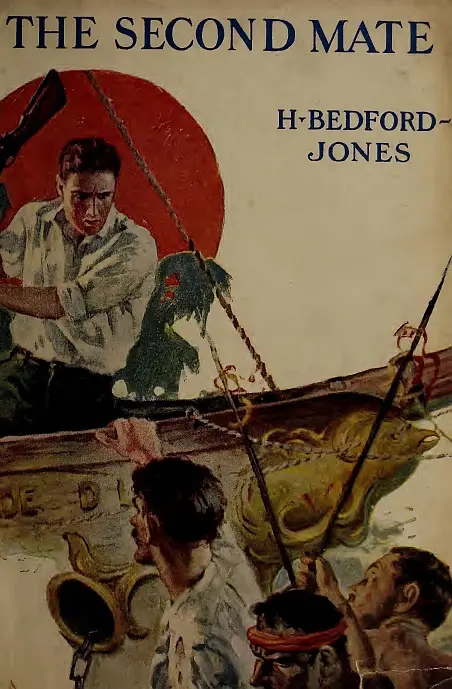
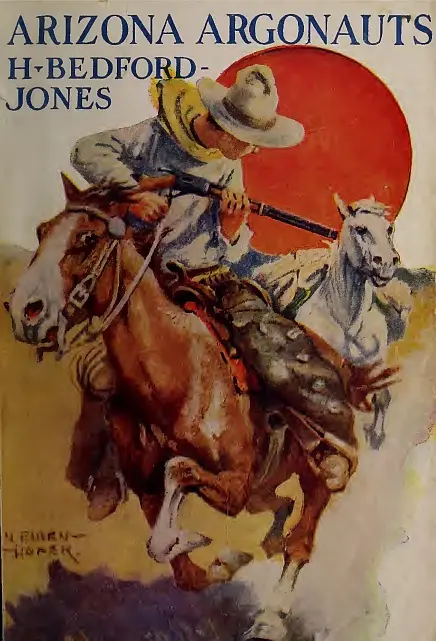
H. (Henry) Bedford-Jones
H. (Henry) Bedford-Jones
H. (Henry) Bedford-Jones
H. (Henry) Bedford-Jones
BEHIND THE BOOK
This eBook is for the use of anyone anywhere in the United States and most other parts of the world at no cost and with almost no restrictions whatsoever. You may copy it, give it away or re-use it under the terms of the Project Gutenberg License included with this eBook or online at www.gutenberg.org. If you are not located in the United States, you will have to check the laws of the country where you are located before using this eBook. Read the source licence.
The original source file, including credits and licence, is retained by this library. Request an original-format copy at no charge. Please include the book title and Project Gutenberg identifier #67269.
KEEP YOUR CURIOSITY GOING
Coulson Kernahan

Maurice Baring
Frances Wright
Cécile Tormay

Frederic Jesup Stimson

W. H. P. (William Henry Pope) Jarvis