READ · DISCOVER · ENJOYClassic literature · Always free
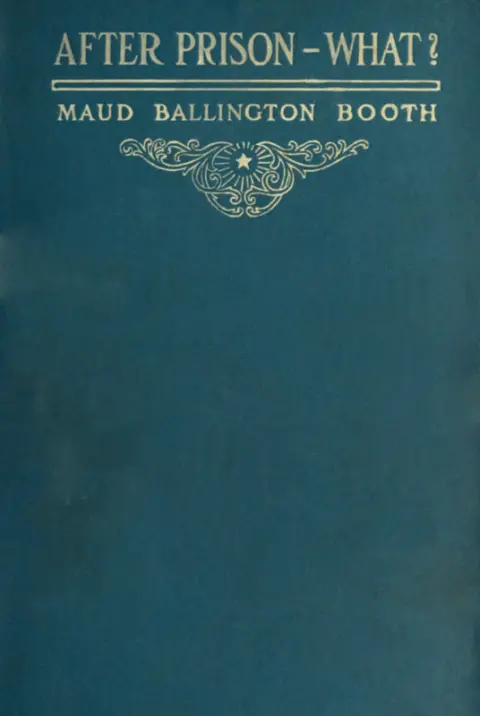
After Prison–What? — digital edition cover

THE CLASSIC COLLECTION · 1903

After Prison–What?

"After Prison--What?" by Maud Ballington Booth is a heartfelt account focusing on prison reform and the possibility of rehabilitation for incarcerated individuals, written in the early 20th century. The work provides a personal perspective from the author, who refers to those in prison as "the boys," emphasizing her belief in their potential for change and renewal. The book seeks to challenge the prevailing prejudices surrounding convicts and advocates for understanding, compassion, and practical support for their reintegration into society. The opening of the book sets the stage for Booth’s mission, where she expresses a deep commitment to prisoners and highlights the need for society to recognize their humanity beyond their crimes. She begins with a dedication to the men in prison, portraying them not just as convicts but as individuals capable of reform with the right support. Throughout her reflections, she draws on various anecdotes that illustrate the struggles and resilience of inmates, demonstrating that many are more than their past mistakes. Booth’s progressive views challenge the reader to look past societal biases and see the “gold” in the character of those behind bars, fostering a message of hope and redemption that resonates throughout the text.

Introduction adapted from the source catalogue; source summaries may be automatically generated.

Start reading ↓

Free to read · English · 67,512 words · No account needed

MAKE TIME FOR A GOOD BOOK

After Prison–What?

On by default. Untick to stop anonymous reading totals. Each page counts after 10 seconds in view. How this works.

Anonymous counting is on unless you have switched it off.

After Prison–What?

A learned writer some years since published in one of our scientific papers a treatise concerning criminals, in which he proved from his own mental conclusions that they could not be reformed. I did not read the paper but I saw it mentioned in reviews and deplored the fact that science should be prostituted to so demoralizing a use. On the following Christmas day I planned to spend my time visiting the cells in Sing Sing and talking individually to as many of the men as possible, for that is a day full of home memories and the realization of loneliness is even more keen and bitter than usual. To my surprise I was met at cell after cell with the question, "Have you read, Little Mother, what Professor ---- said about us?" and in some instances by educated and skeptical men, it was used as an argument against the duty of trying to do better. If those who toll the bell of doom for these poor souls in bondage, fully realized how the damning tones echo and reecho in disheartening vibration from prison to prison, from cell to cell, they might understand that it is almost criminal to break the bruised reed and quench the smoking flax. What should we think of the physician who should calmly and cold-bloodedly put out the spark of life in a patient where though his theories contradicted the likelihood of recovery, some other doctor might save life in the eleventh hour?

That there is a terrible influence in heredity, no one can deny. The drunkard or impure liver leaves the taint of evil appetite to be struggled against by the children to whom he gave life, but to use this as an argument against the possibility of reforming certain men is a contradiction of the teachings of Christ. His message of hope is to every man; His offer of strength and power to the most needy and unfortunate as well as to those in whom one would naturally look for godly aspirations. We have seen enough in our work to understand that many of those who have had the worst environment to contend with, and have been handicapped by miserable parentage have yet been able to accept and respond to the highest teaching, and have made a thorough success of earnest Christian living. I was visiting Sing Sing on one occasion when I had planned for a long list of interviews. As was my custom I presented the list to the Warden, who was deeply in sympathy with our work, and we went over it together that he might give me information that would prove useful in meeting the wants of different men. Coming to one name upon the list, he paused and asked me if I knew the man. I told him that I knew him merely as one who had written me a few lines requesting an interview. "Well," he said, "I will tell you his reputation. We look upon him as the worst and most treacherous man in this prison. He is an habitual criminal, has probably been a criminal all his life, has had several terms in prison and has been constantly punished for insubordination. Three times he has stabbed officers and fellow-prisoners, he has been in plots to escape and twice attempted to burn down the prisons he was in. He has been a morphine or opium fiend, and now he is being kept in 'solitary' because he cannot be trusted with the other men." I shall never forget my interview with this man. It was towards evening of a very busy day for I had between sixty and seventy private interviews between the opening and closing of the prison day. I was sitting in the chapel close to one of the barred windows that looked over the Hudson. The sun was setting and the river gleamed like burnished gold while great shafts of glory were flung upwards from the hills tinting the clouds with crimson and amber. Looking back from the brilliant scene without I glanced down upon my papers scattered upon the little table at which I was seated. There I saw also the streaks of yellow light but between each sunbeam lay the heavy shadow of a bar. I sat there thinking how like the lives of our "boys" was that contrast. In every life there was that heavy shadow blotting, discouraging, darkening the whole present and future, and then turning from the sad side, I thanked God that there was a sunlight that could force its way even into the darkest gloom of prison life, the sunshine of God's own love and mercy, His pardon and His presence. I suppose I had allowed myself to dream a little for I was startled when I heard a shuffling footstep near me. I had not noticed that the officer who stood outside the door had ushered in my next visitor. Looking up I saw a man who might have been taken as a very type of the hopeless habitual criminal. His walk, his attitude, the furtive, distrustful look in his eyes, the nervous twitching of hand and lip and muscles told of one who had been hunted and caged. As he stood there with his dark eyes fixed searchingly on my face I saw how completely he had become a nervous wreck and how he had lost his faith not only in himself but in mankind. I rose to say a few words of welcome, drew up his chair near the table and yet he said never a word. I noticed how the hand that he had laid on the table to steady it shook and how the poor face so white with prison pallor quivered with nervousness. I told him again how glad I was to see him and that he had done quite right in sending for me but it was not until some moments later that he broke the silence and then with the abrupt question, "Do you know who I am?" I was going to give him his name as I knew it, but before I could speak he leaned forward and in the bitterest accents said, "I will tell you. I am the worst and most treacherous man in this prison." Then followed in short, concise words, the story of the efforts to escape, the insubordination, the attempts at incendiary outrage. Pointing to the chains that hung upon the pillar in the chapel, he said, "I have been chained up there. I have been put in the dark cells. I have been punished over and over again but it has not any of it done me any good. Would you like to know what the magistrate who last sentenced me said about me? He said after passing sentence, 'Take him away and lock him up like a brute beast for that is all he is.'" Then with indescribable pathos he turned and said, "Do you think there is any hope for me?" I was at once upon ground where I could speak without hesitation, and I told him simply that if he was through with an evil life, if he was tired of wrong-doing and was thoroughly determined to do right there was a love that could forgive him and a power that could help and keep him in the future. When at last we knelt together, there in the glory of the setting sun, I prayed that the dear Lord, who could bring light into our darkness, might dispel the thick clouds that had shut in this soul from hope, and bring to him the revelation that would change his life. There were tears in the dark eyes as we parted, and taking my hand in his he said, "I will try, Little Mother." He did try, and more than that he triumphed. At first it was a stern battle of an awakened will and conscience fighting against desperate odds. The feeling that a friend was watching and waiting anxiously for good reports proved undoubtedly an incentive. Just about this time I was taken dangerously ill and had to go to the hospital. The news was received with the deepest concern within the prison walls and many men who had never prayed in their lives were found on their knees night after night asking God to spare my life. A letter from this "boy" reached my secretary in which he said, "I am trying very hard to be good these days because it says that the prayers of the righteous avail much and I do want my prayers to help in making the Little Mother well." It was not the highest motive for being good but it was the best that had thus far ever inspired this life and it proved the stepping-stone to better things. It was not long before he sought and found Christ as his Saviour and became an earnest Christian. When he left the prison I do not believe there was an officer who thought it would be possible for him ever to make an honest living. That was over five years ago. He is to-day a prosperous and happy man. He has become by hard work and faithfulness assistant-superintendent in a large industry in which he is employed. He has a comfortably furnished and happy home, and is so changed in face and personal appearance that I do not believe any of his old companions could recognize him. Some three years ago a detective, who had several times arrested him, talked with him sometime without for a moment suspecting it was the same man. So truly when the heart is transformed do the face and manner reflect the change. I quote from his last letter to me written after our seventh anniversary gathering:

Your reading position is saved on this browser. Take it to another device with a library code. Reading pages adapt to text, rather than matching a printed edition.

BEHIND THE WORDS

About Maud Ballington Booth

Maud Ballington Booth (1865–1948). Explore After Prison–What? in this collection. These books span literature & collections.

Explore this author’s books →

THE READERS’ VERDICT

How did this story stay with you?

Not rated yet
Your rating for After Prison–What?

Be the first to share your verdict.

One rating per browser, which you can change or remove. A necessary browser identifier remembers your vote. How ratings work

A GOOD STORY DESERVES COMPANY

Pass this book along.

A great read is even better when it’s shared.

SEND A LITTLE INSPIRATION

Share this book

BEHIND THE BOOK

Edition & source details.

Title
After Prison–What?
Author
Maud Ballington Booth
Publication year
1903
Digital edition publisher
Project Gutenberg
Gutenberg release date
2014-03-27
Language
English
Source edition imprint
Not stated in source catalogue
Source identifier
Project Gutenberg #45234
Contributors
No additional named contributors in source metadata

Public-domain source & licence

This eBook is for the use of anyone anywhere in the United States and most other parts of the world at no cost and with almost no restrictions whatsoever. You may copy it, give it away or re-use it under the terms of the Project Gutenberg License included with this eBook or online at www.gutenberg.org. If you are not located in the United States, you will have to check the laws of the country where you are located before using this eBook. Read the source licence.

Full source licence and obtaining an original copy

The original source file, including credits and licence, is retained by this library. Request an original-format copy at no charge. Please include the book title and Project Gutenberg identifier #45234.

the full Project Gutenberg License must appear
prominently whenever any copy of a Project Gutenberg work (any work
on which the phrase “Project Gutenberg” appears, or with which the
phrase “Project Gutenberg” is associated) is accessed, displayed,
performed, viewed, copied or distributed:

This eBook is for the use of anyone anywhere in the United States and most
other parts of the world at no cost and with almost no restrictions
whatsoever. You may copy it, give it away or re-use it under the terms
of the Project Gutenberg™ License included with this eBook or online
at www.gutenberg.org. If you
are not located in the United States, you will have to check the laws
of the country where you are located before using this eBook.

1.E.2. If an individual Project Gutenberg electronic work is
derived from texts not protected by U.S. copyright law (does not
contain a notice indicating that it is posted with permission of the
copyright holder), the work can be copied and distributed to anyone in
the United States without paying any fees or charges. If you are
redistributing or providing access to a work with the phrase “Project
Gutenberg” associated with or appearing on the work, you must comply
either with the requirements of paragraphs 1.E.1 through 1.E.7 or
obtain permission for the use of the work and the Project Gutenberg
trademark as set forth in paragraphs 1.E.8 or 1.E.9.

1.E.3. If an individual Project Gutenberg electronic work is posted
with the permission of the copyright holder, your use and distribution
must comply with both paragraphs 1.E.1 through 1.E.7 and any
additional terms imposed by the copyright holder. Additional terms
will be linked to the Project Gutenberg License for all works
posted with the permission of the copyright holder found at the
beginning of this work.

1.E.4. Do not unlink or detach or remove the full Project Gutenberg
License terms from this work, or any files containing a part of this
work or any other work associated with Project Gutenberg.

1.E.5. Do not copy, display, perform, distribute or redistribute this
electronic work, or any part of this electronic work, without
prominently displaying the sentence set forth in paragraph 1.E.1 with
active links or immediate access to the full terms of the Project
Gutenberg License.

1.E.6. You may convert to and distribute this work in any binary,
compressed, marked up, nonproprietary or proprietary form, including
any word processing or hypertext form. However, if you provide access
to or distribute copies of a Project Gutenberg work in a format
other than “Plain Vanilla ASCII” or other format used in the official
version posted on the official Project Gutenberg website
(www.gutenberg.org), you must, at no additional cost, fee or expense
to the user, provide a copy, a means of exporting a copy, or a means
of obtaining a copy upon request, of the work in its original “Plain
Vanilla ASCII” or other form. Any alternate format must include the
full Project Gutenberg License as specified in paragraph 1.E.1.

1.E.7. Do not charge a fee for access to, viewing, displaying,
performing, copying or distributing any Project Gutenberg works
unless you comply with paragraph 1.E.8 or 1.E.9.

1.E.8. You may charge a reasonable fee for copies of or providing
access to or distributing Project Gutenberg electronic works
provided that:

• You pay a royalty fee of 20% of the gross profits you derive from
the use of Project Gutenberg works calculated using the method
you already use to calculate your applicable taxes. The fee is owed
to the owner of the Project Gutenberg trademark, but he has
agreed to donate royalties under this paragraph to the Project
Gutenberg Literary Archive Foundation. Royalty payments must be paid
within 60 days following each date on which you prepare (or are
legally required to prepare) your periodic tax returns. Royalty
payments should be clearly marked as such and sent to the Project
Gutenberg Literary Archive Foundation at the address specified in
Section 4, “Information about donations to the Project Gutenberg
Literary Archive Foundation.”

• You provide a full refund of any money paid by a user who notifies
you in writing (or by e-mail) within 30 days of receipt that s/he
does not agree to the terms of the full Project Gutenberg™
License. You must require such a user to return or destroy all
copies of the works possessed in a physical medium and discontinue
all use of and all access to other copies of Project Gutenberg™
works.

• You provide, in accordance with paragraph 1.F.3, a full refund of
any money paid for a work or a replacement copy, if a defect in the
electronic work is discovered and reported to you within 90 days of
receipt of the work.

• You comply with all other terms of this agreement for free
distribution of Project Gutenberg™ works.


1.E.9. If you wish to charge a fee or distribute a Project
Gutenberg™ electronic work or group of works on different terms than
are set forth in this agreement, you must obtain permission in writing
from the Project Gutenberg Literary Archive Foundation, the manager of
the Project Gutenberg™ trademark. Contact the Foundation as set
forth in Section 3 below.

1.F.

1.F.1. Project Gutenberg volunteers and employees expend considerable
effort to identify, do copyright research on, transcribe and proofread
works not protected by U.S. copyright law in creating the Project
Gutenberg™ collection. Despite these efforts, Project Gutenberg™
electronic works, and the medium on which they may be stored, may
contain “Defects,” such as, but not limited to, incomplete, inaccurate
or corrupt data, transcription errors, a copyright or other
intellectual property infringement, a defective or damaged disk or
other medium, a computer virus, or computer codes that damage or
cannot be read by your equipment.

1.F.2. LIMITED WARRANTY, DISCLAIMER OF DAMAGES - Except for the “Right
of Replacement or Refund” described in paragraph 1.F.3, the Project
Gutenberg Literary Archive Foundation, the owner of the Project
Gutenberg™ trademark, and any other party distributing a Project
Gutenberg™ electronic work under this agreement, disclaim all
liability to you for damages, costs and expenses, including legal
fees. YOU AGREE THAT YOU HAVE NO REMEDIES FOR NEGLIGENCE, STRICT
LIABILITY, BREACH OF WARRANTY OR BREACH OF CONTRACT EXCEPT THOSE
PROVIDED IN PARAGRAPH 1.F.3. YOU AGREE THAT THE FOUNDATION, THE
TRADEMARK OWNER, AND ANY DISTRIBUTOR UNDER THIS AGREEMENT WILL NOT BE
LIABLE TO YOU FOR ACTUAL, DIRECT, INDIRECT, CONSEQUENTIAL, PUNITIVE OR
INCIDENTAL DAMAGES EVEN IF YOU GIVE NOTICE OF THE POSSIBILITY OF SUCH
DAMAGE.

1.F.3. LIMITED RIGHT OF REPLACEMENT OR REFUND - If you discover a
defect in this electronic work within 90 days of receiving it, you can
receive a refund of the money (if any) you paid for it by sending a
written explanation to the person you received the work from. If you
received the work on a physical medium, you must return the medium
with your written explanation. The person or entity that provided you
with the defective work may elect to provide a replacement copy in
lieu of a refund. If you received the work electronically, the person
or entity providing it to you may choose to give you a second
opportunity to receive the work electronically in lieu of a refund. If
the second copy is also defective, you may demand a refund in writing
without further opportunities to fix the problem.

1.F.4. Except for the limited right of replacement or refund set forth
in paragraph 1.F.3, this work is provided to you ‘AS-IS’, WITH NO
OTHER WARRANTIES OF ANY KIND, EXPRESS OR IMPLIED, INCLUDING BUT NOT
LIMITED TO WARRANTIES OF MERCHANTABILITY OR FITNESS FOR ANY PURPOSE.

1.F.5. Some states do not allow disclaimers of certain implied
warranties or the exclusion or limitation of certain types of
damages. If any disclaimer or limitation set forth in this agreement
violates the law of the state applicable to this agreement, the
agreement shall be interpreted to make the maximum disclaimer or
limitation permitted by the applicable state law. The invalidity or
unenforceability of any provision of this agreement shall not void the
remaining provisions.

1.F.6. INDEMNITY - You agree to indemnify and hold the Foundation, the
trademark owner, any agent or employee of the Foundation, anyone
providing copies of Project Gutenberg™ electronic works in
accordance with this agreement, and any volunteers associated with the
production, promotion and distribution of Project Gutenberg™
electronic works, harmless from all liability, costs and expenses,
including legal fees, that arise directly or indirectly from any of
the following which you do or cause to occur: (a) distribution of this
or any Project Gutenberg work, (b) alteration, modification, or
additions or deletions to any Project Gutenberg work, and (c) any
Defect you cause.

Section 2. Information about the Mission of Project Gutenberg

Project Gutenberg is synonymous with the free distribution of
electronic works in formats readable by the widest variety of
computers including obsolete, old, middle-aged and new computers. It
exists because of the efforts of hundreds of volunteers and donations
from people in all walks of life.

Volunteers and financial support to provide volunteers with the
assistance they need are critical to reaching Project Gutenberg’s
goals and ensuring that the Project Gutenberg collection will
remain freely available for generations to come. In 2001, the Project
Gutenberg Literary Archive Foundation was created to provide a secure
and permanent future for Project Gutenberg and future
generations. To learn more about the Project Gutenberg Literary
Archive Foundation and how your efforts and donations can help, see
Sections 3 and 4 and the Foundation information page at www.gutenberg.org.

Section 3. Information about the Project Gutenberg Literary Archive Foundation

The Project Gutenberg Literary Archive Foundation is a non-profit
501(c)(3) educational corporation organized under the laws of the
state of Mississippi and granted tax exempt status by the Internal
Revenue Service. The Foundation’s EIN or federal tax identification
number is 64-6221541. Contributions to the Project Gutenberg Literary
Archive Foundation are tax deductible to the full extent permitted by
U.S. federal laws and your state’s laws.

The Foundation’s business office is located at 41 Watchung Plaza #516,
Montclair NJ 07042, USA, +1 (862) 621-9288. Email contact links and up
to date contact information can be found at the Foundation’s website
and official page at www.gutenberg.org/contact

Section 4. Information about Donations to the Project Gutenberg
Literary Archive Foundation

Project Gutenberg™ depends upon and cannot survive without widespread
public support and donations to carry out its mission of
increasing the number of public domain and licensed works that can be
freely distributed in machine-readable form accessible by the widest
array of equipment including outdated equipment. Many small donations
($1 to $5,000) are particularly important to maintaining tax exempt
status with the IRS.

The Foundation is committed to complying with the laws regulating
charities and charitable donations in all 50 states of the United
States. Compliance requirements are not uniform and it takes a
considerable effort, much paperwork and many fees to meet and keep up
with these requirements. We do not solicit donations in locations
where we have not received written confirmation of compliance. To SEND
DONATIONS or determine the status of compliance for any particular state
visit www.gutenberg.org/donate.

While we cannot and do not solicit contributions from states where we
have not met the solicitation requirements, we know of no prohibition
against accepting unsolicited donations from donors in such states who
approach us with offers to donate.

International donations are gratefully accepted, but we cannot make
any statements concerning tax treatment of donations received from
outside the United States. U.S. laws alone swamp our small staff.

Please check the Project Gutenberg web pages for current donation
methods and addresses. Donations are accepted in a number of other
ways including checks, online payments and credit card donations. To
donate, please visit: www.gutenberg.org/donate.

Section 5. General Information About Project Gutenberg electronic works

Professor Michael S. Hart was the originator of the Project
Gutenberg concept of a library of electronic works that could be
freely shared with anyone. For forty years, he produced and
distributed Project Gutenberg eBooks with only a loose network of
volunteer support.

Project Gutenberg eBooks are often created from several printed
editions, all of which are confirmed as not protected by copyright in
the U.S. unless a copyright notice is included. Thus, we do not
necessarily keep eBooks in compliance with any particular paper
edition.

Most people start at our website which has the main PG search
facility: www.gutenberg.org.

This website includes information about Project Gutenberg,
including how to make donations to the Project Gutenberg Literary
Archive Foundation, how to help produce our new eBooks, and how to
subscribe to our email newsletter to hear about new eBooks.


KEEP YOUR CURIOSITY GOING

Your next chapter awaits.

THE CLASSIC COLLECTION✦The Boarding School; Lessons of a Preceptress to Her Pupils Consisting of Information, Instruction and Advice, Calculated to Improve the Manners and Form the Character of Young Ladies. To Which Is Added, a Collection of Letters, Written by the Pupils to Their Instructress, Their Friends, and Each Other.Hannah Webster FosterCLASSIC FREE BOOKS
Open book ↗
Literature & Collections1798

The Boarding School; Lessons of a Preceptress to Her Pupils Consisting of Information, Instruction and Advice, Calculated to Improve the Manners and Form the Character of Young Ladies. To Which Is Added, a Collection of Letters, Written by the Pupils to Their Instructress, Their Friends, and Each Other.

Hannah Webster Foster