THE CLASSIC COLLECTION✦My diaries, being a personal narrative of events 1888-1914, Part 2 (1900-1914)CLASSIC FREE BOOKS
My diaries, being a personal narrative of events 1888-1914, Part 2 (1900-1914)
Wilfrid Scawen Blunt
THE CLASSIC COLLECTION · 1861
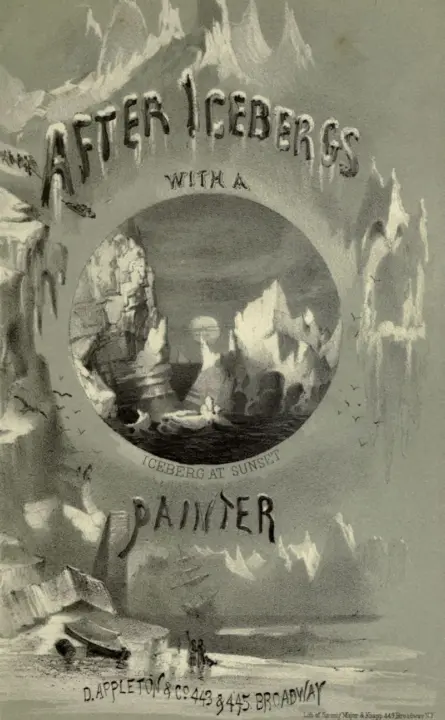
"After Icebergs with a Painter" by Louis Legrand Noble is a travel narrative written in the mid-19th century. The book chronicles the author's summer voyage in 1859 with a landscape painter along the northeastern coast of British America, focusing particularly on the study and sketching of icebergs. This richly detailed account captures the beauty of nature and the encounters with various landscapes and seascapes, providing a glimpse into the adventures of its main characters as they navigate the challenges of their expedition. The opening of the narrative introduces the ambitious nature of the journey, with the author and his painter companion expressing their eagerness to explore the icy terrains and marvels of Labrador and Newfoundland. They discuss the rarity and beauty of icebergs, contemplating both the risks and the allure of their expedition. As they embark, they face the discomforts of sea travel, including seasickness, yet remain captivated by the anticipation of the spectacular landscapes awaiting them. The tone sets the stage for a vivid exploration of natural wonders, human curiosity, and the artistry inspired by such magnificent phenomena.
Introduction adapted from the source catalogue; source summaries may be automatically generated.
Free to read · English · 71,861 words · No account needed
MAKE TIME FOR A GOOD BOOK
On by default. Untick to stop anonymous reading totals. Each page counts after 10 seconds in view. How this works.
Anonymous counting is on unless you have switched it off.
Several years ago, Captain Knight, while beset with the kind of ice, described as so beautiful in the bright nights, encountered, with many others, a terrific gale, to this day, a mournful remembrance to many people. If I am not mistaken, some eighty sail were wrecked, at the time, along these iron shores. In fact, very few that were out escaped. Several crews left their vessels and fled to land over the rolling ice-fields, the more prudent way. A forlorn hope was to put to sea, the course adopted by Captain Knight. By skill and coolness he slipped from the teeth of destruction, and in the face of the tempest escaped into the broad ocean. It was but an escape, just the next thing to a wreck. One single sea, the largest he ever experienced in numerous voyages along this dreadful coast, swept his deck, and nearly made a wreck of him in a moment, carrying overboard one man, nine boats, every sealing-boat on board, and every thing else that could be wrenched away. Another gigantic roller of the kind would have destroyed him. But he triumphed, and returned to St. Johns in time to refit, and start again.
Captain Knight was less fortunate, no later than last April, when he lost a fine brig with a costly outfit for a sealing voyage, under the following circumstances: Immersed in the densest fog, and driven by the gale, he was running down a narrow lane or opening in the ice, when the shout of breakers ahead, and the crash of the bows upon a reef, came in the same moment. Instantly, overboard they sprang, forty men of them, and saw their strong and beautiful vessel almost immediately buried in the ocean. There they stood, on the heaving field of ice, gazing in mournful silence upon the great, black billows as they rolled on, one after another, bursting in thunder on the sunken cliffs, a tremendous display of surf where the trembling spars of the brig had disappeared forever. To the west of them were the precipitous shores of Cape Bonavista, lashed by the surge, and the dizzy roost of wild sea-birds. For this, the nearest land, in single file, with Captain Knight at their head, they commenced at sunset their dreadful, and almost hopeless march. All night, without refreshment or rest, they went stumbling and plunging on their perilous way, now and then sinking into the slush between the pans or ice-cakes, and having to be drawn out by their companions. But for their leader and a few bold spirits, the party would have sunk down with fatigue and despair, and perished. At daybreak, they were still on the rolling ice-fields, beclouded with fog, and with nothing in prospect but the terrible Cape and its solitary chance of escape. Thirsty, famished, and worn down, they toiled on, all the morning, all the forenoon, all the afternoon, more and more slowly, and with increasing silence, bewildered and lost in the dreadful cloud travelling along parallel with the coast, and passing the Cape, but without knowing it at the time. But for some remarkable interposition of Divine Providence, the approaching sunset would be their last. Only the most determined would continue the march into the next night. The worn-out and hopeless ones would drop down singly, or gather into little groups on the cold ice, and die. As the Captain looked back on them, a drawn-out line of suffering men, now in the hollow of the waves, and then crossing the ridge, the last of them scarcely seen in the mist, he prayed that God would interpose, and save them. A man who prays in fair weather, may trust God in the storm. So thought Captain Knight, when he thought of home, and wife and children, and the wives and the children of his men, and made his supplication. They had shouted until they were hoarse, and looked into the endless, gray cloud until they had no heart for looking any longer. Wonderful to tell! Just before sundown they came to a vessel. A few rods to the right or to the left, and they must have missed it, and been lost. It was owing to this disaster that Captain Knight was at leisure in St. Johns upon our arrival, and found it agreeable to undertake, for a few weeks, our guidance after the icebergs.
Your reading position is saved on this browser. Take it to another device with a library code. Reading pages adapt to text, rather than matching a printed edition.
BEHIND THE BOOK
This eBook is for the use of anyone anywhere in the United States and most other parts of the world at no cost and with almost no restrictions whatsoever. You may copy it, give it away or re-use it under the terms of the Project Gutenberg License included with this eBook or online at www.gutenberg.org. If you are not located in the United States, you will have to check the laws of the country where you are located before using this eBook. Read the source licence.
The original source file, including credits and licence, is retained by this library. Request an original-format copy at no charge. Please include the book title and Project Gutenberg identifier #56529.
KEEP YOUR CURIOSITY GOING
Wilfrid Scawen Blunt
Wilfrid Scawen Blunt

E. W. (Edgar Watson) Howe
Francis Greenleaf Allinson & Anne C. E. (Anne Crosby Emery) Allinson
Cyrenus Cole

John Martineau