THE CLASSIC COLLECTION✦My diaries, being a personal narrative of events 1888-1914, Part 2 (1900-1914)CLASSIC FREE BOOKS
My diaries, being a personal narrative of events 1888-1914, Part 2 (1900-1914)
Wilfrid Scawen Blunt
THE CLASSIC COLLECTION · 1861
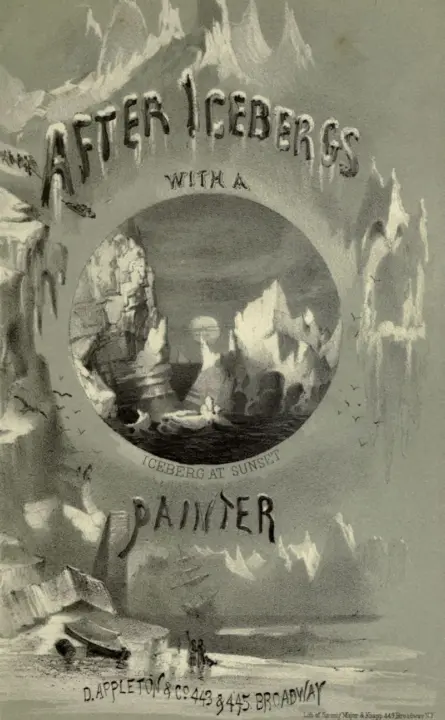
"After Icebergs with a Painter" by Louis Legrand Noble is a travel narrative written in the mid-19th century. The book chronicles the author's summer voyage in 1859 with a landscape painter along the northeastern coast of British America, focusing particularly on the study and sketching of icebergs. This richly detailed account captures the beauty of nature and the encounters with various landscapes and seascapes, providing a glimpse into the adventures of its main characters as they navigate the challenges of their expedition. The opening of the narrative introduces the ambitious nature of the journey, with the author and his painter companion expressing their eagerness to explore the icy terrains and marvels of Labrador and Newfoundland. They discuss the rarity and beauty of icebergs, contemplating both the risks and the allure of their expedition. As they embark, they face the discomforts of sea travel, including seasickness, yet remain captivated by the anticipation of the spectacular landscapes awaiting them. The tone sets the stage for a vivid exploration of natural wonders, human curiosity, and the artistry inspired by such magnificent phenomena.
Introduction adapted from the source catalogue; source summaries may be automatically generated.
Free to read · English · 71,861 words · No account needed
MAKE TIME FOR A GOOD BOOK
On by default. Untick to stop anonymous reading totals. Each page counts after 10 seconds in view. How this works.
Anonymous counting is on unless you have switched it off.
It was getting late, and I asked to retire. I found that we had retired. We were sitting in our private chamber, and the closely-curtained bed behind us, a match for one in an opposite corner, too long and too wide for a lad in his teens, was the appointed couch for two of us, and all ready. There were nine or ten of us, all told, and among them the daughter’s lover, a good-looking and very well-appearing young man. Now that we were provided for, it was certainly no concern of ours how and where the others were to lodge, although I could not avoid feeling some interest in the matter. To hasten things to a conclusion, I rose, wound my watch, took off my boots, my coat and vest, demonstrations of my intention of going at once to bed that were not mistaken. Immediately all walked out of the house, and remained out, talking in the open air, until we were snugly packed away and pinned in behind the scant curtains, when they returned, and noiselessly went to rest in some order peculiar to the household, dividing between them the other bed, the floor, and the small chamber under the roof. When, in her native land, an ebony lady entertained Mungo Park, she and her maids lightened their nocturnal labors—spinning cotton—by singing plaintive songs, the burden of which was “the poor white man who came and sat under our tree.” Thus our two maidens lightened both their labors and our slumbers, but by a less poetic process. While they busied themselves with sweeping the house, and washing dishes until after midnight, they kept a continual whispering, the subject of which was, in part, the poor sunburnt men who came to sleep under their curtains—but could not do it. Considering that the daughter had a sweetheart in the house, the sibilant disturbances of the girls were meekly suffered until they naturally whispered and swept their way to bed. After this we had a fair field, and did our best to improve it. The room being warm and smoky, I unpinned the curtain, and started for fresh air, stealing out as quietly as possible. Treacherous door! When I had succeeded in hitting upon the wooden latch, up it came with a jerk and a clack that went, it seemed to me, to the ears of every sleeper. I waited till I thought the effect of the noise had passed away, when I began slowly opening the door. It squealed like a bagpipe, startling the dreamers from their pillows, and arousing suspicions of a rogue creeping in, while it was only the restless traveller creeping out. There had been a kitten mewing at the door for some time. With tail erect, she whipped in between my feet. There was a puppy outside also, and some pigs; each in its way promising to keep up till daylight the serenade of barking and grunting, with which, from an earlier hour, they had entertained us. It was starlight, and I could see my ground, as I thought. I determined to have satisfaction by setting the dog upon the pigs, and then flogging the dog. Rapping one over the head with a bean-pole, by way of prelude to rapping the other, the puppy instantly joined in the assault, which, but for an unlucky stubbing of my naked toes, would have proved successful. I flung down my bean-pole with disgust, and beat, instead of the young rascal of a dog, an inglorious retreat. For the rest of the night, it was a triumph with the enemy, reinforced by some goslings and quacking ducks. If there was needed any more rosin on the bow that kept sawing across my tightly tuned nerves, two or three fleas supplied it at short intervals. The bite of the little villains made me jump like sparks of fire. There was, also, toward the chilly morning hours, a tide in our affairs, a regular ebb and flow of bed-clothes, and a final cataract of them, the entire sheet descending into some abyss, from which we never succeeded in recovering hardly any thing more than some scanty edges and corners of a blanket. It was a wonder to me how my companion in arms could sleep as he did, a pleasure he declares he did not enjoy; but in his restlessness was surprised that I could slumber on so soundly, and snore through so many troubles—a dulness from which, of course, I tried stoutly to clear myself. Thus, as frequently happens, each imagined the other to have slept, and himself to have been wakeful all night. Undoubtedly, both waked and slumbered, and magnified the several small annoyances.
Your reading position is saved on this browser. Take it to another device with a library code. Reading pages adapt to text, rather than matching a printed edition.
BEHIND THE BOOK
This eBook is for the use of anyone anywhere in the United States and most other parts of the world at no cost and with almost no restrictions whatsoever. You may copy it, give it away or re-use it under the terms of the Project Gutenberg License included with this eBook or online at www.gutenberg.org. If you are not located in the United States, you will have to check the laws of the country where you are located before using this eBook. Read the source licence.
The original source file, including credits and licence, is retained by this library. Request an original-format copy at no charge. Please include the book title and Project Gutenberg identifier #56529.
KEEP YOUR CURIOSITY GOING
Wilfrid Scawen Blunt
Wilfrid Scawen Blunt

E. W. (Edgar Watson) Howe
Francis Greenleaf Allinson & Anne C. E. (Anne Crosby Emery) Allinson
Cyrenus Cole

John Martineau