THE CLASSIC COLLECTION✦My diaries, being a personal narrative of events 1888-1914, Part 2 (1900-1914)CLASSIC FREE BOOKS
My diaries, being a personal narrative of events 1888-1914, Part 2 (1900-1914)
Wilfrid Scawen Blunt
THE CLASSIC COLLECTION · 1861
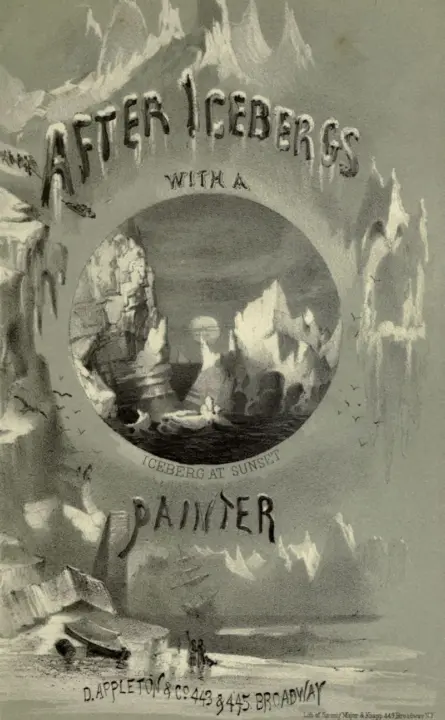
"After Icebergs with a Painter" by Louis Legrand Noble is a travel narrative written in the mid-19th century. The book chronicles the author's summer voyage in 1859 with a landscape painter along the northeastern coast of British America, focusing particularly on the study and sketching of icebergs. This richly detailed account captures the beauty of nature and the encounters with various landscapes and seascapes, providing a glimpse into the adventures of its main characters as they navigate the challenges of their expedition. The opening of the narrative introduces the ambitious nature of the journey, with the author and his painter companion expressing their eagerness to explore the icy terrains and marvels of Labrador and Newfoundland. They discuss the rarity and beauty of icebergs, contemplating both the risks and the allure of their expedition. As they embark, they face the discomforts of sea travel, including seasickness, yet remain captivated by the anticipation of the spectacular landscapes awaiting them. The tone sets the stage for a vivid exploration of natural wonders, human curiosity, and the artistry inspired by such magnificent phenomena.
Introduction adapted from the source catalogue; source summaries may be automatically generated.
Free to read · English · 71,861 words · No account needed
MAKE TIME FOR A GOOD BOOK
On by default. Untick to stop anonymous reading totals. Each page counts after 10 seconds in view. How this works.
Anonymous counting is on unless you have switched it off.
The ride along the shore of Sydney harbor, over a smooth, hard road, was really charming, and would have been to travellers of ill temper. Wild roses incensed the fresh air, and the sunshine was bright upon the clover-fields. On the steamer down from Halifax to Sydney, I became acquainted with a tradesman, an intelligent Scotch Presbyterian. Who should come running out of a little country store by the road-side, with a shout that brought our nag down upon his haunches, but our friend! He, too, was delighted, and shook us heartily by the hand, asking after “the Labrador,” the icebergs, and our voyage in general. Set in the midst of our pleasure was one regret: our want of time to visit Louisburg, or the ruins of it. We talked it over, and then dismissed both the ruins and the regret.
From the bay of Sydney the way is wonderfully serpentine for a main road, winding about apparently for the mere love of winding, and when there seems no more real necessity for it than for a brook in a level meadow. We have liked it all the better, though, running, as it does, around the slightest hills, wooded with the perpetual spruce, intermingled with the birch and maple, crossing with a graceful twist little farms, and coming around garden fences, by the farmers’ doors, under the willows and the apple trees. The native Indians, tricked out with cheap, showy finery, whose huts are seen lazily smoking among the bushes, were occasionally met, and chatted with. A young Mc. something, upon whose sleepy face was the moonshine of a smile, was found trotting his chestnut filly close behind our wagon. The persistence in the thing was becoming disagreeable, and we looked round several times with an expression which said plainly: “Please keep a little back.” Mc. was in no humor to take the hint. When our pace quickened, the click of his horse’s shoes, and the breath of his steed, which carried a high head, were close upon us; a sudden slackening of our speed brought him, horse-head and all, as suddenly into our midst. Presently he changed his tactics, and dashed by, brushing the wheels with his stirrup, and so trotting on ahead, taking occasion to twist himself on the saddle, when a walk permitted, and look back. The fellow was a character, although of the softer kind, and we struck up an acquaintance, during which, in the effort to sustain his part of the conversation, he rode around us in all possible ways. A particularly favorite position was in the gutter at our side, where, in spite of our united care, he would now and then be literally run up a stump, or a bank. Whether on the lead, or following, we kept him frequently at break-neck speed, during which the conversation was mostly confined to monosyllables—loud and few—and, when forward, discharged now over one, and then over the other shoulder. Mc. was a farmer, and lived with “the old folks at home.” He had been on a courting expedition, in which he considered himself successful. In fact, he made a clean breast of it, and told us the pleasant story of his love, and the fine qualities of the lass of whom he was enamored. Although she might not be thought handsome by a great many, yet she was handsome to him. Never errant knight rehearsed a softer tale in shorter periods, with a louder voice, or happier heart. He was full of it, and it mattered little to whom, or how he uttered it. For what distance he was intending to bear us company, I have no notion. The house of an acquaintance, at the gate of which were several persons, who seemed at once to understand him, and whose faces were so many open doors of curiosity, finally relieved us of him. It was evidently undesigned, and he pulled up, I thought, somewhat reluctantly.
Your reading position is saved on this browser. Take it to another device with a library code. Reading pages adapt to text, rather than matching a printed edition.
BEHIND THE BOOK
This eBook is for the use of anyone anywhere in the United States and most other parts of the world at no cost and with almost no restrictions whatsoever. You may copy it, give it away or re-use it under the terms of the Project Gutenberg License included with this eBook or online at www.gutenberg.org. If you are not located in the United States, you will have to check the laws of the country where you are located before using this eBook. Read the source licence.
The original source file, including credits and licence, is retained by this library. Request an original-format copy at no charge. Please include the book title and Project Gutenberg identifier #56529.
KEEP YOUR CURIOSITY GOING
Wilfrid Scawen Blunt
Wilfrid Scawen Blunt

E. W. (Edgar Watson) Howe
Francis Greenleaf Allinson & Anne C. E. (Anne Crosby Emery) Allinson
Cyrenus Cole

John Martineau