THE CLASSIC COLLECTION✦My diaries, being a personal narrative of events 1888-1914, Part 2 (1900-1914)CLASSIC FREE BOOKS
My diaries, being a personal narrative of events 1888-1914, Part 2 (1900-1914)
Wilfrid Scawen Blunt
THE CLASSIC COLLECTION · 1861
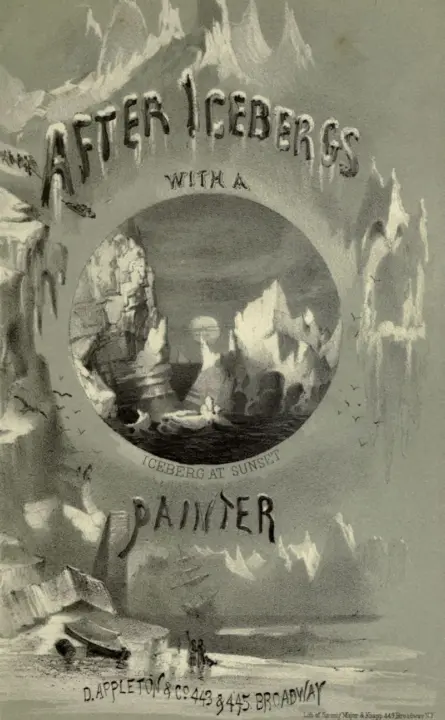
"After Icebergs with a Painter" by Louis Legrand Noble is a travel narrative written in the mid-19th century. The book chronicles the author's summer voyage in 1859 with a landscape painter along the northeastern coast of British America, focusing particularly on the study and sketching of icebergs. This richly detailed account captures the beauty of nature and the encounters with various landscapes and seascapes, providing a glimpse into the adventures of its main characters as they navigate the challenges of their expedition. The opening of the narrative introduces the ambitious nature of the journey, with the author and his painter companion expressing their eagerness to explore the icy terrains and marvels of Labrador and Newfoundland. They discuss the rarity and beauty of icebergs, contemplating both the risks and the allure of their expedition. As they embark, they face the discomforts of sea travel, including seasickness, yet remain captivated by the anticipation of the spectacular landscapes awaiting them. The tone sets the stage for a vivid exploration of natural wonders, human curiosity, and the artistry inspired by such magnificent phenomena.
Introduction adapted from the source catalogue; source summaries may be automatically generated.
Free to read · English · 71,861 words · No account needed
MAKE TIME FOR A GOOD BOOK
On by default. Untick to stop anonymous reading totals. Each page counts after 10 seconds in view. How this works.
Anonymous counting is on unless you have switched it off.
Between our landing and the supper, two hours passed, during which C—— painted the Rip Van Winkle berg, and I ascended the mountain. Crossing a little dell to the west of the house, through which flow a couple of tinkling rills bordered with rank grass, and sheeted with flowers white and fragrant, I struck the foot of a small glacier, or chasm filled with perpetual snow, and commenced the ascent. At first I was pleased with the notion of climbing this mer-de-neige, and went up right merrily, crossing and recrossing, stepping sharply into the thawing surface in order to secure a good foothold. But as I wound my way up the cold track, beginning to be walled in by savage crags, it seemed so lonesome, and sounded so hollow below, and looked so far down and steep behind me, that I became suspicious, and afraid, and timidly crept out upon its icy edge, and leaped to the solid cliff. By this time I was too warm with a heavy overcoat, and left it hanging upon a rock against my return. Cold and windy as it was, I was glowing with heat when I reached the top.
The prospect was a new one to me, although long accustomed to mountain views, and more impressive than any thing of the kind I can remember. Rather more than half of the great circle was filled with the ocean; the remainder was Labrador, a most desolate extent of small rocky mountains, faintly tinted here and there with a greenish gray, and frequently slanting down to lakes and inlets of the sea. It may be said that Neptune, setting his net of blue waters along this solitary land, sprung it at last and caught it full of these bony hills, so hopelessly hard and barren, that he, poor old fellow, appears to have thought it never worth his trouble to look after either net or game. Quite in the interior were a few summits higher than the St. Charles, the one upon which I was standing. The sun was looking red and fiery through long lines and bars of dun clouds, and shed his rays in streams that bathed the stern and gloomy waste with wonderful brightness. Seaward, the prospect exceeds any power of mine at description. I have no expectation of witnessing again any such magnificence in that field of nature. Poets and painters will hereafter behold it, and feel how suggestive it is of facts and truths, past, present, and to come. The coast—that irregular and extended line far north, and far away south and west, upon which the ocean and the continent embrace and wrestle—with its reefs and islets, inlets, bays, and capes, waves breaking into snowy foam, twilight shadows streaming out upon the sea from behind the headlands, and the lights of sunset glancing through the gorges and valleys of the shore, all combined to weave a fringe of glory both for land and ocean. The sky over the ocean was of great extent, and gave a wonderful breadth and vastness to the water. There was truly “the face of the deep.” And a most awful, yet a glorious countenance it was, and most exquisitely complexioned, reflecting faintly both the imagery and the hues of heaven, the bright, the purple and the blue, the saffron and the rosy. Belle Isle, with its steep shores reddening with light, lay in the south, lovely to look upon but desolate in reality, and often fatal to the mariner. Looking farther south and southwest, a dark line lay along the sky—the coast of Newfoundland. I was looking up the straits of Belle Isle. All the sea in that quarter, under the last sunlight, shone like a pavement of amethyst, over which all the chariots of the earth might have rolled, and all its cavalry wheeled with ample room. Wonderful to behold! it was only a fair field for the steepled icebergs, a vast metropolis in ice, pearly white and red as roses, glittering in the sunset. Solemn, still, and half-celestial scene! In its presence, cities, tented fields, and fleets dwindled into toys. I said aloud, but low: “The City of God! The sea of glass! the plains of heaven”! The sweet notes of a wood-thrush, now lost in the voices of the wind, and then returning with soft murmurs of the surf, recalled me from the reverie into which I had lapsed unconsciously, and I descended carefully the front of the mountain until I stood just above the portal of the lofty cavern into which we had sailed. The fishing-boats in a neighboring cove, moored for the night, appeared like corks upon the dark water, and Burton’s house like the merest box. He was just ashore from his salmon-nets, and was tossing the shining fishes from his boat to the rocks. I counted seven.
Your reading position is saved on this browser. Take it to another device with a library code. Reading pages adapt to text, rather than matching a printed edition.
BEHIND THE BOOK
This eBook is for the use of anyone anywhere in the United States and most other parts of the world at no cost and with almost no restrictions whatsoever. You may copy it, give it away or re-use it under the terms of the Project Gutenberg License included with this eBook or online at www.gutenberg.org. If you are not located in the United States, you will have to check the laws of the country where you are located before using this eBook. Read the source licence.
The original source file, including credits and licence, is retained by this library. Request an original-format copy at no charge. Please include the book title and Project Gutenberg identifier #56529.
KEEP YOUR CURIOSITY GOING
Wilfrid Scawen Blunt
Wilfrid Scawen Blunt

E. W. (Edgar Watson) Howe
Francis Greenleaf Allinson & Anne C. E. (Anne Crosby Emery) Allinson
Cyrenus Cole

John Martineau