THE CLASSIC COLLECTION✦My diaries, being a personal narrative of events 1888-1914, Part 2 (1900-1914)CLASSIC FREE BOOKS
My diaries, being a personal narrative of events 1888-1914, Part 2 (1900-1914)
Wilfrid Scawen Blunt
THE CLASSIC COLLECTION · 1861
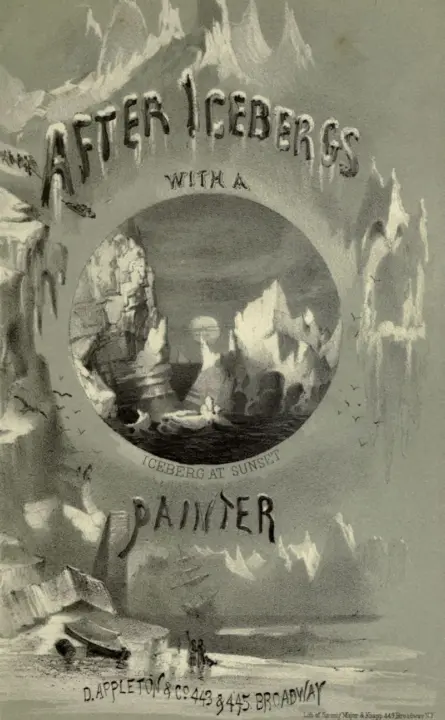
"After Icebergs with a Painter" by Louis Legrand Noble is a travel narrative written in the mid-19th century. The book chronicles the author's summer voyage in 1859 with a landscape painter along the northeastern coast of British America, focusing particularly on the study and sketching of icebergs. This richly detailed account captures the beauty of nature and the encounters with various landscapes and seascapes, providing a glimpse into the adventures of its main characters as they navigate the challenges of their expedition. The opening of the narrative introduces the ambitious nature of the journey, with the author and his painter companion expressing their eagerness to explore the icy terrains and marvels of Labrador and Newfoundland. They discuss the rarity and beauty of icebergs, contemplating both the risks and the allure of their expedition. As they embark, they face the discomforts of sea travel, including seasickness, yet remain captivated by the anticipation of the spectacular landscapes awaiting them. The tone sets the stage for a vivid exploration of natural wonders, human curiosity, and the artistry inspired by such magnificent phenomena.
Introduction adapted from the source catalogue; source summaries may be automatically generated.
Free to read · English · 71,861 words · No account needed
MAKE TIME FOR A GOOD BOOK
On by default. Untick to stop anonymous reading totals. Each page counts after 10 seconds in view. How this works.
Anonymous counting is on unless you have switched it off.
Any doubt that I may have entertained about the danger of lying under the shadow of this great ice-rock is now wholly dispelled. We have just witnessed what was, for the moment, a perfect cataract of ice, with all its motion, and many times its noise. Quick as lightning and loud as thunder, when bolt and thunder come at the same instant, there was one terrific crack, a sharp and silvery ringing blow upon the atmosphere, which I shall never forget, nor ever be able to describe. It shook me through, and struck the very heart. The only response on my part, and I was not alone in the fright, was a convulsive spring to the feet, and a shout to the oarsmen, of fierce command, “Row back! row back!” The spectacle was nearly as startling as the explosion. At once, the upper face of the berg burst out upon the air, as if it had been blasted, and swept down across the great cliff, a huge cataract of green and snowy fragments, with a wild, crashing roar, followed by the heavy, sullen thunder of the plunge into the ocean, and the rolling away of the high-crested seas, and the rocking of the mighty mass back and forth, in the effort to regain its equilibrium. I dreaded the encounter; but our whale-boat was quite at home, and breasted the lofty swells most gracefully. But how fearfully impressive is all this! I recall the warning of the Bishop of Newfoundland, and recollect the conversation of the Rev. Mr. Wood, the rector of St. Thomas’.
We now pass round to the other side of the berg, and take a position between it and the sun. Upon our first circumnavigation, we found this edge of the ice, in its lowest part, about six feet above the sea, with a cavernous hollow running all round, into which the waves were playing with their strange and many sounds. Now, from the recent loss of ice on the opposite heights, all this edge has sunk below the waves, leaving only an inclined plane sweeping up from the water’s edge to the steeper parts of the berg, at an angle of about 20 degrees. Fancy a slab of Italian marble, four and five hundred feet in width, extending from the eaves of the City Hall, New York, half-way or more down the park. I think you will have a tolerable notion of the slope now before us. Up this slippery field of ivory hardness roll the waves, dark as night until they strike the ice, when, in a flash, they turn into that lovely green of the sea, and afterward break in long lines of tumultuous foam. The spectacle is perfectly magnificent. A seam of ice, apparently six inches in diameter, of the hue of a sapphire, cuts the berg from its very top down, and doubtless cuts through the entire submarine body. This jewel of the iceberg is a wonderful beauty. Sparkles of light seem to come from its blue, transparent depths. What, at first, appears singular is, that these blue veins are much softer than the surrounding ice, melting faster, and so becoming channels in which little torrents glitter as they run. At first, we were at a loss to know how they originated, but presently felt satisfied, that they were cracks filled with water, and frozen when the berg was a glacier. This indelible mark of primitive breakage and repair indicates with some correctness the original perpendicular of the ice. According to the blue band in the berg now before us, it is occupying very nearly the position it was in when it was a fissure or crevasse of the glacier. Long processional lines of broken ice are continually floating off from the parent berg, which, in the process of melting, assume many curious shapes, huge antlers of the moose and elk, and sea-fowl, geese and ducks, of gigantic figure. We have just succeeded in securing one of these antlers, and a merry time we had. Before reaching it, we supposed one could bend over and lift it out of the water as easily as he stoops and picks up a buck’s horn out of the prairie grass. It was a match for three of us, and escaped out of our hands and arms repeatedly, slipping back into the waves, and requiring us to round to again and again before we fairly had it. As it is the hardest and the heaviest, so it is the most slippery of all ices, and certainly it seems to me the coldest thing upon which human hands were ever laid. Our summer cakes, handed in by the ice-man, are warm, I fancy, in comparison. I do not wonder that the face of icebergs burst off, under the expansion of the heat they receive in these July days. The surface of this horn is not the least curious feature of it: it is melted into circular depressions about the depth and size of a large watch-crystal, all cutting into each other with such regularity that their angles fall into lines parallel and diagonal in the most artistic manner. Now that we have it in the boat, it resembles a pair of mammoth moose-horns sculptured from water-soaked alabaster. We see several of them now, five or six feet tall, rocking and nodding on the swells as if they were the living appendages of some old moose of the briny deep, come up to sport a little in the world of warmth and sunshine.
Your reading position is saved on this browser. Take it to another device with a library code. Reading pages adapt to text, rather than matching a printed edition.
BEHIND THE BOOK
This eBook is for the use of anyone anywhere in the United States and most other parts of the world at no cost and with almost no restrictions whatsoever. You may copy it, give it away or re-use it under the terms of the Project Gutenberg License included with this eBook or online at www.gutenberg.org. If you are not located in the United States, you will have to check the laws of the country where you are located before using this eBook. Read the source licence.
The original source file, including credits and licence, is retained by this library. Request an original-format copy at no charge. Please include the book title and Project Gutenberg identifier #56529.
KEEP YOUR CURIOSITY GOING
Wilfrid Scawen Blunt
Wilfrid Scawen Blunt

E. W. (Edgar Watson) Howe
Francis Greenleaf Allinson & Anne C. E. (Anne Crosby Emery) Allinson
Cyrenus Cole

John Martineau