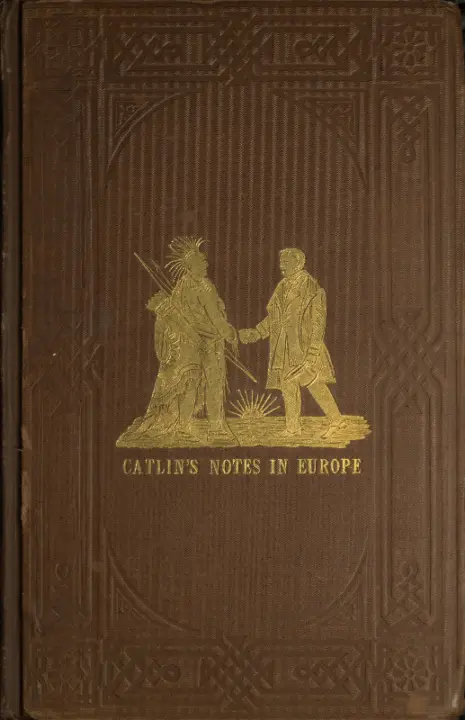
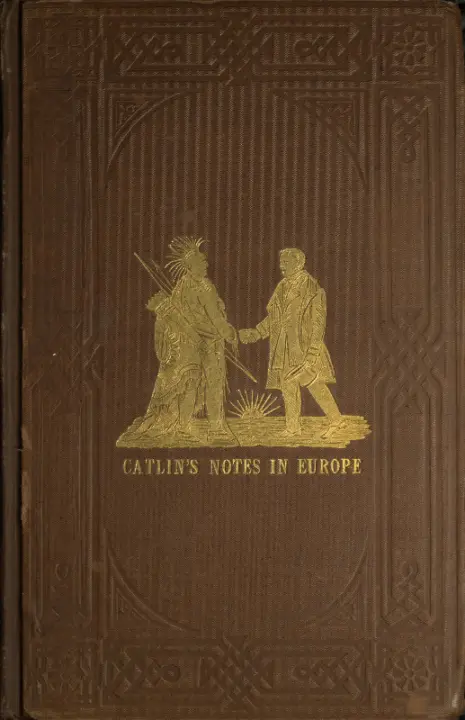
Adventures of the Ojibbeway and Ioway Indians in England, France, and Belgium; Vol. 1 (of 2) being Notes of Eight Years’ Travels and Residence in Europe with his North American Indian Collection
George Catlin
THE CLASSIC COLLECTION · 1852
"Adventures of the Ojibbeway and Ioway Indians in England, France, and Belgium" by George Catlin is a historical account written in the mid-19th century. The work chronicles the travels and experiences of North American Indian tribes, specifically the Ioway Indians, as they visit various European countries. The narrative offers a unique perspective on their cultural interactions, exhibitions, and the impressions they leave on the people of Europe during their journey. The opening of the narrative introduces the arrival of fourteen Ioway Indians in London, led by Mr. Melody, their conductor. Catlin vividly describes their first impressions of the bustling city, hinting at the culture shock they experience as they encounter the complexities of urban life. The Indians, excited yet bewildered, explore their surroundings and prepare for exhibitions of traditional dances and ceremonies, aiming to share their culture with a curious audience. Catlin emphasizes their eagerness to maintain sobriety and respect, in contrast to the previous Ojibbeway group's struggles, setting up a narrative that reflects on identity, tradition, and the cross-cultural dynamics during their time in Europe.
Introduction adapted from the source catalogue; source summaries may be automatically generated.
Free to read · English · 128,758 words · No account needed
MAKE TIME FOR A GOOD BOOK
On by default. Untick to stop anonymous reading totals. Each page counts after 10 seconds in view. How this works.
Anonymous counting is on unless you have switched it off.
With such eyes were those wild people here to look; and without the cares and hourly and momentary concerns which lead the scrambling, busy world through and across the streets, blinded to what is about them, the poor but entirely independent Indians were daily and hourly scanning from the top of their buss, or the platform of their exhibition-rooms, the scenes, and manners, and expressions that were about them; and though they looked with unenlightened eyes, they saw and correctly appreciated many things in London and Paris which the eyes of Londoners and Parisians scarcely see. They saw their sights and got their estimates and statistics, and in the leisure of their inquisitive and abstracted minds drew deductions which few of the business world have leisure or inclination to make; and with all of these they have gone back to be the illustrators and teachers of civilization in the wilderness.
Each one will be a verbal chronicler, as long as he lives, of the events and scenes he witnessed while abroad, and Wash-ka-mon-ya (or Jim), with his smattering of civilization, and his book of entries, which he will find enough to read and translate, will furnish abundance of written evidence for them to comment upon to their nation, who will be looking to them for information of the secret of civilization.
The bazaar of toys and trinkets presented to them, with the money and medals which they will open to view in the wilderness, will glitter in the eyes of their people, and, it is to be feared, may be an inducement to others to follow their example.
Their Bibles had increased in their various boxes since the last census to more than a hundred and fifty; their religious tracts, which they could not read, to some thousands; their dolls, in all, to fifty; and other useless toys, to a great number. Then came their medals, their grosses of buttons, their beads, ribbons, brooches, fans, knives, daggers, combs, pistols, shawls, blankets, handkerchiefs, canes, umbrellas, beaver hats, caps, coats, bracelets, pins, eye-glasses, &c. &c.; and then their prints--views of countries they had seen, of churches, cathedrals, maps of London and Paris, views of bridges, of factories, of coal-pits, of catacombs, of Morgues, &c. &c., to an almost countless number, all to be opened and commented upon, and then scattered, as the first indications of civilization, in the wilderness. These are but mere toys, however, but gewgaws that will be met as matters of course, and soon used up and lost sight of. But Jim's book of the statistics of London, of Paris, and New York, will stand the Magna Charta of his nation, and around it will assemble the wiseacres of the tribe, descanting on and seeking for a solution of the blessings of civilization, as the passing pipe sends off its curling fumes, to future ages, over its astounding and marvellous estimates of civilized nations, of cities, of churches, of courts of justice, and gaols--of the tens of thousands of civilized people who are in it recorded (to their amazement) as blind, as deaf and dumb, and insane; of gallows and guillotines, of massacres and robberies, the number of grog-shops and breweries, of coal-pits, of tread-mills and foundling hospitals, of poorhouses and paupers, of beggars and starvation, of brothels, of prisons for debtors, of rapes, of bigamy, of taxation, of game-laws, of Christianity, of drunkenness, of national debt and repudiation.
Your reading position is saved on this browser. Take it to another device with a library code. Reading pages adapt to text, rather than matching a printed edition.
BEHIND THE BOOK
This eBook is for the use of anyone anywhere in the United States and most other parts of the world at no cost and with almost no restrictions whatsoever. You may copy it, give it away or re-use it under the terms of the Project Gutenberg License included with this eBook or online at www.gutenberg.org. If you are not located in the United States, you will have to check the laws of the country where you are located before using this eBook. Read the source licence.
The original source file, including credits and licence, is retained by this library. Request an original-format copy at no charge. Please include the book title and Project Gutenberg identifier #44777.
KEEP YOUR CURIOSITY GOING
Wilfrid Scawen Blunt
Wilfrid Scawen Blunt

E. W. (Edgar Watson) Howe
Cécile Tormay

Moritz Busch
John L. Ransom