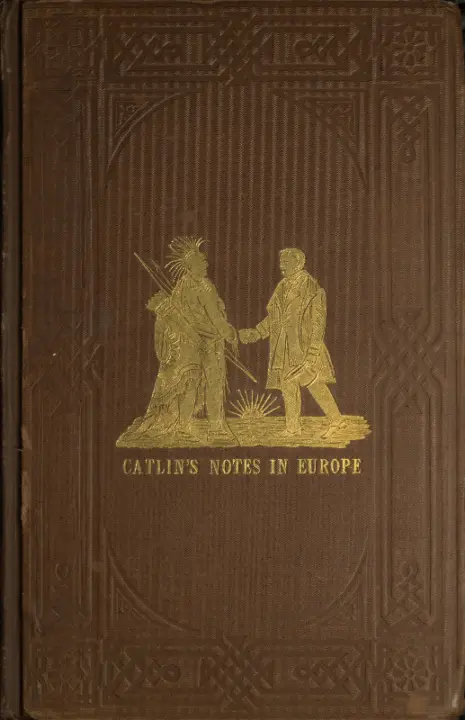
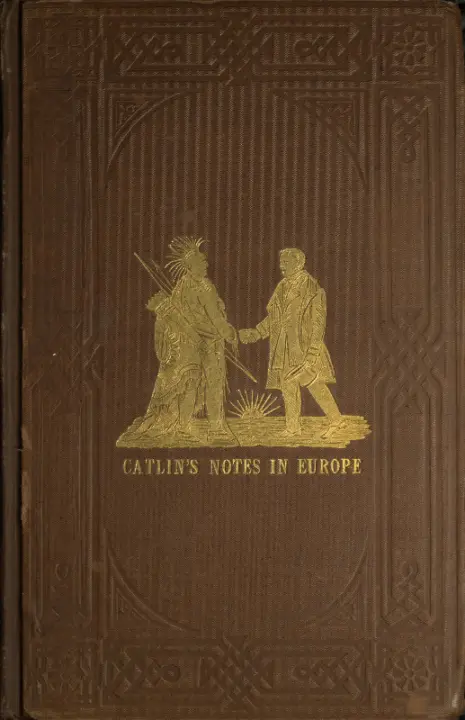
Adventures of the Ojibbeway and Ioway Indians in England, France, and Belgium; Vol. 1 (of 2) being Notes of Eight Years’ Travels and Residence in Europe with his North American Indian Collection
George Catlin
THE CLASSIC COLLECTION · 1852
"Adventures of the Ojibbeway and Ioway Indians in England, France, and Belgium" by George Catlin is a historical account written in the mid-19th century. The work chronicles the travels and experiences of North American Indian tribes, specifically the Ioway Indians, as they visit various European countries. The narrative offers a unique perspective on their cultural interactions, exhibitions, and the impressions they leave on the people of Europe during their journey. The opening of the narrative introduces the arrival of fourteen Ioway Indians in London, led by Mr. Melody, their conductor. Catlin vividly describes their first impressions of the bustling city, hinting at the culture shock they experience as they encounter the complexities of urban life. The Indians, excited yet bewildered, explore their surroundings and prepare for exhibitions of traditional dances and ceremonies, aiming to share their culture with a curious audience. Catlin emphasizes their eagerness to maintain sobriety and respect, in contrast to the previous Ojibbeway group's struggles, setting up a narrative that reflects on identity, tradition, and the cross-cultural dynamics during their time in Europe.
Introduction adapted from the source catalogue; source summaries may be automatically generated.
Free to read · English · 128,758 words · No account needed
MAKE TIME FOR A GOOD BOOK
On by default. Untick to stop anonymous reading totals. Each page counts after 10 seconds in view. How this works.
Anonymous counting is on unless you have switched it off.
As their visit to the Catacombs and the Morgue was abandoned, we resolved to drive through the Champs Elysées and visit the woods of Boulogne, the favourite drive of the Parisians, and probably the most beautiful in the world. We had been solicited by M. Franconi, of the Hippodrome, to enter into an arrangement with him to have the Indians unite in his entertainments three days in the week, where their skill in riding and archery could be seen to great advantage, and for which he would be willing to offer liberal terms. He had invited us to bring the Indians down, at all events, to see the place; and we agreed to make the visit to M. Franconi on our way to the woods of Boulogne. The view was a private one, known only to a few of his friends, who were present, and his own operatic troupe. We were very civilly and politely received; and, all walking to the middle of his grand area, he proposed to make us the offer, on condition that the Indians were good riders, which I had already assured him was the case, and which seemed rather difficult for him to believe, as they had so little of civilization about them. As the best proof, however, he proposed to bring out a horse, and let one of them try and show what he could do. This we agreed to at once; and, having told the Indians before we started that we should make no arrangement for them there unless they were pleased with it and preferred it, they had decided, on entering the grounds, that the exercises would be too desperate and fatiguing to them and destructive to their clothes, and therefore not to engage with him. However, the horse was led into the area and placed upon the track for their chariot-races, which is nearly a quarter of a mile in circumference; and, the question being put, "Who will ride?" it was soon agreed that Jim should try it first. "Wal, me try em," said Jim; "me no ride good, but me try em little." He was already prepared, with his shield and quiver upon his back and his long and shining lance in his hand. The horse was held; though, with all its training, it was some time, with its two or three grooms about it, before they could get the frightened creature to stand steady enough for Jim to mount. In the first effort which they thought he was making to get on, they were surprised to find that he was ungirthing the saddle, which he flung upon the ground, and, throwing his buffalo robe across the animal's back and himself astride, the horse dashed off at his highest speed. Jim saw that the animal was used to the track, and, the course being clear, he leaned forward and brandished his lance, and, every time he came round and passed us, sounded a charge in the shrill notes of the war-whoop. The riding was pleasing and surprised M. Franconi exceedingly, and when he thought it was about time to stop he gave his signal for Jim to pull up, but, seeing no slack to the animal's pace, and Jim still brandishing his weapons in the air and sounding the war-whoop as he passed, he became all at once alarmed for the health of his horse. The Indians at this time were all in a roar of laughter, and the old gentleman was placing himself and his men upon the track as Jim came round, with uplifted arms, to try to stop the animal's speed, just finding at that time that Jim had rode in the true prairie style, without using the bridle, and which, by his neglect of it, had got out of his reach, when he would have used it to pull up with. Jim still dashed by them, brandishing his lance as they came in his way: when they retreated and ran to head him in another place, he there passed them also, and passed them and menaced them again and again as he came around. The alarm of the poor old gentleman for the life of his horse became very conspicuous, and, with additional efforts with his men, and a little pulling up by Jim, who had at length found the rein, the poor affrighted and half-dead animal was stopped, and Jim, leaping off, walked to the middle of the area, where we were in a group, laughing to the greatest excess at the fun. The poor horse was near done over, and led away by the grooms, M. Franconi came and merely bade us good-by, and was exceedingly obliged to us. Whether the poor animal died or not we never heard, but Jim was laid up for several days. On asking him why he ran the horse so hard, he said it was the horse's fault, that "it ran away with him the moment he was on its back--that the creature was frightened nearly to death; and he thought, if it preferred running, he resolved to give it running enough." The Doctor told him he acted imprudently in getting on, which had caused all the trouble. "In what way?" inquired Jim. "Why, by letting the animal see that ugly face of yours; if you had hid it till you were on, there would have been no trouble."
Your reading position is saved on this browser. Take it to another device with a library code. Reading pages adapt to text, rather than matching a printed edition.
BEHIND THE BOOK
This eBook is for the use of anyone anywhere in the United States and most other parts of the world at no cost and with almost no restrictions whatsoever. You may copy it, give it away or re-use it under the terms of the Project Gutenberg License included with this eBook or online at www.gutenberg.org. If you are not located in the United States, you will have to check the laws of the country where you are located before using this eBook. Read the source licence.
The original source file, including credits and licence, is retained by this library. Request an original-format copy at no charge. Please include the book title and Project Gutenberg identifier #44777.
KEEP YOUR CURIOSITY GOING
Wilfrid Scawen Blunt
Wilfrid Scawen Blunt

E. W. (Edgar Watson) Howe
Cécile Tormay

Moritz Busch
John L. Ransom