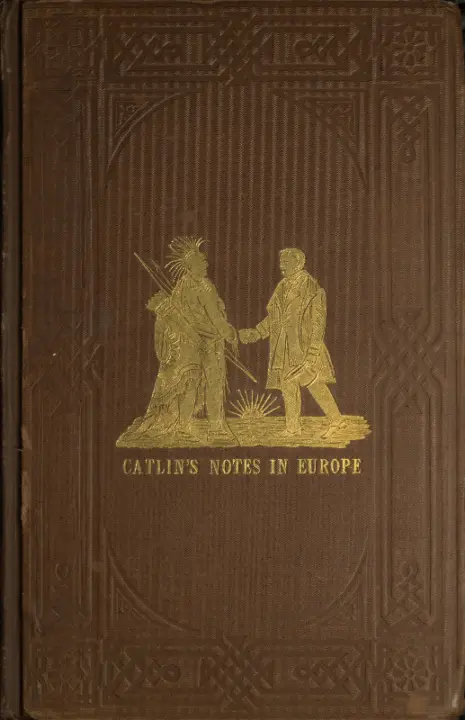
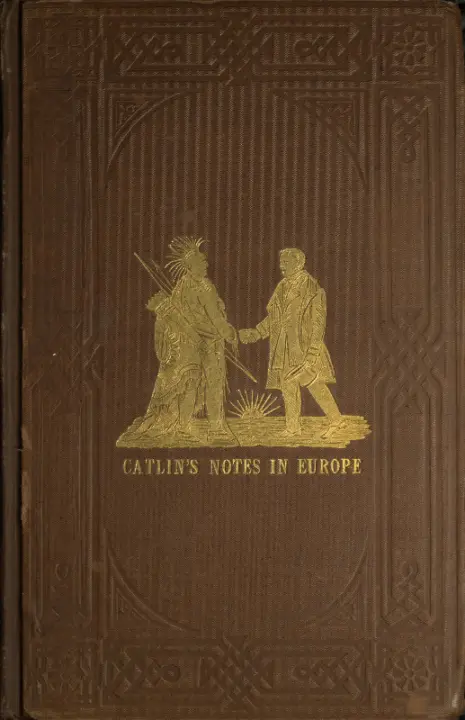
Adventures of the Ojibbeway and Ioway Indians in England, France, and Belgium; Vol. 1 (of 2) being Notes of Eight Years’ Travels and Residence in Europe with his North American Indian Collection
George Catlin
THE CLASSIC COLLECTION · 1852
"Adventures of the Ojibbeway and Ioway Indians in England, France, and Belgium" by George Catlin is a historical account written in the mid-19th century. The work chronicles the travels and experiences of North American Indian tribes, specifically the Ioway Indians, as they visit various European countries. The narrative offers a unique perspective on their cultural interactions, exhibitions, and the impressions they leave on the people of Europe during their journey. The opening of the narrative introduces the arrival of fourteen Ioway Indians in London, led by Mr. Melody, their conductor. Catlin vividly describes their first impressions of the bustling city, hinting at the culture shock they experience as they encounter the complexities of urban life. The Indians, excited yet bewildered, explore their surroundings and prepare for exhibitions of traditional dances and ceremonies, aiming to share their culture with a curious audience. Catlin emphasizes their eagerness to maintain sobriety and respect, in contrast to the previous Ojibbeway group's struggles, setting up a narrative that reflects on identity, tradition, and the cross-cultural dynamics during their time in Europe.
Introduction adapted from the source catalogue; source summaries may be automatically generated.
Free to read · English · 128,758 words · No account needed
MAKE TIME FOR A GOOD BOOK
On by default. Untick to stop anonymous reading totals. Each page counts after 10 seconds in view. How this works.
Anonymous counting is on unless you have switched it off.
Thus musing and moralizing on the events of the day, I left them to their conversation and their pipe, to attend, myself, where my presence was necessary, in arranging my collection, and preparing my rooms for their exhibitions. In this I had a real task--a scene of vexation and delay that I should wish never to go through again, and of which a brief account may be of service to any one of my countrymen who may be going to Paris to open a public exhibition; at least, my hints will enable him, if he pays attention to them, to begin at the right time, and at the right end of what he has got to do, and to do it to the best advantage.
His first step is, for any exhibition whatever, to make his application to the Prefect of Police for his licence, which is in all cases doubtful, and in all cases also is sure to require two or three weeks for his petition to pass the slow routine of the various offices and hands which it must go through. If it be for any exhibition that can be construed into an interference with the twenty or thirty theatre licences, it may as well not be applied for or thought of, for they will shut it up if opened.
It is also necessary to arrange in time with the overseer of the poor, whether he is to take one-eighth or one-fifth of the receipts for the hospitals--for the hospice, as he is termed, is placed at the door of all exhibitions in Paris, who carries off one-eighth or one-fifth of the daily receipts every night. It is necessary also, if catalogues are to be sold in the rooms, to lodge one of them at least two weeks before the exhibition is to open in the hands of the Commissaire de Police, that it may pass through the office of the Prefect, and twenty other officers' hands, to be read, and duly decided that there is nothing revolutionary in it; and then to sell them, or to give them away (all the same), it is necessary for the person who is to sell, and who alone can sell them, to apply personally to the Commissaire de Police, and make oath that he was born in France, to give his age and address, &c., &c., before he can take the part that is assigned him. It is then necessary, when the exhibition is announced, to wait until seven or eight guards and police, with muskets and bayonets fixed, enter and unbar the doors, and open them for the public's admission. It is necessary to submit to their friendly care during every day of the exhibition, and to pay each one his wages at night, when they lock up the rooms and put out the lights. In all this, however, though expensive, there is one redeeming feature. These numbers of armed police, at their posts, in front of the door, and in the passage, as well as in the exhibition rooms, give respectability to its appearance, and preserve the strictest order and quiet amongst the company, and keep a constant and vigilant eye to the protection of property. During the time I was engaged in settling these tedious preliminaries, and getting my rooms prepared for their exhibition, the Indians were taking their daily rides, and getting a passing glimpse of most of the out-door scenes of Paris. They were admitting parties of distinguished visitors, who were calling upon them, and occasionally leaving them liberal presents, and passing their evenings upon their buffalo skins, handing around the never-tiring pipe, and talking about the King, and their medals, and curious things they had seen as they had been riding through the streets. The thing which as yet amused the Doctor the most was the great number of women they saw in the streets leading dogs with ribbons and strings. He said he thought they liked their dogs better than they did their little children. In London, he said he had seen some little dogs leading their masters, who were blind, and in Paris they began to think the first day they rode out that one half of the Paris women were blind, but that they had a great laugh when they found that their eyes were wide open, and that instead of their dogs leading them, they were leading their dogs. The Doctor seemed puzzled about the custom of the women leading so many dogs, and although he did not in any direct way censure them for doing it, it seemed to perplex him, and he would sit and smile and talk about it for hours together. He and Jim had, at first, supposed, after they found that the ladies were not blind, that they cooked and ate them, but they were soon corrected in this notion, and always after remained at a loss to know what they could do with them.
Your reading position is saved on this browser. Take it to another device with a library code. Reading pages adapt to text, rather than matching a printed edition.
BEHIND THE BOOK
This eBook is for the use of anyone anywhere in the United States and most other parts of the world at no cost and with almost no restrictions whatsoever. You may copy it, give it away or re-use it under the terms of the Project Gutenberg License included with this eBook or online at www.gutenberg.org. If you are not located in the United States, you will have to check the laws of the country where you are located before using this eBook. Read the source licence.
The original source file, including credits and licence, is retained by this library. Request an original-format copy at no charge. Please include the book title and Project Gutenberg identifier #44777.
KEEP YOUR CURIOSITY GOING
Wilfrid Scawen Blunt
Wilfrid Scawen Blunt

E. W. (Edgar Watson) Howe
Cécile Tormay

Moritz Busch
John L. Ransom