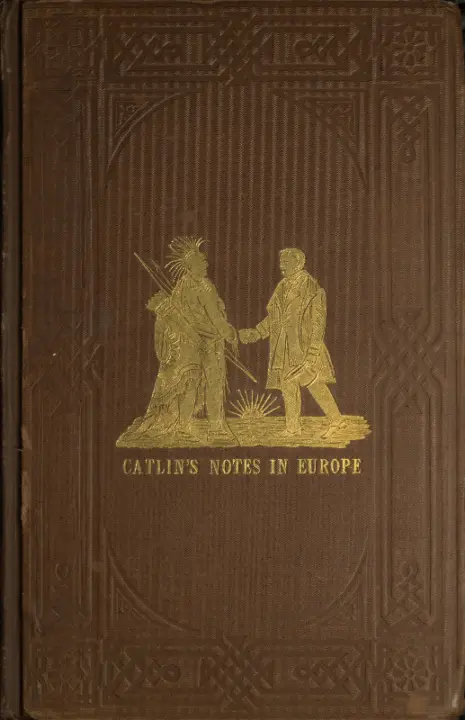
Adventures of the Ojibbeway and Ioway Indians in England, France, and Belgium; Vol. 1 (of 2) being Notes of Eight Years’ Travels and Residence in Europe with his North American Indian Collection
George Catlin
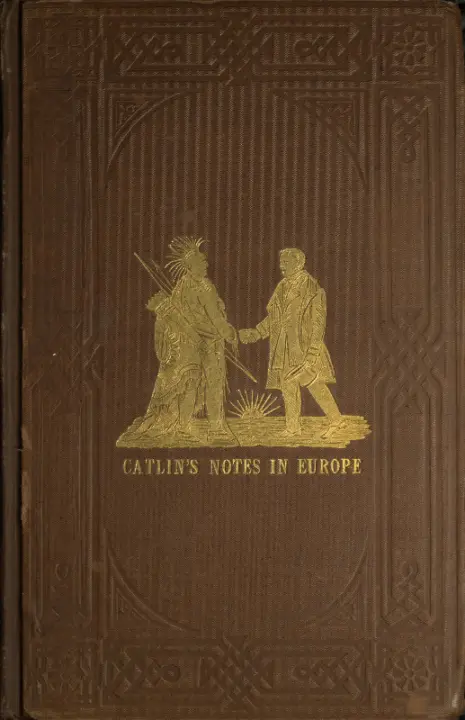
THE CLASSIC COLLECTION · 1852
"Adventures of the Ojibbeway and Ioway Indians in England, France, and Belgium" by George Catlin is a historical account written in the mid-19th century. The work chronicles the travels and experiences of North American Indian tribes, specifically the Ioway Indians, as they visit various European countries. The narrative offers a unique perspective on their cultural interactions, exhibitions, and the impressions they leave on the people of Europe during their journey. The opening of the narrative introduces the arrival of fourteen Ioway Indians in London, led by Mr. Melody, their conductor. Catlin vividly describes their first impressions of the bustling city, hinting at the culture shock they experience as they encounter the complexities of urban life. The Indians, excited yet bewildered, explore their surroundings and prepare for exhibitions of traditional dances and ceremonies, aiming to share their culture with a curious audience. Catlin emphasizes their eagerness to maintain sobriety and respect, in contrast to the previous Ojibbeway group's struggles, setting up a narrative that reflects on identity, tradition, and the cross-cultural dynamics during their time in Europe.
Introduction adapted from the source catalogue; source summaries may be automatically generated.
Free to read · English · 128,758 words · No account needed
MAKE TIME FOR A GOOD BOOK
On by default. Untick to stop anonymous reading totals. Each page counts after 10 seconds in view. How this works.
Anonymous counting is on unless you have switched it off.
The lady's explanation of this, that "It was only harmless ale that these women were carrying in for their masters and mistresses," excited the Doctor's smiles, but no reply.
She seemed not satisfied yet about the first subject that she had started, and reverting to it again, said, "Well, Doctor, I can't excuse the Indians for having so many wives. I like the Indians very much, but I don't like that custom they have; I think it is very cruel and very wicked. Don't you think it is wrong?"
The Doctor studied a moment, and replied, "that it might be wrong, but if it was, he didn't see that it was any worse than for white women to have a number of husbands." "But what, Doctor, what do you mean? I hope you have not so bad an opinion of white women as that?" To this he very coolly replied, "that when they drank a great deal of gin, he believed, from what he had seen in his practice, that a woman would require more than one husband; and that since he had been in London he had seen many walking in the streets, and some riding in fine carriages, whom he thought, from their looks, must have more than one husband: and from what he had been told, he believed that many women in London had a heap!" "That's a lot!" (cried out a very pretty little girl, who had been listening, and, frightened at her own unintentional interpretation, started to run.)
"Come, come, Catlin," said Melody, "pull the old fellow out, and take him away;" and so the debate ended, amidst a roar of laughter from all sides.
One more of the hundred little reminiscences of Vauxhall, and we will leave it. I have already said, that in the spacious apartments of Vauxhall, unoccupied, the Indians were quartered, and took their meals; and during the forepart of the day, between their breakfast and the hour of their afternoon exhibitions, their time was mostly spent in strolling around the grounds, or at their varied amusements. Many of my personal friends finding this a pleasing opportunity to see them, were in the habit of coming in, and amusing themselves with them. I had accidentally heard of a party of ladies preparing to come on a certain morning, some of them my esteemed friends, and others strangers to me: and from a wish to get relieved from a fatiguing conversation, as well as from a still stronger desire for amusement, I selected from my wardrobe a very splendid dress, head-gear and all complete, and fully arranged myself in Indian costume, "cap-à-pied," with face fully painted, and weapons in hand; and at the hour of their arrival in the house, took care to be strolling about in the grounds with Wash-ka-mon-ya (Jim). Whilst the ladies were amused with the party in the house, where there were constant inquiries for me, two of them observing us two beaus sauntering about in the garden, came out to keep us company, and to talk to us, and with themselves, in the English language, which of course we Indians knew nothing of: when we shook our heads to their inquiries, "Do you speak English, good Indians?" I saw they did not recognize me, yet I trembled for fear, for they were lovely women, and every sentence almost which they uttered would have made the discovery more cruel: we held ourselves dignified and dumb; whilst they, poor things, were so much regretting that we could not understand what they said. They finished their visit to us and their remarks, and returned, leaving me to regret my folly upon which I had thoughtlessly entered.
Your reading position is saved on this browser. Take it to another device with a library code. Reading pages adapt to text, rather than matching a printed edition.
BEHIND THE BOOK
This eBook is for the use of anyone anywhere in the United States and most other parts of the world at no cost and with almost no restrictions whatsoever. You may copy it, give it away or re-use it under the terms of the Project Gutenberg License included with this eBook or online at www.gutenberg.org. If you are not located in the United States, you will have to check the laws of the country where you are located before using this eBook. Read the source licence.
The original source file, including credits and licence, is retained by this library. Request an original-format copy at no charge. Please include the book title and Project Gutenberg identifier #44777.
KEEP YOUR CURIOSITY GOING
Wilfrid Scawen Blunt
Wilfrid Scawen Blunt

E. W. (Edgar Watson) Howe
Cécile Tormay

Moritz Busch
John L. Ransom