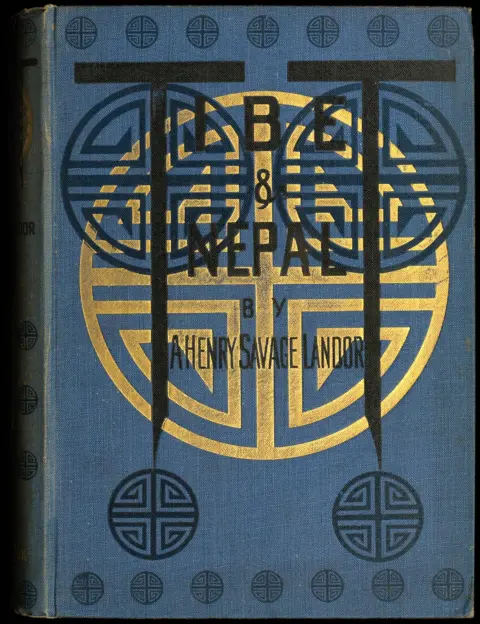
Tibet & Nepal
Arnold Henry Savage Landor
THE CLASSIC COLLECTION · 1913
"Across Unknown South America" by A. Henry Savage-Landor is a travelogue written in the early 20th century. The book chronicles the author's adventurous journey through the uncharted areas of Brazil, detailing his encounters and observations of the land's geography, native tribes, and natural wealth. It aims to illuminate the lesser-known aspects of South America, particularly highlighting Brazil's immense resources and the misconceptions surrounding its interior. The opening of the book establishes the author's ambitious plans for a transcontinental journey, dismissing prevalent fears of danger and difficulty associated with traveling in Brazil's interior. He highlights the lack of reliable European companions for the expedition, ultimately assuming the roles of multiple specialists himself, from cartographer to botanist. The preface expresses his conviction that South America is poised for future development and that misconceptions about the land and its inhabitants have hindered exploration and colonization. The initial chapters introduce the landscape, showcasing Brazil’s size, wealth of minerals, and potential for agricultural prosperity, setting the stage for the ensuing expedition filled with challenges and discoveries.
Introduction adapted from the source catalogue; source summaries may be automatically generated.
Free to read · English · 258,022 words · No account needed
MAKE TIME FOR A GOOD BOOK
On by default. Untick to stop anonymous reading totals. Each page counts after 10 seconds in view. How this works.
Anonymous counting is on unless you have switched it off.
There were in the Bororo language three genders, masculine, feminine and neuter. The masculine was formed by adding the words chireu, curi, or curireu, to the noun; the feminine by the suffixes chireuda and curireuda. There were many words which were used unaltered for either gender. In the case of animals, the additional words medo, male, or aredo, female, clearly defined the sex in specific cases where the names would otherwise be ambiguous. Inanimate objects had no sex, and were therefore neuter.
Most nouns had a plural as well as a singular, but there were exceptions to this rule, such as names of certain plants and animals, the sky, the wind, etc.; not to count things which were generally taken collectively, such as flies--ruque; macaw or macaws, nabure, etc.
The plural was made by the suffixes doghe or maghe--the maghe being used principally in possessive cases, such as tori-doghe, stones; padje-maghe, our mothers. Exceptions to this rule were the words ending in bo, co, go, or mo, to which the suffix e was sufficient to form the plural; whereas in those terminating in do or no, ro, or other consonants, the o was suppressed and an e placed in its stead. Example: jomo, otter, jomoe, otters; cuno, parrot, cune, parrots; apodo, or tucan (a bird), apode, tucans, etc.
There were a number of irregular exceptions, such as aredo, wife; areme, wives; medo, man, ime, men. Perhaps the most curious of plurals was ore, sons, the singular of which was anareghedo (son).
The words ending in go generally formed the plural with an
interchangeable ghe.
The pronouns were:
imi = I
aki = thou
ema = he or she
sheghi or paghi = we
taghi = you
emaghi = they
When immediately before a verb these were abbreviated into I or it, a or ac, e or ei, pa or pag, ta or tag, e or et--I, thou, he or she, we, you, they, according to their preceding a vowel or a consonant. With words beginning with a consonant only the first syllable of the pronoun was used.
The verb itself did not vary in the various persons, but it did vary in its tenses by suffixes, sometimes after the pronoun, sometimes after the verb. In the present tense the Bororos generally used for the purpose the word nure, usually between the pronoun and the verb, with the pronoun occasionally repeated after the nure; but in general conversation, which was laconic, the pronoun was frequently suppressed altogether--similarly to the frequent omission of the pronoun in the English telegraphic language.
Your reading position is saved on this browser. Take it to another device with a library code. Reading pages adapt to text, rather than matching a printed edition.
Arnold Henry Savage Landor
Arnold Henry Savage Landor
Arnold Henry Savage Landor
Arnold Henry Savage Landor
BEHIND THE BOOK
This eBook is for the use of anyone anywhere in the United States and most other parts of the world at no cost and with almost no restrictions whatsoever. You may copy it, give it away or re-use it under the terms of the Project Gutenberg License included with this eBook or online at www.gutenberg.org. If you are not located in the United States, you will have to check the laws of the country where you are located before using this eBook. Read the source licence.
The original source file, including credits and licence, is retained by this library. Request an original-format copy at no charge. Please include the book title and Project Gutenberg identifier #22483.
KEEP YOUR CURIOSITY GOING
Wilfrid Scawen Blunt
Wilfrid Scawen Blunt

E. W. (Edgar Watson) Howe
Francis Greenleaf Allinson & Anne C. E. (Anne Crosby Emery) Allinson
Cyrenus Cole

John Martineau