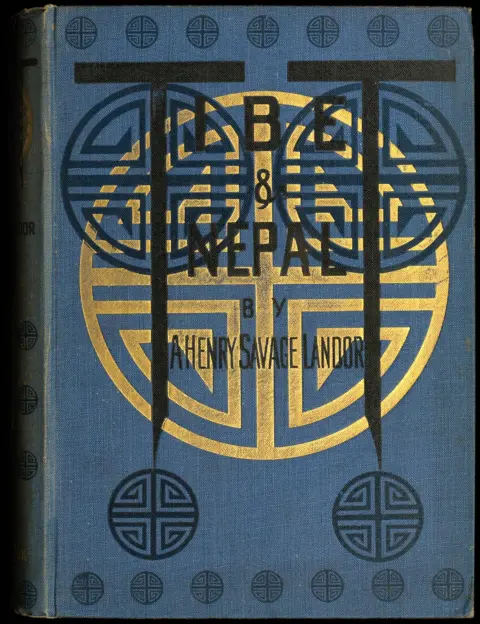
Tibet & Nepal
Arnold Henry Savage Landor
THE CLASSIC COLLECTION · 1913
"Across Unknown South America" by A. Henry Savage-Landor is a travelogue written in the early 20th century. The book chronicles the author's adventurous journey through the uncharted areas of Brazil, detailing his encounters and observations of the land's geography, native tribes, and natural wealth. It aims to illuminate the lesser-known aspects of South America, particularly highlighting Brazil's immense resources and the misconceptions surrounding its interior. The opening of the book establishes the author's ambitious plans for a transcontinental journey, dismissing prevalent fears of danger and difficulty associated with traveling in Brazil's interior. He highlights the lack of reliable European companions for the expedition, ultimately assuming the roles of multiple specialists himself, from cartographer to botanist. The preface expresses his conviction that South America is poised for future development and that misconceptions about the land and its inhabitants have hindered exploration and colonization. The initial chapters introduce the landscape, showcasing Brazil’s size, wealth of minerals, and potential for agricultural prosperity, setting the stage for the ensuing expedition filled with challenges and discoveries.
Introduction adapted from the source catalogue; source summaries may be automatically generated.
Free to read · English · 258,022 words · No account needed
MAKE TIME FOR A GOOD BOOK
On by default. Untick to stop anonymous reading totals. Each page counts after 10 seconds in view. How this works.
Anonymous counting is on unless you have switched it off.
Where, perhaps, Brazil's greatest richness lies is in its hundreds of thousands of square miles of wonderful pasture lands--perfectly ideal, with plenty of excellent water and a delicious climate--capable of some day fattening enough cattle to supply half the world with meat.
All these wonderful riches are absolutely dormant; more than that, absolutely wasted for lack of population, for lack of roads, trails, railways, or navigation of the rivers. The coast of Brazil is highly civilized, and so, more or less, is the immediate neighbourhood of large cities; but the moment you leave those cities, or the narrow zone along the few hundred kilometres of railways which now exist, you immediately relapse into the Middle Ages. When you get beyond the comparatively narrow belt of semi-civilization, along the coast, Brazil is almost as unknown as Mars or the moon. The people who know least the country are, curiously enough, the Brazilians themselves. Owing greatly to racial apathy, they care little for the trouble of developing their beautiful land. They watch with envy strangers taking gold, diamonds, platinum, and precious stones out of their country. They accuse foreigners of going there to rob them of their wealth; yet you seldom meet a Brazilian who will venture out of a city to go and help himself. The Brazilian Government is now beginning to wake up to the fact that it is the possessor of the most magnificent country on earth, and it is its wish to endeavour to develop it; but the existing laws, made by short-sighted politicians, are considered likely to hamper development for many years to come.
Brazil is not lacking in intelligent men. Indeed, I met in Rio de Janeiro and S. Paulo men who would be remarkable anywhere. Councillor Antonio Prado of S. Paulo, for instance, was a genius who had done wonders for his country. The great development of the State of S. Paulo compared with other States is chiefly due to that great patriot. Then the Baron de Rio Branco--the shrewd diplomatist, who has lately died--has left a monument of good work for his country. The cession of the immensely rich tract of the Acre Territory by Bolivia to Brazil is in itself a wonderful achievement. Dr. Pedro de Toledo, the present Minister of Agriculture, is a practical, well-enlightened, go-ahead gentleman, who makes superhuman efforts, and in the right direction, in order to place his country among the leading states of the two Americas. Dr. Lauro Severiano Mueller, the new Minister of Foreign Affairs, is a worthy successor of Baron de Rio Branco. There are many other persons of positive genius, such as Senator Alcindo Guanabara, a man of remarkable literary ability, and one of the few men in Brazil who realize thoroughly the true wants of the Republic, a man of large views, who is anxious to see his country opened up and properly developed. Another remarkable man is Dr. Jose Carlos Rodriguez, the proprietor of the leading newspaper in Rio--the Jornal do Commercio--and the organizing genius of some of the most important Brazilian commercial ventures. Having had an American and English education, Dr. Rodriguez has been able to establish in Rio the best edited and produced daily newspaper in the world. Its complete service of telegraphic news from all over the globe--on a scale which no paper, even in England, can equal or even approach--the moderate tone and seriousness of its leading articles, its highly reliable and instructive columns on all possible kinds of subjects by a specially able staff of the cleverest writers in Brazil, and the refined style in which it is printed, do great honour to Dr. Rodriguez. Then comes another man of genius--Dr. Francisco Pereira Passos, who, with Dr. Paulo de Frontin, has been able in a few years to transform Rio de Janeiro from one of the dirtiest and ugliest cities in South America into the most beautiful. The great drive around the beautiful bay, the spacious new Avenida Central--with its parallel avenues of great width--the construction of a magnificently appointed municipal theatre, the heavenly road along the Tijuca mountains encircling and overlooking the great harbour, and a thousand other improvements of the city are due to those two men. Dr. Paulo Frontin has also been active in developing the network of railways in Brazil. Whatever he has undertaken, he has accomplished with great judgment and skill.
Your reading position is saved on this browser. Take it to another device with a library code. Reading pages adapt to text, rather than matching a printed edition.
Arnold Henry Savage Landor
Arnold Henry Savage Landor
Arnold Henry Savage Landor
Arnold Henry Savage Landor
BEHIND THE BOOK
This eBook is for the use of anyone anywhere in the United States and most other parts of the world at no cost and with almost no restrictions whatsoever. You may copy it, give it away or re-use it under the terms of the Project Gutenberg License included with this eBook or online at www.gutenberg.org. If you are not located in the United States, you will have to check the laws of the country where you are located before using this eBook. Read the source licence.
The original source file, including credits and licence, is retained by this library. Request an original-format copy at no charge. Please include the book title and Project Gutenberg identifier #22483.
KEEP YOUR CURIOSITY GOING
Wilfrid Scawen Blunt
Wilfrid Scawen Blunt

E. W. (Edgar Watson) Howe
Francis Greenleaf Allinson & Anne C. E. (Anne Crosby Emery) Allinson
Cyrenus Cole

John Martineau