THE CLASSIC COLLECTION✦FlaxiusCLASSIC FREE BOOKS
Flaxius
Charles Godfrey Leland
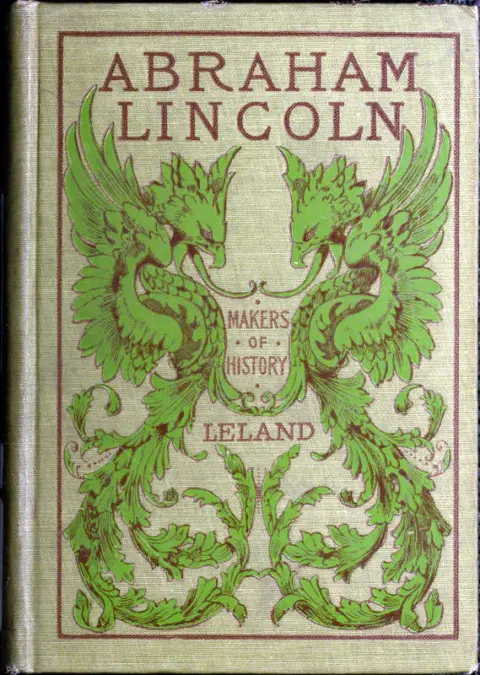
THE CLASSIC COLLECTION · 1879
"Abraham Lincoln and the Abolition of Slavery in the United States" by Charles Godfrey Leland is a historical account written in the late 19th century. This biography delves into the life and political career of Abraham Lincoln, particularly focusing on his role in the abolition of slavery during a tumultuous period in American history. The book paints a picture of Lincoln's perseverance and moral integrity, which ultimately led to significant changes in the nation. The opening of the biography introduces Abraham Lincoln, detailing his early life from his birth in Kentucky to his family's challenges and hardships. It describes his formative years of self-education, his relationships with family members, particularly his mother, and the influences that shaped his character. Leland emphasizes Lincoln's physical strength, intellectual curiosity, and empathetic nature, setting the stage for the defining moments of his later career. The narrative highlights not only the socio-economic conditions of Lincoln's upbringing but also the foundational experiences that would later inform his views on equality and civil rights, particularly as they relate to the abolition of slavery.
Introduction adapted from the source catalogue; source summaries may be automatically generated.
Free to read · English · 57,544 words · No account needed
MAKE TIME FOR A GOOD BOOK
On by default. Untick to stop anonymous reading totals. Each page counts after 10 seconds in view. How this works.
Anonymous counting is on unless you have switched it off.
Abraham was now sixteen years of age, and had grown so rapidly that he had almost attained the height which he afterwards reached of six feet four inches. He was very dark, his skin was shrivelled even in boyhood by constant exposure, and he habitually wore low shoes, a linsey-woolsey shirt, a cap made from the skin of a raccoon or opossum, and buckskin breeches, which were invariably about twelve inches too short for him. When not working for his father, he was hired out as a farm-labourer to the neighbours. His cousin, John Hanks, says--“We worked barefoot, grubbed it, ploughed, mowed, and cradled together.”
All who knew him at this time testify that Abraham hated hard-work, though he did it well--that he was physically indolent, though intellectually very active--that he loved to laugh, tell stories, and joke while labouring--and that he passed his leisure moments in hard study or in reading, which he made hard by writing out summaries of all he read, and getting them by heart. He would study arithmetic at night by the light of the fire, and cipher or copy with a pencil or coal on the wooden shovel or on a board. When this was full, he would shave it off with his father’s drawing-knife, and begin again. When he had paper, he used it instead; but in the frequent intervals when he had none, the boards were kept until paper was obtained. Among the first books which he read and thoroughly mastered were “Æsop’s Fables,” “Robinson Crusoe,” Bunyan’s “Pilgrim’s Progress,” a “History of the United States,” Weem’s “Life of Washington,” and “The Revised Statutes of Indiana.” From another work, “The Kentucky Preceptor,” a collection of literary extracts, he is said by a Mrs. Crawford, who knew him well, to have “learned his school orations, speeches, and pieces to write.” The field-work, which Abraham Lincoln disliked, did not, however, exhaust his body, and his mind found relief after toil in mastering anything in print.[9] It is not unusual to see poor and ignorant youths who are determined to “get learning,” apply themselves to the hardest and dryest intellectual labour with very little discrimination of any difference between that and more attractive literature, and it is evident that young Lincoln worked in this spirit. There is no proof that his memory was by nature extraordinary--it would rather seem that the contrary was the case, from the pains which he took to improve it. During his boyhood, any book had to him all the charm of rarity; perhaps it was the more charming because most of his friends believed that mental culture was incompatible with industry. “Lincoln,” said his cousin, Dennis Hanks, “was lazy--a very lazy man. He was always reading, scribbling, writing, ciphering, writing poetry, and the like.” It is evident that his custom of continually exercising his memory on all subjects grew with his growth and strengthened with his strength. By the time he was twenty-five, he had, without instruction, made himself a good lawyer--not a mere “case-practitioner,” but one who argued from a sound knowledge of principles. It is said that when he began to read Blackstone, he thoroughly learned the first forty pages at one sitting. There is also sufficient proof that he had perfectly mastered not only “Euclid’s Geometry,” but a number of elementary scientific works, among others one on astronomy. And many anecdotes of his later life prove that he learned nothing without thinking it over deeply, especially in all its relations to his other acquisitions and its practical use. If education consists of mental discipline and the acquisition of knowledge, it is idle to say that Abraham Lincoln was uneducated, since few college graduates actually excelled him in either respect. These facts deserve dwelling on, since, in the golden book of self-made men, there is not one who presents a more encouraging example to youth, and especially to the poor and ambitious, than Abraham Lincoln. He developed his memory by resolutely training it--he brought out his reasoning powers as a lawyer by using his memory--he became a fluent speaker and a ready reasoner by availing himself of every opportunity to speak or debate. From the facts which have been gathered by his biographers, or which are current in conversation among those who knew him, it is most evident that there seldom lived a man who owed so little to innate genius or talents, in comparison to what he achieved by sheer determination and perseverance.
Your reading position is saved on this browser. Take it to another device with a library code. Reading pages adapt to text, rather than matching a printed edition.
Charles Godfrey Leland
Charles Godfrey Leland
Charles Godfrey Leland
Charles Godfrey Leland
BEHIND THE BOOK
This eBook is for the use of anyone anywhere in the United States and most other parts of the world at no cost and with almost no restrictions whatsoever. You may copy it, give it away or re-use it under the terms of the Project Gutenberg License included with this eBook or online at www.gutenberg.org. If you are not located in the United States, you will have to check the laws of the country where you are located before using this eBook. Read the source licence.
The original source file, including credits and licence, is retained by this library. Request an original-format copy at no charge. Please include the book title and Project Gutenberg identifier #52412.
KEEP YOUR CURIOSITY GOING
Cécile Tormay

Moritz Busch
John L. Ransom
Frances Wright
Cécile Tormay

Mabel Potter Daggett