THE CLASSIC COLLECTION✦FlaxiusCLASSIC FREE BOOKS
Flaxius
Charles Godfrey Leland
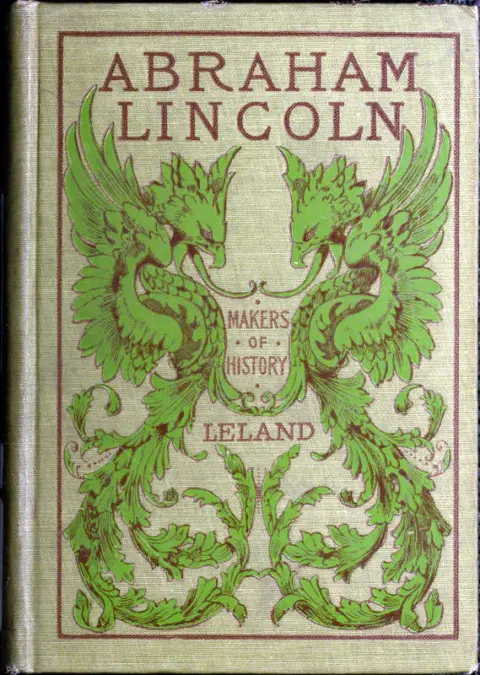
THE CLASSIC COLLECTION · 1879
"Abraham Lincoln and the Abolition of Slavery in the United States" by Charles Godfrey Leland is a historical account written in the late 19th century. This biography delves into the life and political career of Abraham Lincoln, particularly focusing on his role in the abolition of slavery during a tumultuous period in American history. The book paints a picture of Lincoln's perseverance and moral integrity, which ultimately led to significant changes in the nation. The opening of the biography introduces Abraham Lincoln, detailing his early life from his birth in Kentucky to his family's challenges and hardships. It describes his formative years of self-education, his relationships with family members, particularly his mother, and the influences that shaped his character. Leland emphasizes Lincoln's physical strength, intellectual curiosity, and empathetic nature, setting the stage for the defining moments of his later career. The narrative highlights not only the socio-economic conditions of Lincoln's upbringing but also the foundational experiences that would later inform his views on equality and civil rights, particularly as they relate to the abolition of slavery.
Introduction adapted from the source catalogue; source summaries may be automatically generated.
Free to read · English · 57,544 words · No account needed
MAKE TIME FOR A GOOD BOOK
On by default. Untick to stop anonymous reading totals. Each page counts after 10 seconds in view. How this works.
Anonymous counting is on unless you have switched it off.
Mr. Lincoln’s last speech was entirely devoted to a kind consideration of the means by which he might restore their privileges to the rebels; and his last story was a kindly excuse for letting one escape. It was known that Jacob Thompson, a notorious Confederate, meant to escape in disguise. The President, as usual, was disposed to be merciful, and to permit the arch-rebel to pass unmolested, but his Secretary urged that he should be arrested as a traitor. “By permitting him to escape the penalties of treason,” remarked the Secretary, “you sanction it.” “Well,” replied Mr. Lincoln, “that puts me in mind of a little story. There was an Irish soldier last summer who stopped at a chemist’s, where he saw a soda-fountain. ‘Misther Doctor,’ he said, ‘give me, plase, a glass ov soda-wather--and if ye can put in a few drops of whiskey unbeknown to anyone, I’ll be obleeged till yees.’ Now,” continued Mr. Lincoln, “if Jake Thompson is permitted to go away unknown to anyone, where’s the harm? Don’t have him arrested.”
And now the end was drawing near. As the taper which has burned almost away flashes upwards, as if it would cast its fire-life to heaven, so Abraham Lincoln, when his heart was for once, and once only, glad and light, perished suddenly. During the whole war he had been hearing from many sources that his life was threatened. There were always forming, in the South, Devoted Bands and Brotherhoods of Death, sanctioned by the Confederate Congress, whose object was simply arson, robbery, and murder in the North. Many have forgotten, but I have not, what appeared in the rebel newspapers of those days, or with what the detective police of the North were continually busy. The deeds of Beal and Kennedy,[34] men holding commissions from the authorities of Richmond for the purpose, showed that a government could stoop to attempt to burn hundreds of women and children alive, and throw railway trains full of peaceable citizens off the track. It is to the credit of the North that, in their desire for reconciliation, the question as to who were the instigators and authorisers of Lincoln’s death was never pushed very far. The world was satisfied with being told that the murderer was a crazy actor, and the rebels eagerly caught at the idea. But years have now passed, and it is time that the truth should be known. As Dr. Brockett declares, a plot, the extent and ramifications of which have never yet been fully made known, had long been formed to assassinate the President and the prominent members of the Cabinet. “Originating in the Confederate Government, this act, with others, such as the attempt to fire New York, ... was confided to an association of army officers, who, when sent on these errands, were said to be on ‘detached service.’” There is direct proof of Booth’s actual consultation with officers known to belong to this organisation, during Lee’s retreat from Gettysburg. The assassination of the President was a thing so commonly talked of in the South as to excite no surprise. A reward was actually offered in one of the Southern papers for “the murder of the President, Vice-President, and Secretary Seward.” Now when such an offer is followed by such an attempt, few persons would deny the connection. It is true that there were, even among the most zealous Union-men at this time, some whose desire to acquire political influence in the South, and be regarded as conciliators, was so great, that they hastened to protest, as zealously as any rebels, that the Confederate Government had no knowledge of the plot. Perhaps from the depths of Mr. Jefferson Davis’s inner conscience there may yet come forth some tardy avowal of the truth. When that gentleman was arrested, he protested that he had done nothing for which he could be punished; but when he heard, in answer, that he might be held accountable for complicity in the murder of President Lincoln, he was silent and seemed alarmed. But the almost conclusive proof that the murder was carried out under the sanction and influence of high authorities, may be found in the great number of people who were engaged in it, and the utter absence among them of those guiding minds which invariably direct conspiracies. When on one night a great number of hotels were fired in New York, the Copperhead press declared that it was done by thieves. But the Fire Marshal of Philadelphia, who was an old detective, said that common incendiaries like burglars never worked in large parties. It was directed by higher authority. Everything in the murder of President Lincoln indicated that the assassin and his accomplices were tools in stronger hands. The rebellion had failed, but the last blow of revenge was struck with unerring Southern vindictiveness. After all, as a question of mere morality, the exploits of Beal and Kennedy show that the Confederate Government had authorised deeds a hundred times more detestable than the simple murder of President Lincoln. Political enthusiasm might have induced thousands to regard Lincoln as a tyrant and Booth as a Brutus; but the most fervent madness of faction can never apologise for burning women and children alive, or killing them on railways.
Your reading position is saved on this browser. Take it to another device with a library code. Reading pages adapt to text, rather than matching a printed edition.
Charles Godfrey Leland
Charles Godfrey Leland
Charles Godfrey Leland
Charles Godfrey Leland
BEHIND THE BOOK
This eBook is for the use of anyone anywhere in the United States and most other parts of the world at no cost and with almost no restrictions whatsoever. You may copy it, give it away or re-use it under the terms of the Project Gutenberg License included with this eBook or online at www.gutenberg.org. If you are not located in the United States, you will have to check the laws of the country where you are located before using this eBook. Read the source licence.
The original source file, including credits and licence, is retained by this library. Request an original-format copy at no charge. Please include the book title and Project Gutenberg identifier #52412.
KEEP YOUR CURIOSITY GOING
Cécile Tormay

Moritz Busch
John L. Ransom
Frances Wright
Cécile Tormay

Mabel Potter Daggett