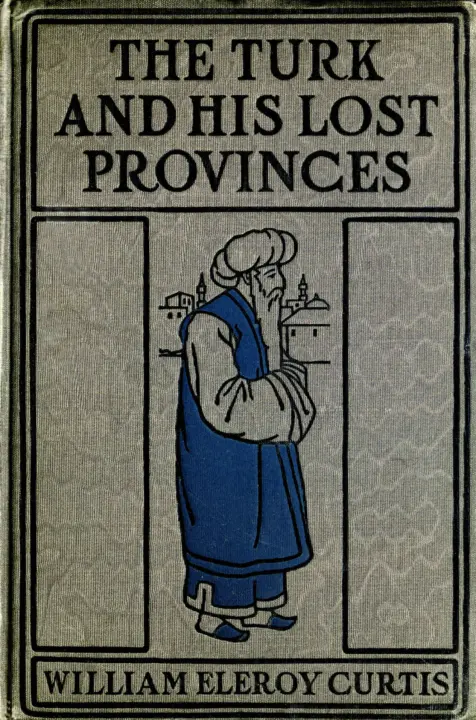
The Turk and his lost provinces
William Eleroy Curtis
THE CLASSIC COLLECTION · 1891
"Abraham Lincoln" by William Eleroy Curtis is a historical account written in the early 20th century. The work presents a series of sketches aimed at portraying the character of Abraham Lincoln, examining him as a quintessential American figure. This biography not only details his rise from humble beginnings to the presidency but also emphasizes his moral integrity and beloved status among both supporters and opponents. The opening of the book sets the tone by explaining that Lincoln's life is a compelling narrative devoid of controversies or scandals, as he is universally admired for his selfless patriotism. Curtis introduces Lincoln's early life, tracing his ancestry and the hardships faced by his family, particularly focusing on the influences of his mother and stepmother. The author paints Lincoln as a hardworking and intelligent individual who overcame humble beginnings, hinting at the remarkable journey that will unfold throughout the rest of the biography.
Introduction adapted from the source catalogue; source summaries may be automatically generated.
Free to read · English · 128,204 words · No account needed
MAKE TIME FOR A GOOD BOOK
On by default. Untick to stop anonymous reading totals. Each page counts after 10 seconds in view. How this works.
Anonymous counting is on unless you have switched it off.
He was deeply moved. He took her right hand in both of his and said, "I am afraid with all my troubles I shall never get to that resting-place you speak of; but if I do, I am sure I shall find you. That you wish me to get there is, I believe, the best wish you could make for me. Good-by."
To his oldest and most intimate friend he said, "Speed, die when I may, I want it said of me by those who know me best, that I always plucked a thistle and planted a flower when I thought a flower would grow."
His greatness consisted not in his eloquence as an orator, nor his shrewdness as a lawyer, nor his tact as a diplomatist, nor his genius in planning and directing military affairs, nor his executive ability, but in his absolute self-control, his unselfishness, the full maturity of his wisdom, the strength of his convictions, his sound judgment, his absolute integrity, his unwavering adherence to the principles of truth, justice, and honor, his humanity, his love of country, his sublime faith in the people and in Republican institutions. He was without malice or the spirit of resentment, without envy or jealousy, and he suppressed his passions to a degree beyond that of most men. He entered the Presidency with an inadequate conception of his own responsibilities, but when he saw his duty he did it with courage, endurance, magnanimity, and unselfish devotion. In his eulogy of Lincoln, uttered a few days after the assassination, Ralph Waldo Emerson said,--
"He grew according to the need; his mind mastered the problem of the day; and as the problem grew so did his comprehension of it. Rarely was a man so fitted to the event.
"In four years--four years of battle days--his endurance, his fertility and resources, his magnanimity, were sorely tried and never found wanting. There, by his courage, his justice, his even temper, his fertile counsel, his humanity, he stood a heroic figure in the centre of an heroic epoch."
Index
Acceptance, Lincoln's letter of, 157
Adams, Charles Francis, 354
----, John Quincy, 144
Address, first inaugural, 170
----, second inaugural, 89
Admitted to the bar, 65
Advice to young lawyers, 70, 82
Alley, John B., 54, 175, 216
Amendment, thirteenth, adopted, 337
Ancestry of Lincoln, 15
Anderson, General Robert, 231, 308
Anecdotes of Lincoln, 29, 49, 69, 74, 81, 95, 128, 133, 141, 159, 161, 164, 175, 178, 220, 222, 226, 234, 259, 278, 280, 290, 310, 330, 343, 360
Anger, Lincoln's, 54
Appearance, Lincoln's, 48
Argument, Lincoln's method of, 79, 86, 96, 100, 125
Arrival at Washington, Lincoln's, 169
Assassination conspiracy, 168
---- of Lincoln, 311
Atheism, story of Lincoln's, 376
Autobiography, Lincoln's, 59
Bailache, William H., 170
Baker, Edward D., 54, 83, 134, 137, 169
Bar, early practice at, 65, 66, 83
Bateman, Dr. Newton, 158, 388
Bates, Edward, 181, 298
Beecher, Henry Ward, 190
Berry and Lincoln, 34, 63
Bible, Lincoln's admiration for, 387
Birthplace of Abraham Lincoln, 20
Bixby, letters to Mrs., 51
Black Hawk War, 65, 229
Blair, Francis P., 187
----, Montgomery, 181, 187, 191
Bloomington Convention, 105, 149
Your reading position is saved on this browser. Take it to another device with a library code. Reading pages adapt to text, rather than matching a printed edition.
William Eleroy Curtis
William Eleroy Curtis
William Eleroy Curtis
William Eleroy Curtis
BEHIND THE BOOK
This eBook is for the use of anyone anywhere in the United States and most other parts of the world at no cost and with almost no restrictions whatsoever. You may copy it, give it away or re-use it under the terms of the Project Gutenberg License included with this eBook or online at www.gutenberg.org. If you are not located in the United States, you will have to check the laws of the country where you are located before using this eBook. Read the source licence.
The original source file, including credits and licence, is retained by this library. Request an original-format copy at no charge. Please include the book title and Project Gutenberg identifier #42526.
KEEP YOUR CURIOSITY GOING
Cécile Tormay

Moritz Busch
John L. Ransom
Frances Wright
Cécile Tormay

Mabel Potter Daggett