THE CLASSIC COLLECTION✦Adventures and Letters of Richard Harding DavisCLASSIC FREE BOOKS
Adventures and Letters of Richard Harding Davis
Richard Harding Davis
THE CLASSIC COLLECTION · 1895
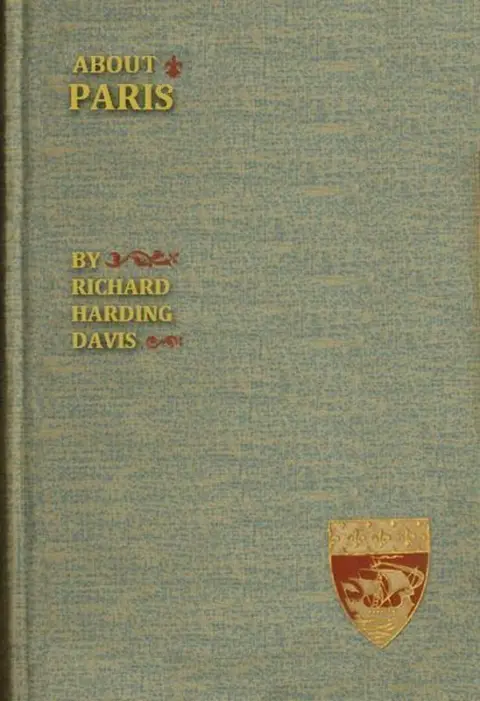
"About Paris" by Richard Harding Davis is a travel narrative written in the late 19th century. The work captures the essence of Paris through vivid descriptions of its streets, social life, and the unique characters that inhabit the city. Focusing on the experiences of a narrator who observes the everyday life of Parisians, the book blends humor and insight to illustrate the charm and complexity of the French capital. The opening of "About Paris" paints a lively picture of a modest street in the city, elaborating on its seemingly mundane yet intimate life. The narrator describes the colorful inhabitants, including a poet who once lived there, and a haughty woman who captures the attention of those living on the street. As the narrative unfolds, it explores the connections and dynamics among neighbors—from simple interactions and daily routines to the unwritten social rules that govern their lives. With rich detail, the opening invites readers into the familiar, bustling world of Paris, setting the stage for further exploration of the city's vibrant culture.
Introduction adapted from the source catalogue; source summaries may be automatically generated.
Free to read · English · 36,585 words · No account needed
MAKE TIME FOR A GOOD BOOK
On by default. Untick to stop anonymous reading totals. Each page counts after 10 seconds in view. How this works.
Anonymous counting is on unless you have switched it off.
The best of the boulevards is that the people sitting on their sidewalks, and the heavy green trees, and the bare heads of so many of the women, make one feel how much out-of-doors he is, as no other street or city does, and what a folly it is to waste time within walls. I do not think we appreciate how much we owe to the women in Paris who go without bonnets. They give the city so homelike and friendly an air, as though every woman knew every other woman so well that she did not mind running across the street to gossip with her neighbor without the formality of a head-covering. And it really seems strange that the prettiest bonnets should come from the city where the women of the poorer classes have shown how very pretty a woman of any class can look without any bonnet at all.
The enduring nature of the boulevards impresses one who sees them at different hours as much as does their life and gayety at every hour. You sometimes think surely to-morrow they will rest, and the cafés will be closed, and the long passing stream of cabs and omnibuses will stop, and the asphalt street will be permitted to rest from its burden. You may think this at night, but when you turn up again at nine the next morning you will find it all just as you left it at one the same morning. The same waiters, the same rush of carriages, the same ponderous omnibuses with fine straining white horses, the flowers in the booths, and the newspapers neatly piled round the colored kiosks.
The Champs Élysées is hardly a street, but as a thoroughfare it is the most remarkable in the world. It is a much better show than are the boulevards. The place for which you pay to enter is generally more interesting than the place to which admittance is free, and any one can walk along the boulevards, but to ride in the Champs Élysées you must pay something, even if you take your fiacre by the hour. Some Parisians regret that the Avenue des Champs Élysées should be so cheapened that it is not reserved for carriages hired by the month, and not by the course, and that omnibuses and hired cabs are not kept out of it, as they are kept out of Hyde Park. But should this rule obtain the Avenue des Champs Élysées would lose the most amusing of its features. It would shut out the young married couples and their families and friends in their gala clothes, which look strangely unfamiliar in the sunlight, and make you think that the wearers have been up all night; and the hundreds of girls in pairs from the Jardin de Paris, who have halved the expense of a fiacre, but who cannot yet afford a brougham; and the English tourists dressed in flannel shirts and hunting-caps and knickerbockers, exactly as though they were penetrating the mountains of Afghanistan or the deserts of Syria, and as unashamed of their provincialism as the young marquis who passes on his dog-cart is unashamed of having placed the girl with him on his right hand instead of his left, though by so doing he tells every one who passes who and what she is. It would shut out the omnibuses, with the rows of spectators on their tops, who lean on their knees and look down into the carriages below, and point out the prettiest gowns and faces; and it would exclude the market-wagons laden with huge piles of yellow carrots and purple radishes, with a woman driving on the box-seat, and a dog chained beside her. There is no other place in the world, unless it be Piccadilly at five o'clock in the afternoon, where so many breeds of horses trot side by side, where the chains of the baron banker and the cracking whip of a drunken cabman and the horn of some American millionaire's four-in-hand all sound at the same time. To be known is easy in the boulevards, but it is a distinction in the Avenue des Champs Élysées--a distinction which costs much money and which lasts an hour. Sometimes it is gained by liveries and trappings and a large red rosette in the button-hole, or by driving the same coach at the same hour at the same rate of speed throughout the season, or by wearing a fez, or by sending two sais ahead of your cart to make a way for it, or by a beautiful face and a thoroughbred pug on a cushion at your side, although this last mode is not so easy, as there are many pretty faces and many softly cushioned victorias and innumerable pug-dogs, and when the prevailing color for the hair happens to be red--as it was last summer--the chance of gaining any individuality becomes exceedingly difficult. When all of these people meet in the afternoon on their way to and from the Bois, there is no better entertainment of the sort in the world, and the avenue grows much too short, and the hours before dinner even shorter. There are women in light billowy toilets, with elbows squared and whip in hand, fearlessly driving great English horses from the top of a mail-phaeton, while a frightened little English groom clutches at the rail and peers over their shoulder to grasp the reins if need be, or to jump if he must. And there are narrow-chested corseted and padded young Frenchmen in white kid gloves, who hold one rein in each hand as little girls hold a skipping-rope, and who imagine they are so like Englishmen that no one can distinguish them even by their accent. There are fat Hebrew bankers and their equally fat sons in open victorias, who, lacking the spirit of the Frenchmen, who at least attempt to drive themselves, recline consciously on cushions, like the poodles in the victorias of the ladies with the red hair. There are also visiting princes from India or pashas from Egypt; or diplomats of the last Spanish-American republic, as dark as the negroes of Sixth Avenue, but with magnificent liveries and clanking chains; the nabobs of Haiti, of Algiers and Tunis, and with these the beautiful Spanish-looking woman from South America, the wives of the rastaqouères; and mixed with these is the long string of bookmakers and sporting men coming back from the races at Longchamps or Auteuil, red-faced and hot and dusty, with glasses strapped around them, and the badges still flying from their button-holes. There are three rows of carriages down and three of carriages up, and if you look from the Arc de Triomphe to the Tuileries you see a broken mass of glittering carriage-tops and lace parasols, and what looks like the flashing of thousands of mirrors as the setting sun strikes on the glass of the lamps and windows and on the lacquered harness and polished mountings. Whether you view this procession from the rows of green iron seats on either side or as a part of it, you must feel lifted up by its movement and color and the infinite variety of its changes. A man might live in the Champs Élysées for a week or a month, seeing no more of Paris than he finds under its beautiful trees or on its broad thoroughfare, and be so well content with that much of the city as to prefer it to all other cities.
Your reading position is saved on this browser. Take it to another device with a library code. Reading pages adapt to text, rather than matching a printed edition.
Richard Harding Davis
Richard Harding Davis
Richard Harding Davis
Richard Harding Davis
BEHIND THE BOOK
This eBook is for the use of anyone anywhere in the United States and most other parts of the world at no cost and with almost no restrictions whatsoever. You may copy it, give it away or re-use it under the terms of the Project Gutenberg License included with this eBook or online at www.gutenberg.org. If you are not located in the United States, you will have to check the laws of the country where you are located before using this eBook. Read the source licence.
The original source file, including credits and licence, is retained by this library. Request an original-format copy at no charge. Please include the book title and Project Gutenberg identifier #52706.
KEEP YOUR CURIOSITY GOING
Wilfrid Scawen Blunt
Wilfrid Scawen Blunt

E. W. (Edgar Watson) Howe
Francis Greenleaf Allinson & Anne C. E. (Anne Crosby Emery) Allinson
Cyrenus Cole

John Martineau