THE CLASSIC COLLECTION✦Life and times of Frederick DouglassCLASSIC FREE BOOKS
Life and times of Frederick Douglass
Frederick Douglass
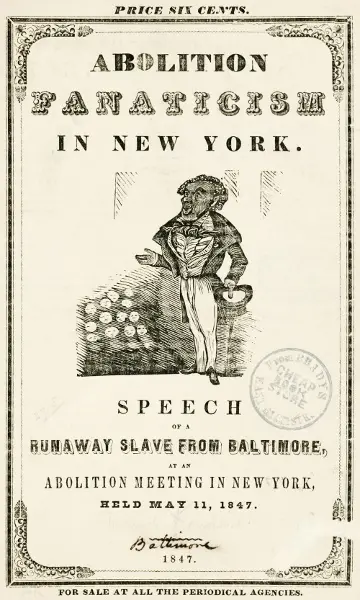
THE CLASSIC COLLECTION · 1847
"Abolition Fanaticism in New York" by Frederick Douglass is a historical account written in the mid-19th century. This work features a speech delivered by Douglass, a prominent African American abolitionist and former runaway slave, at the Anniversary of the American Anti-Slavery Society on May 11, 1847. The topic revolves around the struggles against slavery in the United States and the call for abolition, illustrating Douglass's passionate advocacy for the rights of enslaved individuals and the moral imperative to end the institution of slavery. In his speech, Douglass reflects on his experiences as a runaway slave and his observations of the societal dynamics surrounding slavery in America. He expresses his disillusionment with American institutions that perpetuate slavery and emphasizes his lack of patriotism for a country that dehumanizes him and millions of others. Douglass calls for English support in the fight against slavery, arguing that American citizens lack the moral power to abolish it. He recounts his travels abroad, contrasting the acceptance he found in England with the prejudices he faces at home. The speech concludes with a rallying cry for justice and a commitment to non-violent resistance, ultimately demonstrating the urgency of the abolitionist movement and the shared humanity that transcends national boundaries.
Introduction adapted from the source catalogue; source summaries may be automatically generated.
Free to read · English · 4,588 words · No account needed
MAKE TIME FOR A GOOD BOOK
On by default. Untick to stop anonymous reading totals. Each page counts after 10 seconds in view. How this works.
Anonymous counting is on unless you have switched it off.
In all this, my friends, let me make myself understood. I do not hate America as against England, or against any other country or land. I love Humanity all over the globe. I am anxious to see Righteousness prevail in all directions. I am anxious to see Slavery overthrown here; but, I never appealed to Englishmen in a manner calculated to awaken feelings of hatred or disgust, or to inflame their prejudices toward America as a nation, or in a manner provocative of national jealousy or ill-will; but I always appealed to their conscience--to the higher and nobler feelings of the people of that country, to enlist them in this cause. I always appealed to their manhood, that which preceded their being Englishmen, (to quote an expression of my friend Phillips,) I appealed to them as men, and I had a right to do so. They are men, and the Slave is a man, and we have a right to call upon all men to assist in breaking his bonds, let them be born when and live where they may.
But it is asked, 'What good will this do?' or 'What good has it done?' 'Have you not irritated, have you not annoyed your American friends and the American people rather than done them good?' I admit that we have irritated them. They deserve to be irritated. I am anxious to irritate the American people on this question. As it is in physics, so in morals, there are cases which demand irritation and counter-irritation. The conscience of the American public needs this irritation, and I would blister it all over from centre to circumference, until it gives signs of a purer and a better life than it is now manifesting to the world.
But why expose the sins of one nation in the eyes of another? Why attempt to bring one people under the odium of another people? There is much force in this question. I admit that there are sins in almost every country which can be best removed by means confined exclusively to their immediate locality. But such evils and such sins pre-suppose the existence of a moral power in their immediate locality sufficient to accomplish the work of renovation. But, where, pray, can we go to find moral power in this nation sufficient to overthrow Slavery? To what institution, to what party shall we apply for aid? I say we admit that there are evils which can be best removed by influences confined to their immediate locality. But in regard to American Slavery it is not so. It is such a giant crime, so darkening to the soul, so blinding in its moral influence, so well calculated to blast and corrupt all the humane principles of our nature, so well adapted to infuse its own accursed spirit into all around it, that the people among whom it exists have not the moral power to abolish it. Shall we go to the Church for this influence? We have heard its character described. Shall we go to Politicians or Political Parties? Have they the moral power necessary to accomplish this mighty task? They have not. What are they doing at this moment? Voting supplies for Slavery--voting supplies for the extension, the stability, the perpetuation of Slavery in this land. What is the press doing? The same. The pulpit? Almost the same. I do not flatter myself that there is moral power in the land sufficient to overthrow Slavery, and I welcome the aid of England. And that aid will come. The growing intercourse between England and this country, by means of steam navigation, the relaxation of the protective system in various countries in Europe, gives us an opportunity to bring in the aid, the moral and Christian aid of those living on the other side of the Atlantic. We welcome it in the language of the resolution. We entreat our British friends to continue to send their remonstrances across the deep against Slavery in this land. And these remonstrances will have a powerful effect here. Sir, the Americans may tell of their ability, and I have no doubt they have it, to keep back the invader's hosts, to repulse the strongest force that its enemies may send against this country. It may boast, and rightly boast of its capacity to build its ramparts so high that no foe can hope to scale them--to render them so impregnable as to defy the assaults of the world. But, sir, there is one thing it cannot resist, come from what quarter it may. It cannot resist TRUTH. You cannot build your forts so strong, nor your ramparts so high, nor arm yourselves so powerfully, as to be able to withstand the overwhelming MORAL SENTIMENT against Slavery now flowing into this land. For example: Prejudice against Color is continually becoming weaker in this land; and why? Because the whole European Continent denounces this sentiment as unworthy a lodgment in the breast of an enlightened community. And the American abroad dares not now, even in a public conveyance, to lift his voice in defence of this disgusting prejudice.
Your reading position is saved on this browser. Take it to another device with a library code. Reading pages adapt to text, rather than matching a printed edition.
Frederick Douglass
Frederick Douglass
Frederick Douglass
Frederick Douglass
BEHIND THE BOOK
This eBook is for the use of anyone anywhere in the United States and most other parts of the world at no cost and with almost no restrictions whatsoever. You may copy it, give it away or re-use it under the terms of the Project Gutenberg License included with this eBook or online at www.gutenberg.org. If you are not located in the United States, you will have to check the laws of the country where you are located before using this eBook. Read the source licence.
The original source file, including credits and licence, is retained by this library. Request an original-format copy at no charge. Please include the book title and Project Gutenberg identifier #34915.
KEEP YOUR CURIOSITY GOING

David Patterson (Spirit) Hatch

David Patterson (Spirit) Hatch

David Patterson (Spirit) Hatch
Cécile Tormay

Moritz Busch
Coulson Kernahan