THE CLASSIC COLLECTION✦When I was your ageCLASSIC FREE BOOKS
When I was your age
Laura Elizabeth Howe Richards
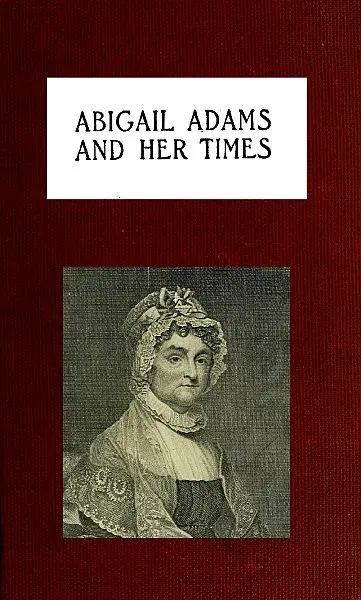
THE CLASSIC COLLECTION · 1917
"Abigail Adams and Her Times" by Laura Elizabeth Howe Richards is a historical account written in the early 20th century. The work focuses on the life of Abigail Adams, exploring her role and experiences during a pivotal time in American history as the nation moved towards independence. It provides insight into her personal life and relationships, particularly her marriage to John Adams, as well as the broader social and political context of the era. The opening of the book sets the stage by providing a glimpse into the world into which Abigail Smith was born in 1744, amidst political unrest in both England and the American colonies. It introduces her family background, noting her father's position as a reverend, and touches upon the intimate details of her early life in Puritan New England. The narration paints a vivid picture of the societal challenges faced by a Puritan child and hints at Abigail’s strong will and intelligence even from a young age. Through detailed accounts of her upbringing, the text foreshadows the significant impact she would have as a supporter of American independence and reflects on the environment that shaped her thoughts and philosophies.
Introduction adapted from the source catalogue; source summaries may be automatically generated.
Free to read · English · 60,587 words · No account needed
MAKE TIME FOR A GOOD BOOK
On by default. Untick to stop anonymous reading totals. Each page counts after 10 seconds in view. How this works.
Anonymous counting is on unless you have switched it off.
"Friendship, I take it, is one of the distinguishing glories of man; and the creature that is insensible of its charms, though he may wear the shape of man, is unworthy of the character. In this, perhaps, we bear a nearer resemblance to unembodied intelligences than in anything else. From this I expect to receive the chief happiness of my future life; and am sorry that fortune has thrown me at such a distance from those of my friends who have the highest place in my affections. But thus it is, and I must submit. But I hope ere long to return, and live in that familiarity that has from earliest infancy subsisted between yourself and affectionate friend,
We shall see about this. Friendship played an important part in John Adams' life; but it was not to form the chief happiness of his life.
He did not enjoy teaching; witness another letter to Nathan Webb.
"The situation of the town is quite pleasant, and the inhabitants, as far as I have had opportunity to know their character, are a sociable, generous, and hospitable people; but the school is indeed a school of affliction. A large number of little runtlings, just capable of lisping A B C, and troubling the master. But Dr. Savil tells me, for my comfort, 'by cultivating and pruning these tender plants in the garden of Worcester, I shall make some of them plants of renown and cedars of Lebanon.' However this be, I am certain that keeping this school any length of time, would make a base weed and ignoble shrub of me."
Yet at times he realized the value of his work. We read in the diary of
1756:
"I sometimes in my sprightly moments consider myself, in my great chair at school, as some dictator at the head of a commonwealth. In this little state I can discover all the great geniuses, all the surprising actions and revolutions of the great world, in miniature. I have several renowned generals but three feet high, and several deep projecting politicians in petticoats. I have others catching and dissecting flies, accumulating remarkable pebbles, cockle-shells, etc., with as ardent curiosity as any virtuoso in the Royal Society. Some rattle and thunder out A B C, with as much fire and impetuosity as Alexander fought, and very often sit down and cry as heartily upon being outspelt, as Cæsar did, when at Alexander's sepulchre he reflected that the Macedonian hero had conquered the world before his age. At one table sits Mr. Insipid, foppling and fluttering, spinning his whirligig, or playing with his fingers, as gaily and wittily as any Frenchified cox-comb brandishes his cane or rattles his snuff-box. At another, sits the polemical divine, plodding and wrangling in his mind about 'Adam's fall, in which we sinned all,' as his Primer has it. In short, my little school, like the great world, is made up of kings, politicians, divines, L.D.'s, fops, buffoons, fiddlers, sycophants, fools, coxcombs, chimney-sweepers, and every other character drawn in history, or seen in the world. Is it not, then, the highest pleasure, my friend, to preside in this little world, to bestow the proper applause upon virtuous and generous actions, to blame and punish every vicious and contracted trick, to wear out of the tender mind everything that is mean and little, and fire the newborn soul with a noble ardor, and emulation?"
Your reading position is saved on this browser. Take it to another device with a library code. Reading pages adapt to text, rather than matching a printed edition.
Laura Elizabeth Howe Richards
Laura Elizabeth Howe Richards
Laura Elizabeth Howe Richards
Laura Elizabeth Howe Richards
BEHIND THE BOOK
This eBook is for the use of anyone anywhere in the United States and most other parts of the world at no cost and with almost no restrictions whatsoever. You may copy it, give it away or re-use it under the terms of the Project Gutenberg License included with this eBook or online at www.gutenberg.org. If you are not located in the United States, you will have to check the laws of the country where you are located before using this eBook. Read the source licence.
The original source file, including credits and licence, is retained by this library. Request an original-format copy at no charge. Please include the book title and Project Gutenberg identifier #41605.
KEEP YOUR CURIOSITY GOING
Cécile Tormay

Moritz Busch
John L. Ransom
Frances Wright
Cécile Tormay

Mabel Potter Daggett