THE CLASSIC COLLECTION✦When I was your ageCLASSIC FREE BOOKS
When I was your age
Laura Elizabeth Howe Richards
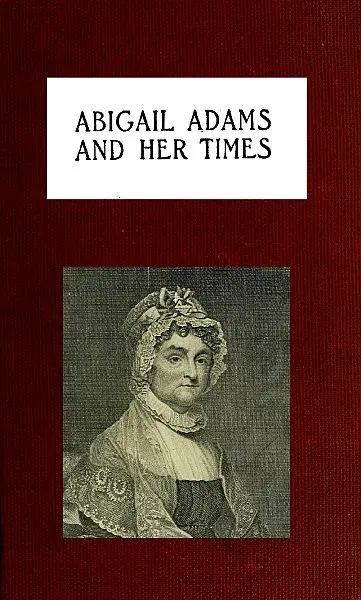
THE CLASSIC COLLECTION · 1917
"Abigail Adams and Her Times" by Laura Elizabeth Howe Richards is a historical account written in the early 20th century. The work focuses on the life of Abigail Adams, exploring her role and experiences during a pivotal time in American history as the nation moved towards independence. It provides insight into her personal life and relationships, particularly her marriage to John Adams, as well as the broader social and political context of the era. The opening of the book sets the stage by providing a glimpse into the world into which Abigail Smith was born in 1744, amidst political unrest in both England and the American colonies. It introduces her family background, noting her father's position as a reverend, and touches upon the intimate details of her early life in Puritan New England. The narration paints a vivid picture of the societal challenges faced by a Puritan child and hints at Abigail’s strong will and intelligence even from a young age. Through detailed accounts of her upbringing, the text foreshadows the significant impact she would have as a supporter of American independence and reflects on the environment that shaped her thoughts and philosophies.
Introduction adapted from the source catalogue; source summaries may be automatically generated.
Free to read · English · 60,587 words · No account needed
MAKE TIME FOR A GOOD BOOK
On by default. Untick to stop anonymous reading totals. Each page counts after 10 seconds in view. How this works.
Anonymous counting is on unless you have switched it off.
catch the manner living as they rise.
". . . At eight o'clock we returned home in order to dress ourselves for the ball at the French ambassador's, to which we had received an invitation a fortnight before. He has been absent ever since our arrival here, till three weeks ago. He has a levee every Sunday evening, at which there are usually several hundred persons. The Hotel de France is beautifully situated, fronting St. James's Park, one end of the house standing upon Hyde Park. It is a most superb building. About half past nine, we went and found some company collected. Many very brilliant ladies of the first distinction were present. The dancing commenced about ten, and the rooms soon filled. The room which he had built for this purpose is large enough for five or six hundred persons. It is most elegantly decorated, hung with a gold tissue, ornamented with twelve brilliant cut lustres, each contained twenty-four candles. At one end there are two large arches; these were adorned with wreaths and bunches of artificial flowers upon the walls; in the alcoves were cornucopiae, loaded with oranges, sweetmeats, etc. Coffee, tea, lemonade, orgeat, etc., were taken here by every person who chose to go for them. There were covered seats all round the room for those who did not choose to dance. In the other rooms, card-tables, and a large faro-table, were set: this is a new kind of game, which is much practised here. Many of the company who did not dance, retired here to amuse themselves. . . ."
This was Betsey's letter: Lucy was to hear about the dresses:
"To amuse you then, my dear niece, I will give you an account of the dress of the ladies at the ball of the Comte d'Adhémar; as your cousin tells me that she some time ago gave you a history of the birthday and ball at Court, this may serve as a counterpart. Though, should I attempt to compare the apartments, St. James's would fall as much short of the French Ambassador's as the Court of his Britannic Majesty does of the splendor and magnificence of that of his Most Christian Majesty. I am sure I never saw an assembly room in America, which did not exceed that at St. James's in point of elegance and decoration; and, as to its fair visitors, not all their blaze of diamonds, set off with Parisian rouge, can match the blooming health, the sparkling eye, and modest deportment of the dear girls of my native land. As to the dancing, the space they had to move in gave them no opportunity to display the grace of a minuet, and the full dress of long court-trains and enormous hoops, you well know were not favorable for country dances, so that I saw them at every disadvantage; not so the other evening. They were much more properly clad:--silk waists, gauze or white or painted tiffany coats decorated with ribbon, beads, or flowers, as fancy directed, were chiefly worn by the young ladies. Hats turned up at the sides with diamond loops and buttons of steel, large bows of ribbons and wreaths of flowers, displayed themselves to much advantage upon the heads of some of the prettiest girls England can boast. The light from the lustres is more favorable to beauty than daylight, and the color acquired by dancing, more becoming than rouge, as fancy dresses are more favorable to youth than the formality of a uniform. There was as great a variety of pretty dresses, borrowed wholly from France, as I have ever seen; and amongst the rest, some with sapphire-blue satin waists, spangled with silver, and laced down the back and seams with silver stripes; white satin petticoats trimmed with black and blue velvet ribbon; an odd kind of head-dress, which they term the 'helmet of Minerva.' I did not observe the bird of wisdom, however, nor do I know whether those who wore the dress had suitable pretensions to it. 'And pray,' say you, 'how were my aunt and cousin dressed?' If it will gratify you to know, you shall hear. Your aunt then wore a full-dress court cap without the lappets, in which was a wreath of white flowers, and blue sheafs, two black and blue flat feathers (which cost her half a guinea a-piece, but that you need not tell of), three pearl pins, bought for Court, and a pair of pearl ear-rings, the cost of them--no matter what; no less than diamonds, however. A sapphire blue demi-saison with a satin stripe, sack and petticoat trimmed with a broad black lace; crape flounce, etc.; leaves made of blue ribbon, and trimmed with white floss; wreaths of black velvet ribbon spotted with steel beads, which are much in fashion, and brought to such perfection as to resemble diamonds; white ribbon also in the Vandyke style, made up the trimming, which looked very elegant; a full dress handkerchief, and a bouquet of roses. 'Full gay, I think, for my aunt.' That is true, Lucy, but nobody is old in Europe. I was seated next the Duchess of Bedford, who had a scarlet satin sack and coat, with a cushion full of diamonds, for hair she has none, and is but seventy-six, neither. Well, now for your cousin; a small, white Leghorn hat, bound with pink satin ribbon; a steel buckle and band which turned up at the side, and confined a large pink bow; large bow of the same kind of ribbon behind; a wreath of full-blown roses round the crown, and another of buds and roses withinside the hat, which being placed at the back of the hair brought the roses to the edge; you see it clearly; one red and black feather with two white ones, completed the head-dress. A gown and coat of Chambéri gauze, with a red satin stripe over a pink waist, and coat flounced with crape, trimmed with broad point and pink ribbon; wreaths of roses across the coat; gauze sleeves and ruffles."
Your reading position is saved on this browser. Take it to another device with a library code. Reading pages adapt to text, rather than matching a printed edition.
Laura Elizabeth Howe Richards
Laura Elizabeth Howe Richards
Laura Elizabeth Howe Richards
Laura Elizabeth Howe Richards
BEHIND THE BOOK
This eBook is for the use of anyone anywhere in the United States and most other parts of the world at no cost and with almost no restrictions whatsoever. You may copy it, give it away or re-use it under the terms of the Project Gutenberg License included with this eBook or online at www.gutenberg.org. If you are not located in the United States, you will have to check the laws of the country where you are located before using this eBook. Read the source licence.
The original source file, including credits and licence, is retained by this library. Request an original-format copy at no charge. Please include the book title and Project Gutenberg identifier #41605.
KEEP YOUR CURIOSITY GOING
Cécile Tormay

Moritz Busch
John L. Ransom
Frances Wright
Cécile Tormay

Mabel Potter Daggett