THE CLASSIC COLLECTION✦When I was your ageCLASSIC FREE BOOKS
When I was your age
Laura Elizabeth Howe Richards
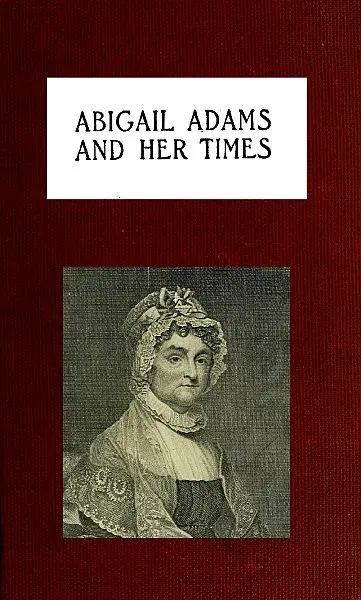
THE CLASSIC COLLECTION · 1917
"Abigail Adams and Her Times" by Laura Elizabeth Howe Richards is a historical account written in the early 20th century. The work focuses on the life of Abigail Adams, exploring her role and experiences during a pivotal time in American history as the nation moved towards independence. It provides insight into her personal life and relationships, particularly her marriage to John Adams, as well as the broader social and political context of the era. The opening of the book sets the stage by providing a glimpse into the world into which Abigail Smith was born in 1744, amidst political unrest in both England and the American colonies. It introduces her family background, noting her father's position as a reverend, and touches upon the intimate details of her early life in Puritan New England. The narration paints a vivid picture of the societal challenges faced by a Puritan child and hints at Abigail’s strong will and intelligence even from a young age. Through detailed accounts of her upbringing, the text foreshadows the significant impact she would have as a supporter of American independence and reflects on the environment that shaped her thoughts and philosophies.
Introduction adapted from the source catalogue; source summaries may be automatically generated.
Free to read · English · 60,587 words · No account needed
MAKE TIME FOR A GOOD BOOK
On by default. Untick to stop anonymous reading totals. Each page counts after 10 seconds in view. How this works.
Anonymous counting is on unless you have switched it off.
On the day of the festivities she writes: "My head is dressed for St. James's, and in my opinion, looks very tasty. Whilst my daughter's is undergoing the same operation, I set myself down composedly to write you a few lines. 'Well,' methinks I hear Betsey and Lucy say, 'what is cousin's dress?' White, my dear girls, like your aunt's, only differently trimmed and ornamented; her train being wholly of white crape, and trimmed with white ribbon; the petticoat, which is the most showy part of the dress, covered and drawn up in what are called festoons, with light wreaths of beautiful flowers; the sleeves white crape, drawn over the silk, with a row of lace round the sleeve near the shoulder, another half way down the arm, and a third upon the top of the ruffle, a little flower stuck between; a kind of hat-cap, with three large feathers and a bunch of flowers; a wreath of flowers upon the hair. Thus equipped, we go in our own carriage, and Mr. Adams and Colonel Smith in his. But I must quit my pen to put myself in order for the ceremony, which begins at two o'clock. When I return, I will relate to you my reception; but do not let it circulate, as there may be persons eager to catch at every thing, and as much given to misrepresentation as here. I would gladly be excused the ceremony."
The next day she thus continues: "Congratulate me, my dear sister, it is over. I was too much fatigued to write a line last evening. At two o'clock we went to the circle, which is in the drawing-room of the Queen. We passed through several apartments, lined as usual with spectators upon these occasions. . . . We were placed in a circle round the drawing-room, which was very full. I believe two hundred persons present. Only think of the task! The royal family have to go round to every person, and find small talk enough to speak to all of them, though they very prudently speak in a whisper, so that only the person who stands next you can hear what is said. The King enters the room, and goes round to the right; the Queen and Princesses to the left. The lord-in-waiting presents you to the King; and the lady-in-waiting does the same to her Majesty. The King is a personable man, but, my dear sister, he has a certain countenance, which you and I have often remarked; a red face and white eyebrows. The Queen has a similar countenance, and the numerous royal family confirm the observation. Persons are not placed according to their rank in the drawing-room, but promiscuously; and when the King comes in, he takes persons as they stand. When he came to me, Lord Onslow said, 'Mrs. Adams'; upon which I drew off my right-hand glove, and his Majesty saluted my left cheek; then asked me if I had taken a walk today. I could have told his Majesty that I had been all the morning preparing to wait upon him; but I replied, 'No, Sire.' 'Why, don't you love walking?' says he. I answered, that I was rather indolent in that respect. He then bowed and passed on. It was more than two hours after this before it came to my turn to be presented to the Queen. The circle was so large that the company were four hours standing. The Queen was evidently embarrassed when I was presented to her. I had disagreeable feelings, too. She, however, said, 'Mrs. Adams, have you got into your house? Pray, how do you like the situation of it?' Whilst the Princess Royal looked compassionate, and asked me if I was not much fatigued; and observed, that it was a very full drawing-room. Her sister, who came next, Princess Augusta, after having asked your niece if she was ever in England before, and her answering, 'Yes,' inquired of me how long ago, and supposed it was when she was very young. And all this is said with much affability, and the ease and freedom of old acquaintance. The manner in which they make their tour round the room is, first, the Queen, the lady-in-waiting behind her, holding up her train; next to her, the Princess Royal; after her, Princess Augusta, and their lady-in-waiting behind them. They are pretty, rather than beautiful, well shaped, with fair complexions, and a tincture of the King's countenance. The two sisters look much alike; they were both dressed in black and silver silk, with a silver netting upon the coat, and their heads full of diamond pins. The Queen was in purple and silver. She is not well shaped nor handsome. As to the ladies of the Court, rank and title may compensate for want of personal charms; but they are, in general, very plain, ill-shaped, and ugly; but don't tell anybody that I say so."
Your reading position is saved on this browser. Take it to another device with a library code. Reading pages adapt to text, rather than matching a printed edition.
Laura Elizabeth Howe Richards
Laura Elizabeth Howe Richards
Laura Elizabeth Howe Richards
Laura Elizabeth Howe Richards
BEHIND THE BOOK
This eBook is for the use of anyone anywhere in the United States and most other parts of the world at no cost and with almost no restrictions whatsoever. You may copy it, give it away or re-use it under the terms of the Project Gutenberg License included with this eBook or online at www.gutenberg.org. If you are not located in the United States, you will have to check the laws of the country where you are located before using this eBook. Read the source licence.
The original source file, including credits and licence, is retained by this library. Request an original-format copy at no charge. Please include the book title and Project Gutenberg identifier #41605.
KEEP YOUR CURIOSITY GOING
Cécile Tormay

Moritz Busch
John L. Ransom
Frances Wright
Cécile Tormay

Mabel Potter Daggett