THE CLASSIC COLLECTION✦When I was your ageCLASSIC FREE BOOKS
When I was your age
Laura Elizabeth Howe Richards
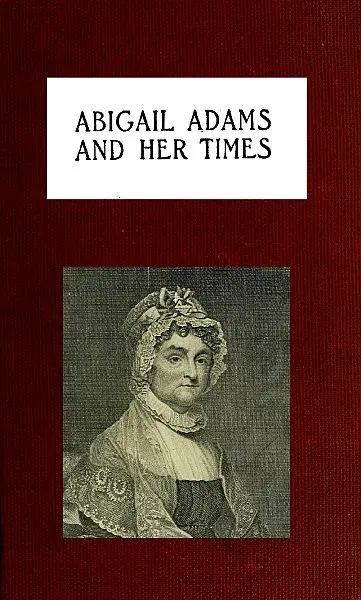
THE CLASSIC COLLECTION · 1917
"Abigail Adams and Her Times" by Laura Elizabeth Howe Richards is a historical account written in the early 20th century. The work focuses on the life of Abigail Adams, exploring her role and experiences during a pivotal time in American history as the nation moved towards independence. It provides insight into her personal life and relationships, particularly her marriage to John Adams, as well as the broader social and political context of the era. The opening of the book sets the stage by providing a glimpse into the world into which Abigail Smith was born in 1744, amidst political unrest in both England and the American colonies. It introduces her family background, noting her father's position as a reverend, and touches upon the intimate details of her early life in Puritan New England. The narration paints a vivid picture of the societal challenges faced by a Puritan child and hints at Abigail’s strong will and intelligence even from a young age. Through detailed accounts of her upbringing, the text foreshadows the significant impact she would have as a supporter of American independence and reflects on the environment that shaped her thoughts and philosophies.
Introduction adapted from the source catalogue; source summaries may be automatically generated.
Free to read · English · 60,587 words · No account needed
MAKE TIME FOR A GOOD BOOK
On by default. Untick to stop anonymous reading totals. Each page counts after 10 seconds in view. How this works.
Anonymous counting is on unless you have switched it off.
Let us hope that Mrs. Smith, a Quincy born, knew better than to torture and overwhelm a worthy vegetable! We know little of this good lady, but we may suppose that she was a notable housewife, since her daughter in later life showed such skill in all household arts. We shall see by and by how Abigail baked and brewed, spun and wove, clothed and fed and cared for her family, often with little or no assistance. We may fancy her now, trotting about after Mother Smith at Weymouth or Grandmother Quincy at Wollaston, her bright eyes noting everything, her quick fingers mastering all the arts of preserving, candying, distilling. There was a passion for such work among the New England women in those days.
"They made preserves and conserves, marmalets and quiddonies, hypocras and household wines, usquebarbs and cordials. They candied fruits and made syrups. They preserved everything that would bear preserving. I have seen old-time receipts for preserving quinces, 'respasse,' pippins, 'apricocks,' plums, 'damsins,' peaches, oranges, lemons, artichokes; green walnuts, elecampane roots, eringo roots, grapes, barberries, cherries; receipts for syrup of clove gillyflower, wormwood, mint, aniseed, clove, elder, lemons, marigold, citron, hyssop, liquorice; receipts for conserves of roses, violets, borage flowers, rosemary, betony, sage, mint, lavender, marjoram, and 'piony'; rules for candying fruit, berries, and flowers, for poppy water, cordial, cherry water, lemon water, thyme water, Angelica water, Aqua Mirabilis, Aqua Celestis, clary water, mint water."[5]
Good living was cheap in Abigail's childhood. An English traveler, visiting Boston in 1740, writes thus: "Their poultry of all sorts are as fine as can be desired, and they have plenty of fine fish of various kinds, all of which are very cheap. Take the butchers' meat all together, in every season of the year, I believe it is about twopence per pound sterling; the best beef and mutton, lamb and veal are often sold for sixpence per pound of New England money, which is some small matter more than one penny sterling.
"Poultry in their season are exceeding cheap. As good a turkey may be bought for about two shillings sterling as we can buy in London for six or seven, and as fine a goose for tenpence as would cost three shillings and sixpence or four shillings in London. The cheapest of all the several kinds of poultry are a sort of wild pigeon, which are in season the latter end of June, and so continue until September. They are large, and finer than those we have in London, and are sold here for eighteenpence a dozen, and sometimes for half of that.
Your reading position is saved on this browser. Take it to another device with a library code. Reading pages adapt to text, rather than matching a printed edition.
Laura Elizabeth Howe Richards
Laura Elizabeth Howe Richards
Laura Elizabeth Howe Richards
Laura Elizabeth Howe Richards
BEHIND THE BOOK
This eBook is for the use of anyone anywhere in the United States and most other parts of the world at no cost and with almost no restrictions whatsoever. You may copy it, give it away or re-use it under the terms of the Project Gutenberg License included with this eBook or online at www.gutenberg.org. If you are not located in the United States, you will have to check the laws of the country where you are located before using this eBook. Read the source licence.
The original source file, including credits and licence, is retained by this library. Request an original-format copy at no charge. Please include the book title and Project Gutenberg identifier #41605.
KEEP YOUR CURIOSITY GOING
Cécile Tormay

Moritz Busch
John L. Ransom
Frances Wright
Cécile Tormay

Mabel Potter Daggett