THE CLASSIC COLLECTION✦An outlaw’s diary: the CommuneCLASSIC FREE BOOKS
An outlaw’s diary: the Commune
Cécile Tormay
THE CLASSIC COLLECTION · 1911
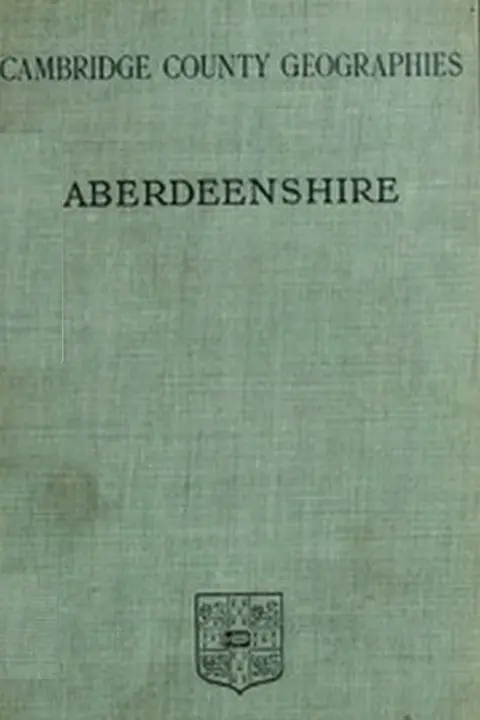
"Aberdeenshire" by Alexander Mackie is a geographical account written in the early 20th century. This work serves as part of the Cambridge County Geographies series, offering a detailed exploration of the natural features, history, agriculture, and industries of Aberdeenshire, Scotland. Through its analysis, the text likely provides insights into both the physical landscape and the socio-economic aspects of the region. The opening of the book begins with a transcriber’s note outlining editorial conventions used in the publication. It then introduces the concept of "shire" and its interchangeable use with "county" in a Scottish context, specifically detailing the origin of Aberdeenshire and the significance of its chief town, Aberdeen. The text establishes the historical context of the county's boundaries and explores its rural character, focusing on the interplay of agriculture, geography, and local industry. This early content sets the stage for a comprehensive examination of Aberdeenshire's geography, highlighting the ongoing relationship between its people and the land they cultivate.
Introduction adapted from the source catalogue; source summaries may be automatically generated.
Free to read · English · 36,206 words · No account needed
MAKE TIME FOR A GOOD BOOK
On by default. Untick to stop anonymous reading totals. Each page counts after 10 seconds in view. How this works.
Anonymous counting is on unless you have switched it off.
=Alford= (pa. 1464), on Donside, is the terminus of the branch railway from Kintore and the centre of a rich agricultural district called the Vale of Alford. In the neighbourhood are several interesting castles—Terpersie, Kildrummy and Craigievar. From Alford the main Donside road leads up the valley to Strathdon and Corgarff, from which there are passes both to Deeside and to Speyside. (pp. 27, 71, 113, 115, 134, 160, 162.)
=Ballater= (1240), a small town beautifully situated on the north side of the river Dee, in a level space enclosed by high mountains, is 660 feet above sea-level. From Ballater coaches drive daily to Braemar, passing Balmoral Castle half-way. (pp. 2, 8, 18, 24, 27, 33, 154, 162, 164, 176.)
=Braemar= (502), properly Castleton of Braemar, is the highest village in the county, being 1100 feet above sea-level. It stands at the junction of the Clunie and the Dee, and is finely sheltered in a hollow amongst the surrounding mountains. Braemar is a fashionable health resort. Some 10,000 strangers visit it annually. At the beginning of the nineteenth century it was not much more than a Highland clachan. Now it has
spacious hotels with electric light and all modern conveniences on a luxurious scale. Six miles distant is the famous Linn of Dee. The Duke of Fife’s Highland residence, Mar Lodge, as well as Mar Castle and Invercauld House, the home of the Farquharsons, are all in the vicinity. From Braemar the ascent of Ben-Macdhui is usually made, and sometimes also Loch-na-gar. A road leads from Braemar up the valley of the Clunie and over the Cairnwell to Blairgowrie. (pp. 8, 21, 22, 33, 66, 68, 75, 112, 161, 162.)
=Byth= (360), usually New Byth, is a village three miles from Cuminestown, and founded in 1764. It is a bare and treeless district. Near it are the hills of Fishrie with a large number of crofts given off by the Earl of Fife in 1830 to poor people evicted from other estates at a time when the fashion began of amalgamating small holdings in larger farms. (pp. 91, 124, 163.)
=Collieston= is a fishing village circling round a romantic bay near the parish church of Slains. Here in 1588 one of the ships of the Spanish Armada (Santa Catherina) was wrecked. The fishermen still call the creek St Catherine’s Dub. Several small cannon have been recovered from the pool. Eighty years ago, Collieston enjoyed a certain notoriety for smuggling, and the graveyard of Slains close by contains evidence of the deeds of violence that the contraband trade brought about. (pp. 38, 48, 54.)
=Culter=, eight miles west of Aberdeen, celebrated for its paper-mills, which date back to 1750. This paper-mill, the first of its kind in the north, manufactured superfine paper and in particular the bank-notes of the Aberdeen Bank. (p. 89.)
Your reading position is saved on this browser. Take it to another device with a library code. Reading pages adapt to text, rather than matching a printed edition.
BEHIND THE BOOK
This eBook is for the use of anyone anywhere in the United States and most other parts of the world at no cost and with almost no restrictions whatsoever. You may copy it, give it away or re-use it under the terms of the Project Gutenberg License included with this eBook or online at www.gutenberg.org. If you are not located in the United States, you will have to check the laws of the country where you are located before using this eBook. Read the source licence.
The original source file, including credits and licence, is retained by this library. Request an original-format copy at no charge. Please include the book title and Project Gutenberg identifier #73335.
KEEP YOUR CURIOSITY GOING
Cécile Tormay

Moritz Busch
John L. Ransom
Frances Wright
Cécile Tormay

Mabel Potter Daggett