THE CLASSIC COLLECTION✦The haunts of menCLASSIC FREE BOOKS
The haunts of men
Robert W. (Robert William) Chambers
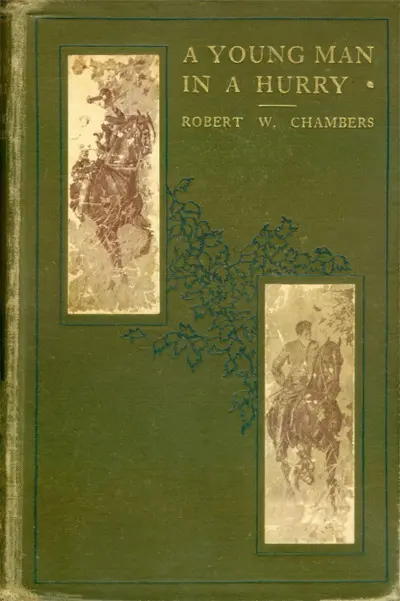
THE CLASSIC COLLECTION · 1904
"A Young Man in a Hurry, and Other Short Stories" by Robert W. Chambers is a collection of short stories written in the early 20th century. The opening story introduces a young man who, in a frantic hurry, mistakenly enters the wrong cab, leading to a series of unexpected interactions and circumstances with a young woman who is equally distressed about the confusion. Their chance encounter unfolds amidst the backdrop of a snowy evening, setting the stage for themes of mistaken identity, urgency, and romantic tension. The beginning of the first story features a young man rushing to catch a train, only to discover he has entered a cab intended for someone else. In the cab, he meets a young lady who is equally panicked, as she is trying to reach her brother but is now stuck with this stranger. Despite their frustration, something intriguing begins to develop between them as they navigate through their predicament. The storytelling is characterized by a blend of humor and tension, suggesting that their hurried encounter may lead to a deeper connection amidst the chaos of their circumstances.
Introduction adapted from the source catalogue; source summaries may be automatically generated.
Free to read · English · 64,424 words · No account needed
MAKE TIME FOR A GOOD BOOK
On by default. Untick to stop anonymous reading totals. Each page counts after 10 seconds in view. How this works.
Anonymous counting is on unless you have switched it off.
Meanwhile he had confidently skipped to another subject. "Phosphates and nitrogen are what those people need for their farms. Now if you prepare your soil--do your own mixing, of course--then begin with red clover, and plough--"
Her gray eyes were so wide open that he stopped short to observe them; they were so beautiful that his observation continued until she colored furiously. It was the last straw.
"The fire is out, I think," she said, calmly, rising to her feet; "my duty here is ended, Mr. Burleson."
"Oh--are you going?" he asked, with undisguised disappointment. She regarded him in silence for a moment. How astonishingly like that boy he was--this six-foot--
"Of course I am going," she said, and wondered why she had said "of course" with emphasis. Then she whistled to her mare.
"May I ride with you to the house?" he asked, humbly.
She was going to say several things, all politely refusing. What she did say was, "Not this time."
Then she was furious with herself, and began to hate him fiercely, until she saw something in his face that startled her. The mare came up; she flung the bridle over hastily, set foot to metal, and seated herself in a flash. Then she looked down at the man beside her, prepared for his next remark.
It came at once. "When may we ride together, Miss Elliott?"
She became strangely indulgent. "You know," she said, as though instructing youth, "that the first proper thing to do is to call upon my father, because he is older than you, and he is physically unable to make the first call."
"Then by Wednesday we may ride?" he inquired, so guilessly that she broke into a peal of delicious laughter.
"How old are you, Mr. Burleson? Ten?"
"I feel younger," he said.
"So do I," she said. "I feel like a little girl in a muslin gown." Two spots of color tinted her cheeks. He had never seen such beauty in human guise, and he came very near saying so. Something in the aromatic mountain air was tempting her to recklessness. Amazed, exhilarated by the temptation, she sat there looking down at him; and her smile was perilously innocent and sweet.
"Once," she said, "I knew a boy--like you--when I wore a muslin frock, and I have never forgotten him. He was extremely silly."
"Do you remember only silly people?"
"I can't forget them; I try."
"Please don't try any more," he said.
She looked at him, still smiling. She gazed off through the forest, where the men were going home, shovels shouldered, the blades of axe and spade blood-red in the sunset light.
Your reading position is saved on this browser. Take it to another device with a library code. Reading pages adapt to text, rather than matching a printed edition.
Robert W. (Robert William) Chambers
Robert W. (Robert William) Chambers

Robert W. (Robert William) Chambers
Robert W. (Robert William) Chambers
BEHIND THE BOOK
This eBook is for the use of anyone anywhere in the United States and most other parts of the world at no cost and with almost no restrictions whatsoever. You may copy it, give it away or re-use it under the terms of the Project Gutenberg License included with this eBook or online at www.gutenberg.org. If you are not located in the United States, you will have to check the laws of the country where you are located before using this eBook. Read the source licence.
The original source file, including credits and licence, is retained by this library. Request an original-format copy at no charge. Please include the book title and Project Gutenberg identifier #27374.
KEEP YOUR CURIOSITY GOING
Coulson Kernahan

Maurice Baring
Frances Wright
Cécile Tormay

Frederic Jesup Stimson

W. H. P. (William Henry Pope) Jarvis