THE CLASSIC COLLECTION✦The haunts of menCLASSIC FREE BOOKS
The haunts of men
Robert W. (Robert William) Chambers
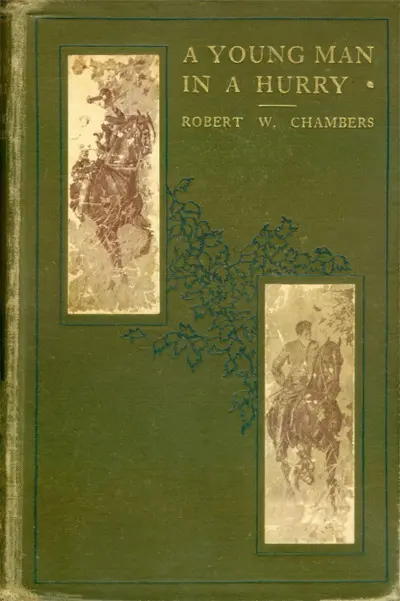
THE CLASSIC COLLECTION · 1904
"A Young Man in a Hurry, and Other Short Stories" by Robert W. Chambers is a collection of short stories written in the early 20th century. The opening story introduces a young man who, in a frantic hurry, mistakenly enters the wrong cab, leading to a series of unexpected interactions and circumstances with a young woman who is equally distressed about the confusion. Their chance encounter unfolds amidst the backdrop of a snowy evening, setting the stage for themes of mistaken identity, urgency, and romantic tension. The beginning of the first story features a young man rushing to catch a train, only to discover he has entered a cab intended for someone else. In the cab, he meets a young lady who is equally panicked, as she is trying to reach her brother but is now stuck with this stranger. Despite their frustration, something intriguing begins to develop between them as they navigate through their predicament. The storytelling is characterized by a blend of humor and tension, suggesting that their hurried encounter may lead to a deeper connection amidst the chaos of their circumstances.
Introduction adapted from the source catalogue; source summaries may be automatically generated.
Free to read · English · 64,424 words · No account needed
MAKE TIME FOR A GOOD BOOK
On by default. Untick to stop anonymous reading totals. Each page counts after 10 seconds in view. How this works.
Anonymous counting is on unless you have switched it off.
About three o'clock that afternoon, the pigeon-toed Seminole Indian who followed Haltren, as a silent, dangerous dog follows its master, laid down the heavy pink cedar log which he had brought to the fire, and stood perfectly silent, nose up, slitted eyes almost closed.
Haltren's glance was a question. "Paddl'um boat," said the Indian,
sullenly.
After a pause Haltren said, "I don't hear it, Tiger."
"Hunh!" grunted the Seminole. "Paddl'um damn slow. Bime-by you hear."
And bime-by Haltren heard.
"Somebody is landing," he said.
The Indian folded his arms and stood bolt upright for a moment; then, "Hunh!" he muttered, disgusted. "Heap squaw. Tiger will go."
Haltren did not hear him; up the palmetto-choked trail from the landing strolled a girl, paddle poised over one shoulder, bright hair blowing. He rose to his feet; she saw him standing in the haze of the fire and made him a pretty gesture of recognition.
"I thought I'd call to pay my respects," she said. "How do you do? May I
sit on this soap-box?"
Smiling, she laid the paddle on the ground and held out one hand as he
stepped forward.
They shook hands very civilly.
"That was a brave thing you did," she said. "Mes compliments, monsieur."
And that was all said about the wreck.
"It's not unlike an Adirondack camp," she suggested, looking around at the open-faced, palm-thatched shanty with its usual hangings of blankets and wet clothing, and its smoky, tin-pan bric-a-brac.
Her blue eyes swept all in rapid review--the guns leaning against the tree; the bunch of dead bluebill ducks hanging beyond; the improvised table and bench outside; the enormous mottled rattlesnake skin tacked lengthways on a live-oak.
"Are there many of those about?" she inquired.
"Very few"--he waited to control the voice which did not sound much like his own--"very few rattlers yet. They come out later."
"That's amiable of them," she said, with a slight shrug of her
shoulders.
There was a pause.
"I hope you are well," he ventured.
"Perfectly--and thank you. I hope you are well, Jack."
"Thank you, Kathleen."
She picked up a chip of rose-colored cedar and sniffed it daintily.
"Like a lead-pencil, isn't it? Put that big log on the fire. The odor of burning cedar must be delicious."
He lifted the great log and laid it across the coals.
"Suppose we lunch?" she proposed, looking straight at the simmering
coffee-pot.
"Would you really care to?" Then he raised his voice: "Tiger! Tiger! Where the dickens are you?" But Tiger, half a mile away, squatted sulkily on the lagoon's edge, fishing, and muttering to himself that there were too many white people in the forest for him.
Your reading position is saved on this browser. Take it to another device with a library code. Reading pages adapt to text, rather than matching a printed edition.
Robert W. (Robert William) Chambers
Robert W. (Robert William) Chambers

Robert W. (Robert William) Chambers
Robert W. (Robert William) Chambers
BEHIND THE BOOK
This eBook is for the use of anyone anywhere in the United States and most other parts of the world at no cost and with almost no restrictions whatsoever. You may copy it, give it away or re-use it under the terms of the Project Gutenberg License included with this eBook or online at www.gutenberg.org. If you are not located in the United States, you will have to check the laws of the country where you are located before using this eBook. Read the source licence.
The original source file, including credits and licence, is retained by this library. Request an original-format copy at no charge. Please include the book title and Project Gutenberg identifier #27374.
KEEP YOUR CURIOSITY GOING
Coulson Kernahan

Maurice Baring
Frances Wright
Cécile Tormay

Frederic Jesup Stimson

W. H. P. (William Henry Pope) Jarvis