THE CLASSIC COLLECTION✦Accepting the universeCLASSIC FREE BOOKS
Accepting the universe
John Burroughs
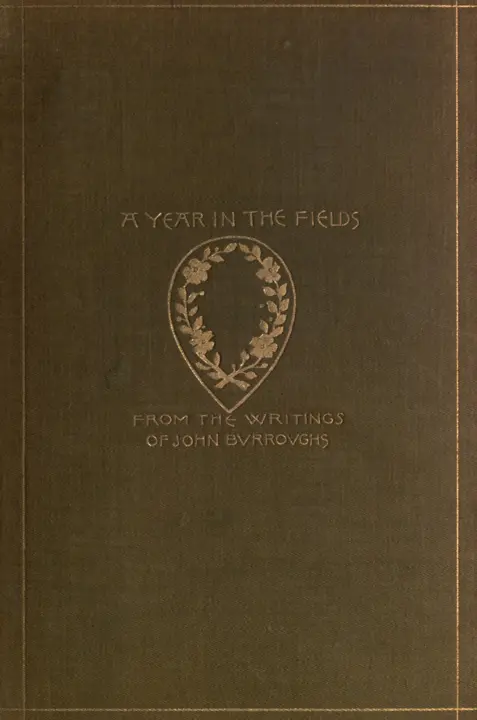
THE CLASSIC COLLECTION · 1875
"A Year in the Fields" by John Burroughs is a collection of nature writings composed in the late 19th century. The book explores the observations and reflections of Burroughs as he engages with the natural world through the seasons, capturing the intricate details of wildlife and the beauty of the landscape. Focused primarily on his experiences in the Catskills region, it combines elements of personal memoir with keen ecological insight. The opening of the text introduces readers to Burroughs's contemplative style, starting with a vibrant description of a snowstorm. He reflects on the quiet anticipation of snowfall, detailing the transformation of the landscape and the activities of local wildlife as winter progresses. Burroughs vividly illustrates the snowfall's effects on the environment, evoking each sensory detail, from the visual beauty to the subtle sounds that characterize a winter scene. His appreciation for the interplay of natural phenomena sets the tone for the rest of the selections within the collection, inviting readers to enter a world filled with wonder and a profound respect for nature’s cycles.
Introduction adapted from the source catalogue; source summaries may be automatically generated.
Free to read · English · 46,603 words · No account needed
MAKE TIME FOR A GOOD BOOK
On by default. Untick to stop anonymous reading totals. Each page counts after 10 seconds in view. How this works.
Anonymous counting is on unless you have switched it off.
Common thistle, Gill, Canada thistle, Nightshade, Burdock, Buttercup, Yellow dock, Dandelion, Wild carrot, Wild mustard, Ox-eye daisy, Shepherd's purse, Chamomile, St. John's-wort, Mullein, Chickweed, Dead-nettle (Lamium), Purslane, Hemp-nettle (Galeopsis), Mallow, Elecampane, Darnel, Plantain, Poison hemlock, Motherwort, Hop-clover, Stramonium, Yarrow, Catnip, Wild radish, Blue-weed, Wild parsnip, Stick-seed, Chicory, Hound's-tongue, Live-forever, Henbane, Toad-flax, Pigweed, Sheep-sorrel, Quitch grass, Mayweed,
and others less noxious. To offset this list we have given Europe the vilest of all weeds, a parasite that sucks up human blood, tobacco. Now if they catch the Colorado beetle of us, it will go far toward paying them off for the rats and the mice, and for other pests in our houses.
The more attractive and pretty of the British weeds--as the common daisy, of which the poets have made so much, the larkspur, which is a pretty cornfield weed, and the scarlet field-poppy, which flowers all summer, and is so taking amid the ripening grain--have not immigrated to our shores. Like a certain sweet rusticity and charm of European rural life, they do not thrive readily under our skies. Our fleabane has become a common roadside weed in England, and a few other of our native less-known plants have gained a foothold in the Old World. Our beautiful jewel-weed has recently appeared along certain of the English rivers.
Pokeweed is a native American, and what a lusty, royal plant it is! It never invades cultivated fields, but hovers about the borders and looks over the fences like a painted Indian sachem. Thoreau coveted its strong purple stalk for a cane, and the robins eat its dark crimson-juiced berries.
It is commonly believed that the mullein is indigenous to this country, for have we not heard that it is cultivated in European gardens, and christened the American velvet plant? Yet it, too, seems to have come over with the Pilgrims, and is most abundant in the older parts of the country. It abounds throughout Europe and Asia, and had its economic uses with the ancients. The Greeks made lamp-wicks of its dried leaves, and the Romans dipped its dried stalk in tallow for funeral torches. It affects dry uplands in this country, and, as it takes two years to mature, it is not a troublesome weed in cultivated crops. The first year it sits low upon the ground in its coarse flannel leaves, and makes ready; if the plow comes along now, its career is ended. The second season it starts upward its tall stalk, which in late summer is thickly set with small yellow flowers, and in fall is charged with myriads of fine black seeds. "As full as a dry mullein stalk of seeds" is almost equivalent to saying "as numerous as the sands upon the seashore."
Your reading position is saved on this browser. Take it to another device with a library code. Reading pages adapt to text, rather than matching a printed edition.
BEHIND THE BOOK
This eBook is for the use of anyone anywhere in the United States and most other parts of the world at no cost and with almost no restrictions whatsoever. You may copy it, give it away or re-use it under the terms of the Project Gutenberg License included with this eBook or online at www.gutenberg.org. If you are not located in the United States, you will have to check the laws of the country where you are located before using this eBook. Read the source licence.
The original source file, including credits and licence, is retained by this library. Request an original-format copy at no charge. Please include the book title and Project Gutenberg identifier #31292.
KEEP YOUR CURIOSITY GOING
Cécile Tormay

Moritz Busch
John L. Ransom
Frances Wright
Cécile Tormay

Mabel Potter Daggett