THE CLASSIC COLLECTION✦My diaries, being a personal narrative of events 1888-1914, Part 2 (1900-1914)CLASSIC FREE BOOKS
My diaries, being a personal narrative of events 1888-1914, Part 2 (1900-1914)
Wilfrid Scawen Blunt
THE CLASSIC COLLECTION · 1901
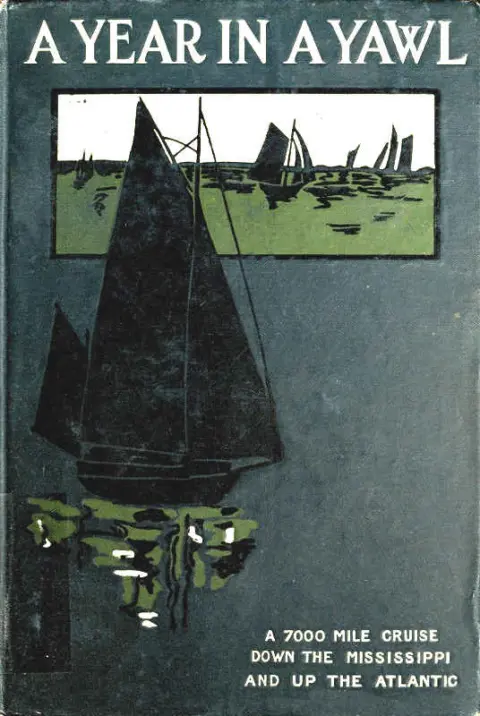
"A Year in a Yawl" by Russell Doubleday is a true adventure narrative written in the early 20th century. The story follows four boys—Kenneth Ransom, Clyde Morrow, Frank Chauvet, and Arthur Morrow—as they embark on an ambitious journey in a thirty-foot yawl they build themselves, aiming to sail around the Eastern half of the United States. The tale encapsulates themes of friendship, courage, and the spirit of adventure, as the boys navigate the challenges of their expedition. The opening of the narrative introduces the enthusiastic planning phase, where Kenneth passionately describes his vision for the voyage to his skeptical friends while sketching routes on a map. Kenneth's determination and resourcefulness come to life as he works diligently to construct the yawl, the "Gazelle," preparing for the grand adventure ahead. We see the boys coming together, excited about the journey and the experiences waiting for them, despite the doubts expressed by adults and their peers. Their initial conversations and preparations set the stage for a voyage filled with excitement, perils, and the joy of exploration, drawing readers into their audacious quest.
Introduction adapted from the source catalogue; source summaries may be automatically generated.
Free to read · English · 76,834 words · No account needed
MAKE TIME FOR A GOOD BOOK
On by default. Untick to stop anonymous reading totals. Each page counts after 10 seconds in view. How this works.
Anonymous counting is on unless you have switched it off.
“Ugh!” said the boy, shivering in remembrance. “What was that?”
“Angle-fish, I reckon. Scare yer?” the other replied.
Though Kenneth tried again, he could not haul up a sponge. There was a knack to it that completely baffled him.
All through this part of the Gulf, the boys found the sponge fishermen and their crews—many of whom were West Indian negroes—great, big, strong fellows, who seemed to find the odoriferous life healthy. The shallow water, smooth and clear, produced good sponges, and the fishermen came to reap the harvest from all directions.
Even in the town of Cedar Keys, the boys could not get away from the horrid odor. The town, formerly a great cedar-producing place, and the site of a large pencil manufactory, had become the sponge fisherman’s port of call.
“For heaven’s sake, Ken, let’s get our mail, our grub, and our water, and clear out of this place,” Arthur said, the afternoon that they entered Cedar Keys Harbor. “It seems to me that sponge is mixed up with everything I eat, drink, smell, taste, see, and touch. It’s awful!”
“I’m willing,” the skipper answered, “if Frank votes aye.”
“Aye! Aye!” Frank shouted emphatically, with no loss of time.
Soon after dawn the next day, the mud-hook was pulled up, and the “Gazelle” stood for the open Gulf. She sped along as if she, too, was glad to get away into the free, sweet air of the Southern sea.
It was a six days’ sail to Charlotte Harbor, a little below Tampa. A sail full of incident; of friendly races with fishing boats; exhilarating bouts with sharp little squalls that called for quick work and unerring judgment; and an entrancing view of an ever-changing semi-tropical coast.
A schooner with which they had been sailing hour after hour, headed into the harbor which opened up invitingly before both vessels.
“We might as well go in too,” suggested Ransom. “There’s plenty of water, and we might take a chance at a turtle or two. What do you say?”
So they rounded the lighthouse and sailed up the channel with their companion ship, like a team of horses. Together the jibs came down, and together the anchor chains rattled through the chocks.
They learned from the lighthouse keeper that turtles were plentiful at this time of year, and that they crawled up on the beach at night to lay their eggs.
All three boys wanted to go, but one had to stay and keep ship. So after
supper they drew lots.
Your reading position is saved on this browser. Take it to another device with a library code. Reading pages adapt to text, rather than matching a printed edition.
BEHIND THE BOOK
This eBook is for the use of anyone anywhere in the United States and most other parts of the world at no cost and with almost no restrictions whatsoever. You may copy it, give it away or re-use it under the terms of the Project Gutenberg License included with this eBook or online at www.gutenberg.org. If you are not located in the United States, you will have to check the laws of the country where you are located before using this eBook. Read the source licence.
The original source file, including credits and licence, is retained by this library. Request an original-format copy at no charge. Please include the book title and Project Gutenberg identifier #56792.
KEEP YOUR CURIOSITY GOING
Wilfrid Scawen Blunt
Wilfrid Scawen Blunt

E. W. (Edgar Watson) Howe
Coulson Kernahan

Maurice Baring
Frances Wright