THE CLASSIC COLLECTION✦My diaries, being a personal narrative of events 1888-1914, Part 2 (1900-1914)CLASSIC FREE BOOKS
My diaries, being a personal narrative of events 1888-1914, Part 2 (1900-1914)
Wilfrid Scawen Blunt
THE CLASSIC COLLECTION · 1901
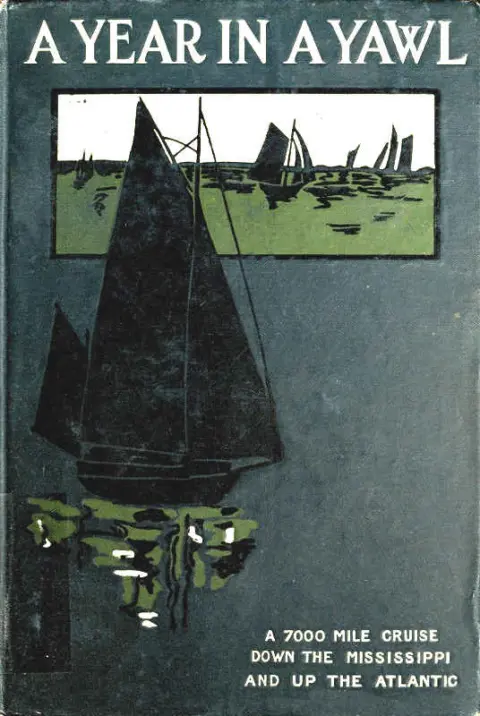
"A Year in a Yawl" by Russell Doubleday is a true adventure narrative written in the early 20th century. The story follows four boys—Kenneth Ransom, Clyde Morrow, Frank Chauvet, and Arthur Morrow—as they embark on an ambitious journey in a thirty-foot yawl they build themselves, aiming to sail around the Eastern half of the United States. The tale encapsulates themes of friendship, courage, and the spirit of adventure, as the boys navigate the challenges of their expedition. The opening of the narrative introduces the enthusiastic planning phase, where Kenneth passionately describes his vision for the voyage to his skeptical friends while sketching routes on a map. Kenneth's determination and resourcefulness come to life as he works diligently to construct the yawl, the "Gazelle," preparing for the grand adventure ahead. We see the boys coming together, excited about the journey and the experiences waiting for them, despite the doubts expressed by adults and their peers. Their initial conversations and preparations set the stage for a voyage filled with excitement, perils, and the joy of exploration, drawing readers into their audacious quest.
Introduction adapted from the source catalogue; source summaries may be automatically generated.
Free to read · English · 76,834 words · No account needed
MAKE TIME FOR A GOOD BOOK
On by default. Untick to stop anonymous reading totals. Each page counts after 10 seconds in view. How this works.
Anonymous counting is on unless you have switched it off.
Ransom kicked Chauvet under the table, to put him on to the game. “Yes, I hear the house is haunted.” The wind howled, as if to confirm the fact, and a puff came down the companionway hatch and made the lamp flicker.
Frank and Kenneth kept up a fire of ghost stories, so that their own hair showed a tendency to rise, while Arthur was visibly unnerved.
As the wind gave a particularly weird shriek, Kenneth made a scratching noise on the centre-board trunk.
“What’s that?” said Arthur, startled.
“What’s what?” Frank inquired, innocently.
“That noise—hear it?”—Arthur paused to listen—“sounds like a person or dog scratching to get in.”
“Oh, it’s your imagination, I guess.”
“By the way, Art, did you take the boot off ‘Step Lively’?”
“Sure!” he answered.
“I’ll bet you didn’t; too much of a hurry to get out of the wind and
aboard.”
“I know I did—at least I think I did.”
“Gee, that’s a queer noise,” Kenneth interrupted the inquiry to say. The wind made a noise like one in torment, and the light flickered again.
“I’ll give you two dollars if you go out and make sure. It’s up to you, and don’t forget the week’s dishwashing if we find the boot on in the morning.”
The thought of a week of dishwashing braced the mate, and, lighting a lantern, he pushed open the companionway door and went out.
Almost immediately he was back again, white and shaking. “Say, boys, saw something queer in there—something white moving round—sure’s you’re born!”
“Did you find out about the boot?” inquired Ransom, inexorably.
“No; didn’t wait.”
“You had better go and find out.”
“I wouldn’t be hired to go in there.”
“Well, we’ll find out.” Frank wore a superior air, but he kept close to Kenneth for all that.
The whispers of the wind grew into shrieks as they approached the barn, and, as Frank reached out his hand to grasp the door-catch, a damp leaf slapped his face. Opening the door cautiously, they poked in their heads and looked. Startled, they saw a dim gray shape in the middle of the big open space, and as they were about to turn and run, the ghost stamped hard and whinnied gently. “Step Lively” was glad to see something alive and human.
“Hullo, old beast, broke loose, did you?” Kenneth was very bold; went up to the horse, felt her leg.
“Boot’s off, all right, but we’ve got the laugh on Art.”
“He pretty nearly got the laugh on us,” Frank remarked, honestly.
Your reading position is saved on this browser. Take it to another device with a library code. Reading pages adapt to text, rather than matching a printed edition.
BEHIND THE BOOK
This eBook is for the use of anyone anywhere in the United States and most other parts of the world at no cost and with almost no restrictions whatsoever. You may copy it, give it away or re-use it under the terms of the Project Gutenberg License included with this eBook or online at www.gutenberg.org. If you are not located in the United States, you will have to check the laws of the country where you are located before using this eBook. Read the source licence.
The original source file, including credits and licence, is retained by this library. Request an original-format copy at no charge. Please include the book title and Project Gutenberg identifier #56792.
KEEP YOUR CURIOSITY GOING
Wilfrid Scawen Blunt
Wilfrid Scawen Blunt

E. W. (Edgar Watson) Howe
Coulson Kernahan

Maurice Baring
Frances Wright