Illustrations of the birds of Jamaica
Philip Henry Gosse
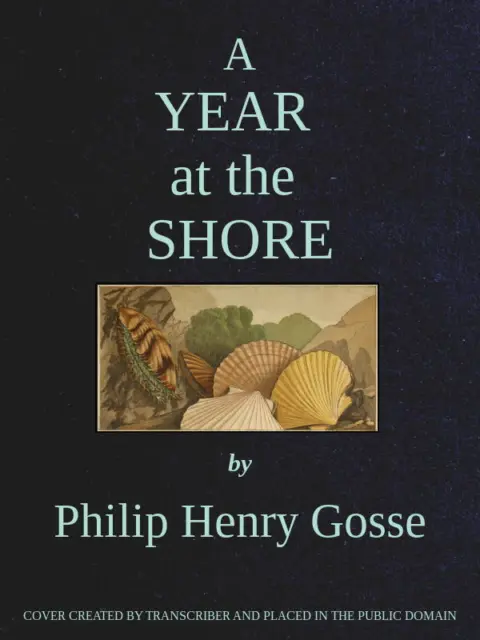
THE CLASSIC COLLECTION · 1865
"A Year at the Shore" by Philip Henry Gosse is a natural history account written in the mid-19th century. The work intricately details the exploration of marine life and coastal environments, capturing the essence of the shoreline through descriptive passages and illustrations. Through the author's keen observations, readers are likely to delve into the life forms and habitats along the shore, gaining insight into the beauty and complexity of nature. The opening of "A Year at the Shore" sets the stage for a detailed examination of the coastal landscape and its inhabitants. Gosse vividly describes heavy waves crashing onto a shingle beach under a tumultuous sky. The narrative transitions into a first-person exploration as he climbs rocky cliffs, observing the powerful interaction of ocean and land. Along the way, he describes various marine creatures, such as the Purple-spotted Top and the Dog-whelk, highlighting their physical characteristics and behaviors. The emphasis on both the beauty of the external landscape and the intricate life within it establishes an engaging tone, inviting readers to appreciate the dynamic world at the shoreline.
Introduction adapted from the source catalogue; source summaries may be automatically generated.
Free to read · English · 78,216 words · No account needed
MAKE TIME FOR A GOOD BOOK
On by default. Untick to stop anonymous reading totals. Each page counts after 10 seconds in view. How this works.
Anonymous counting is on unless you have switched it off.
This Work announces and illustrates a grand Physical Law, which, though hitherto unrecognised, is proved to be of universal application in the organic world--the Law of Prochronism in Creation. On this principle the Author shows that the conclusions of geologists as to the great antiquity of the earth are not inevitable, that there is another solution of the facts at least possible.
“We have no hesitation in pronouncing this book to be the most important and best-written that has yet appeared on the very interesting question with which it deals. We believe the logic of the book to be unanswerable, its postulates true, its laws fairly deduced.”--Nat. Hist. Review, Jan. 1858.
Post 8vo, 21s.
Small 8vo, 5s.
“In these ‘Letters’ we have one of the pleasantest little volumes imaginable on all the curious life that abounds in the woods and forests of Alabama--a part of the United States ‘visited by comparatively few Englishmen.’ A vast amount of interesting information, gathered from a careful and daily search and ramble through primeval forests, woods, and swamps, is collected for us in this little book, and put together in an extremely readable and attractive form. We heartily recommend the volume.”--St. James’s Chronicle, Aug. 25.
Transcriber's Note
Illustrations have been moved next to the text which they illustrate,
and may no longer match the locations given in the List of
Illustrations.
The letters C and S used to describe shapes on p. 319 were printed in
different fonts.
The following apparent errors have been corrected:
p. 21 "tranverse" changed to "transverse"
p. 50 "‘the" changed to "“the"
p. 51 "point," changed to "point."
p. 51 "foot." changed to "foot,"
p. 61 "Inprovements" changed to "Improvements"
p. 67 (note) "right hand" changed to "left hand"
p. 74 "equaminity" changed to "equanimity"
p. 92 "countremen" changed to "countrymen"
(plate) "PLATE 12" changed to "PLATE 12."
(plate) "LESSER WEEVER" changed to "LESSER WEEVER."
p. 138 "assailent" changed to "assailant"
p. 145 (note) "Introd. to Conchology" changed to "Introd. to Conchology"
(plate) "ANGLED-CRAB" changed to "ANGLED-CRAB."
p. 230 "Plymouth" changed to "Plymouth."
(plate) "PURPLE-HERMIT CRAB." changed to "PURPLE HERMIT-CRAB."
p. 300 (note) "right hand" changed to "left hand"
p. 300 (note) "XXXIV" changed to "XXXIV."
p. 310 (note) "XXXV" changed to "XXXV."
The following are used inconsistently in the text:
Beroë, Beröe and Beroe
Brittlestar and Brittle-star
Corkwing and Cork-wing
débris and debris
footstalk and foot-stalk
honeycombed and honey-combed
Keyhole and Key-hole
Longworm and Long-worm
zigzag and zig-zag
Your reading position is saved on this browser. Take it to another device with a library code. Reading pages adapt to text, rather than matching a printed edition.
Philip Henry Gosse
Philip Henry Gosse
Philip Henry Gosse
BEHIND THE BOOK
This eBook is for the use of anyone anywhere in the United States and most other parts of the world at no cost and with almost no restrictions whatsoever. You may copy it, give it away or re-use it under the terms of the Project Gutenberg License included with this eBook or online at www.gutenberg.org. If you are not located in the United States, you will have to check the laws of the country where you are located before using this eBook. Read the source licence.
The original source file, including credits and licence, is retained by this library. Request an original-format copy at no charge. Please include the book title and Project Gutenberg identifier #49022.
KEEP YOUR CURIOSITY GOING
Wilfrid Scawen Blunt
Wilfrid Scawen Blunt

E. W. (Edgar Watson) Howe
Francis Greenleaf Allinson & Anne C. E. (Anne Crosby Emery) Allinson
Cyrenus Cole

John Martineau