Illustrations of the birds of Jamaica
Philip Henry Gosse
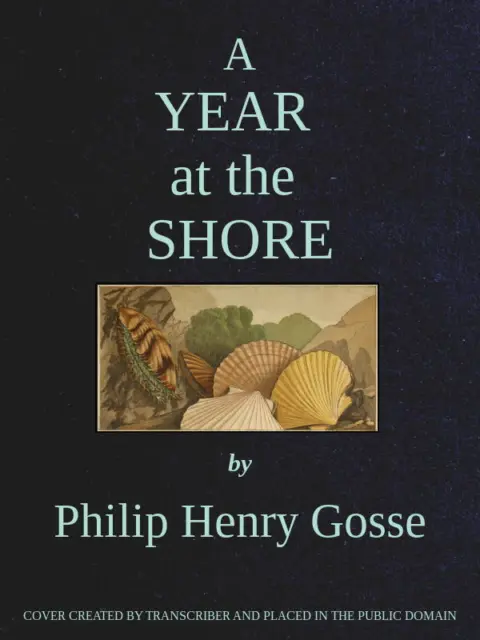
THE CLASSIC COLLECTION · 1865
"A Year at the Shore" by Philip Henry Gosse is a natural history account written in the mid-19th century. The work intricately details the exploration of marine life and coastal environments, capturing the essence of the shoreline through descriptive passages and illustrations. Through the author's keen observations, readers are likely to delve into the life forms and habitats along the shore, gaining insight into the beauty and complexity of nature. The opening of "A Year at the Shore" sets the stage for a detailed examination of the coastal landscape and its inhabitants. Gosse vividly describes heavy waves crashing onto a shingle beach under a tumultuous sky. The narrative transitions into a first-person exploration as he climbs rocky cliffs, observing the powerful interaction of ocean and land. Along the way, he describes various marine creatures, such as the Purple-spotted Top and the Dog-whelk, highlighting their physical characteristics and behaviors. The emphasis on both the beauty of the external landscape and the intricate life within it establishes an engaging tone, inviting readers to appreciate the dynamic world at the shoreline.
Introduction adapted from the source catalogue; source summaries may be automatically generated.
Free to read · English · 78,216 words · No account needed
MAKE TIME FOR A GOOD BOOK
On by default. Untick to stop anonymous reading totals. Each page counts after 10 seconds in view. How this works.
Anonymous counting is on unless you have switched it off.
The process of building the mud tubes of the Sabellæ is a very interesting one. It is performed, according to my own observations,[148] mainly by means of the gill-filaments and their pinnal grooves. The filaments are bent-over, till the inner or grooved face comes in contact with the soft mud on which the animal is lying, when the sensitive pinnæ close on a minute portion of the mud, taking it up in a pellet, which is then fashioned by the form of the groove; the filament is now erected, and the pellet, passing down the groove to the bottom by means of the cilia, is delivered to the care of two delicate moveable organs, like leaves or flaps, which place it on the edge of the tube, and then shape and mould it, smoothing both surfaces. Doubtless, either from these organs, or from some other part of the circumjacent region, the glutinous secretion is at the same time poured out, which consolidates the mud, and forms the true basis of the tube.
[133] Antennularia antennina, figured in Plate XXXI., springing
from the lower left corner. It will be easily recognised from the
description.
[134] For details and figures of these developments, I beg to refer the reader to my Naturalist’s Rambles on the Devonshire Coast.
[135] Scalpellum vulgare, seen in Plate XXXI., in the position
described in the text.
[136] Balanus balanoides, of which a group is seen in the extreme left of the foreground in Plate XXXI.; B. porcatus, a single specimen, is a little to the right.
[137] Lepas anatifera. A group, the size of life, is seen depending in the upper right-hand corner of Plate XXXI.
[138] Pyrgoma Anglicum, of which three specimens are seen attached to a Caryophyllia Smithii, at the left side of Plate XXXI.
[139] Zoologist, pp. 7054, 7111.
[140] Serpula contortuplicata, a mass of which forms the subject of Plate XXXII., mingled with S. triquetra.
[141] Some in this infant state are seen in Plate XXXIII.
[142] Brit. Annelida, in Rep. Brit. Assoc., 1851.
[143] Zoologist, p. 5976.
[144] Vide supra, p. 135.
[145] Sabella tubularia, represented as occupying the foreground and the left-hand side of Plate XXXIII.
[146] I have figured a group in the centre of Plate XXXIII. I cannot satisfactorily identify it with any species described in Grube’s Fam. der Anneliden. It has some affinities with the Sabella penicillus of Müller; and still more with S. gracilis of Grube. This latter is defined, however, as wanting the two naked threads by the mouth, which in my little species are sufficiently conspicuous. I must leave it undetermined.
[147] Sabella bombyx, represented in Plate XXXIII., towards the right hand, springing out of a group of Serpula tubes.
[148] Intellectual Observer, vol. iii. p. 77.
Your reading position is saved on this browser. Take it to another device with a library code. Reading pages adapt to text, rather than matching a printed edition.
Philip Henry Gosse
Philip Henry Gosse
Philip Henry Gosse
BEHIND THE BOOK
This eBook is for the use of anyone anywhere in the United States and most other parts of the world at no cost and with almost no restrictions whatsoever. You may copy it, give it away or re-use it under the terms of the Project Gutenberg License included with this eBook or online at www.gutenberg.org. If you are not located in the United States, you will have to check the laws of the country where you are located before using this eBook. Read the source licence.
The original source file, including credits and licence, is retained by this library. Request an original-format copy at no charge. Please include the book title and Project Gutenberg identifier #49022.
KEEP YOUR CURIOSITY GOING
Wilfrid Scawen Blunt
Wilfrid Scawen Blunt

E. W. (Edgar Watson) Howe
Francis Greenleaf Allinson & Anne C. E. (Anne Crosby Emery) Allinson
Cyrenus Cole

John Martineau