
The prophetic marriage
Warwick Deeping
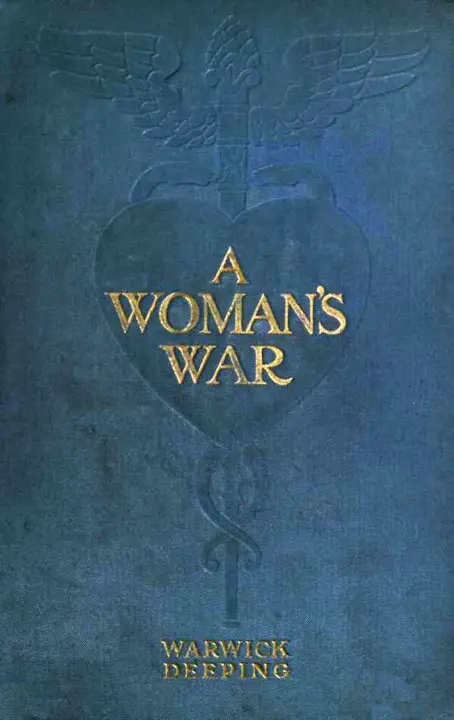
THE CLASSIC COLLECTION · 1907
"A Woman's War" by Warwick Deeping is a novel written in the early 20th century. The story centers around Catherine Murchison, a devoted wife, and her husband, James Murchison, a dedicated physician battling his personal demons and the pressures of his profession. Set in a small English town, the narrative explores themes of love, rivalry, and the complexities of human relationships, particularly the tensions that arise between Catherine and her rival, Mrs. Betty Steel. At the start of the novel, readers are introduced to Catherine Murchison, who returns home on a cold winter’s night, depicted as a happy wife reflected in her comfortable domestic life. However, as the story unfolds, the backdrop of her husband James’s struggles with the burdens of his career and inherited vices begins to emerge. Catherine's deep love for James motivates her to manage their home life while he fights the pressures of his medical career. Their relationship is complicated further by the presence of Betty Steel, who harbors jealousy and rivalry towards Catherine, creating an undercurrent of tension that hints at the challenges they will face. The opening sets a tone of domesticity laced with unease, inviting readers to delve into the intertwining lives of the characters.
Introduction adapted from the source catalogue; source summaries may be automatically generated.
Free to read · English · 83,836 words · No account needed
MAKE TIME FOR A GOOD BOOK
On by default. Untick to stop anonymous reading totals. Each page counts after 10 seconds in view. How this works.
Anonymous counting is on unless you have switched it off.
Porteus Carmagee stared hard at the silver epergne full of daffodils before him on the table. They were at dessert, and alone, with the curtains drawn, and a wood fire burning in the old-fashioned grate. The whole setting of the room spoke of a generation that was past. It suggested solidity and repose, placid kindliness, prosaic comfort.
“Murchison ought never to have left us,” said the lawyer, curtly.
“No.”
“The affair might have blown over in a year.”
“You think so, Porteus.”
“If he had only stuck to his guns. People always wait to see what a man will do. If he skedaddles they draw their own inferences. Life is largely a game of bluff.”
The eyes of brother and sister met in a sudden questioning glance. Possibly the same thought had occurred to both.
“Would it be possible?”
“Possible for what?”
“For James Murchison to come back to Roxton?”
The lawyer reached for his napkin that had slipped down from his knees.
“That is the question,” he confessed, “it is not easy to rebuild a reputation. I would rather face fire than the sneers of my genteel neighbors.”
Miss Carmagee’s placid face had lost its habitual air of contentment and
repose.
“I know it would require courage,” she said.
“People would probably call it impertinence. It requires more than courage to be successfully impertinent in this world.”
“Cleverness, Porteus?”
“Genius, the genius of patience, magnanimity, and self-restraint.”
His sister pondered a moment, while Porteus sipped his port.
“Then—there is Catherine?”
Her brother’s keen eyes lit up at the name.
“Ah, there we have a touch of the divine fire.”
“She could help him.”
“Next to God.”
There was silence again between them for a season. The dim and homely room seemed full of a quiet dignity, a pervading restfulness that was clean and good. The most prosaic people grow great and lovable when their hearts are moved to succor others. The words of a beggar may strike the noblest chords of time, and live with the utterances of martyrs and of prophets.
“Porteus.”
Brother and sister looked at each other.
“I might speak to them.”
“Perhaps, dear, better than any one.”
“And if they need money? Mrs. Pentherby’s property cannot come to them at once. The law—”
Porteus’s face twinkled benignantly.
“The law, like a mule, is abominably slow. If I can be of any use to them—remind Kate that I am still alive.”
Miss Carmagee regarded her brother affectionately across the table.
“Then I shall go to-morrow,” she said, with a quiet sigh.
Your reading position is saved on this browser. Take it to another device with a library code. Reading pages adapt to text, rather than matching a printed edition.
Warwick Deeping

Warwick Deeping

Warwick Deeping

Warwick Deeping
BEHIND THE BOOK
This eBook is for the use of anyone anywhere in the United States and most other parts of the world at no cost and with almost no restrictions whatsoever. You may copy it, give it away or re-use it under the terms of the Project Gutenberg License included with this eBook or online at www.gutenberg.org. If you are not located in the United States, you will have to check the laws of the country where you are located before using this eBook. Read the source licence.
The original source file, including credits and licence, is retained by this library. Request an original-format copy at no charge. Please include the book title and Project Gutenberg identifier #52715.
KEEP YOUR CURIOSITY GOING
Coulson Kernahan

Maurice Baring
Frances Wright
Cécile Tormay

Frederic Jesup Stimson

W. H. P. (William Henry Pope) Jarvis